
Crucian carp
Carassius carassius
Description
How to identify
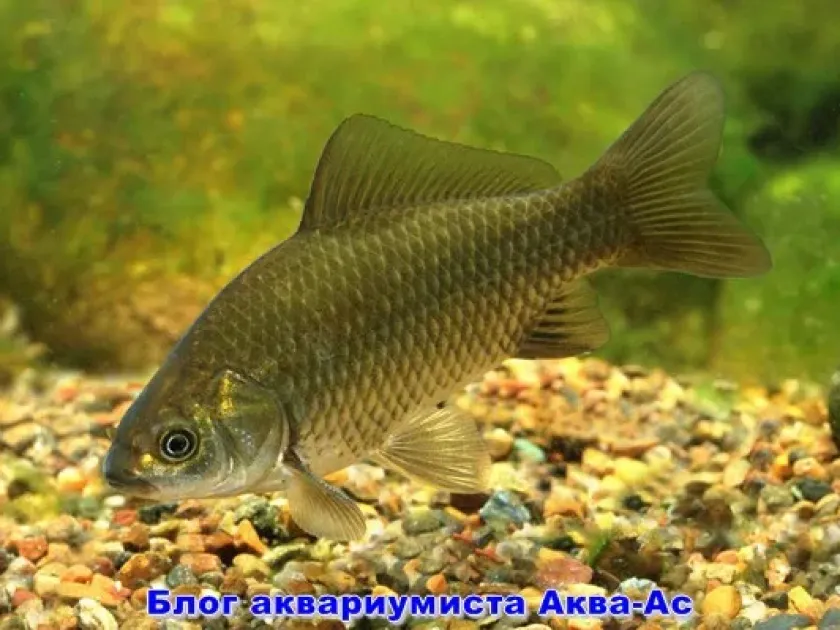
The Crucian carp (lat. Carassius carassius) belongs to the Cyprinidae family, Order Cypriniformes. It is a freshwater fish characterized by a high, laterally compressed body and golden-bronze scales.
Within agricultural ecosystems, especially rice paddies, this fish achieves high population densities due to its remarkable tolerance to low oxygen levels in stagnant water.
Adult specimens are known for their rapid growth and ability to thrive in muddy environments, making them persistent inhabitants of irrigation networks.
They are distinguished by the rounded shape of the dorsal fin and specialized pharyngeal teeth, which allow them to feed on both aquatic vegetation and small soil invertebrates.
Their biological endurance makes them a challenging nuisance in managed agricultural water systems worldwide.
What it damages
The primary damage occurs during the early stages of rice growth. The fish actively digs into the bottom soil in search of food, uprooting young rice sprouts in the process.
This mechanical destruction of the root system leads to sparse stands of rice, frequently necessitating costly replanting efforts in flooded fields.
Crucian carp also compromise the structural integrity of irrigation dams and embankments by burrowing into the soft soil, leading to uncontrolled water leakage.
Their activity increases water turbidity, which blocks sunlight, inhibits photosynthesis of submerged plant parts, and prevents the water from warming up efficiently.
Furthermore, their consumption of benthic organisms disrupts the nutrient cycle, potentially reducing the natural fertility of the soil within the rice paddies.
When it appears
The highest level of damage occurs during the spring, specifically in April and May, coinciding with the rice seeding and the initial flooding of the paddies.
Activity remains high throughout the summer spawning season, which varies depending on water temperatures, usually peaking between 14 and 18 degrees Celsius.
During the autumn water drainage, the fish migrate into main irrigation channels, where they concentrate and overwinter until the next season begins.
The species possesses a high survival rate, capable of overwintering even if the water body freezes, ensuring that the pest population remains stable from year to year.
Agricultural management plans must account for these seasonal migration patterns to effectively manage the fish population in irrigation networks.
Signs of infestation
Increased water turbidity that cannot be attributed to weather conditions or soil management is a strong indicator of the presence of Crucian carp.
The appearance of rice sprouts floating on the water surface, showing clear signs of having been uprooted from the bottom, is a direct sign of damage.
Visual evidence of erosion, burrows, or gaps in the dams and embankments suggests a high density of fish activity in those specific areas.
Detection in monitoring traps or mesh screens installed at the irrigation intake points confirms that the pest is actively infiltrating the rice fields.
A sudden, unexplained drop in the water level of the paddies often indicates that the fish have compromised the integrity of the containment walls.
Control measures
The most effective protection measure is the installation of fine-mesh screens on all sluices and water supply inlets to prevent fish from entering the paddies.
Thorough drying of the paddies after the harvest season helps to eliminate larvae and juvenile fish that remain trapped in the soil depressions.
Biological control methods involve introducing predatory fish, such as pike-perch, into the main channels to naturally regulate the Crucian carp population.
Using natural filtration barriers made of gravel or reeds can effectively prevent adult fish movement while maintaining necessary water flow for irrigation.
Regular maintenance, including dredging and desilting of irrigation channels during winter, minimizes overwintering sites and significantly reduces the pest population.
Taxonomy
- Latin name
- Carassius carassius
- Family
- Cyprinidae
- EPPO code
- CRSSCA
Discussion
No discussions yet — be the first.