
Cappaea
Cappaea
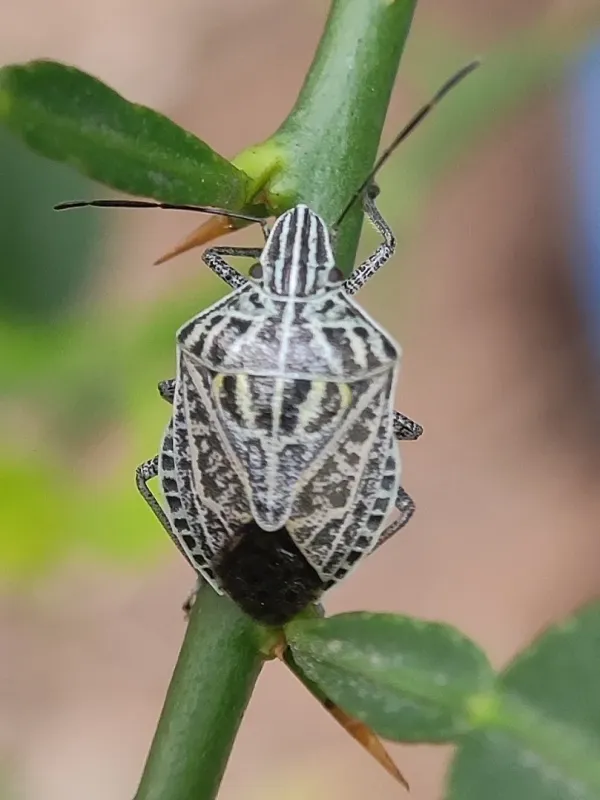
Description
How to identify
Cappaea is a genus of insects within the Pentatomidae family, commonly known as stink bugs. These insects are characterized by their shield-shaped bodies, which provide both protection and a distinct silhouette, making them recognizable in agricultural settings.
The coloration of Cappaea adults ranges from brownish to grayish-green, allowing them to blend seamlessly with bark, stems, and foliage. Their head is somewhat elongated, and they possess five-segmented antennae, a key taxonomic feature used by entomologists for identification.
Adults typically measure between 8 and 12 millimeters in length. Their cuticle is covered with fine punctures, giving it a dull, matte appearance. They have well-developed legs designed for efficient movement across plant surfaces, facilitating their search for optimal feeding sites.
The eggs of Cappaea are barrel-shaped and are usually deposited in clusters on the undersides of leaves. Nymphs closely resemble smaller, wingless versions of the adults, though their color patterns may be more vibrant or contrasting during earlier developmental stages.
The life cycle involves an egg stage, five nymphal instars, and the adult stage. In temperate climates, this species follows a seasonal pattern, with adults typically overwintering in sheltered locations such as leaf litter, crevices, or under bark.
What it damages
Cappaea primarily targets plants within the Rosaceae family, including raspberries, blackberries, and various pome or stone fruit trees. As sap-feeders, they cause significant physiological stress to their host plants by extracting essential fluids.
The insects use their piercing-sucking mouthparts to penetrate plant tissues. During feeding, they inject saliva containing enzymes that break down cell structures, making it easier for the insect to ingest nutrients while simultaneously damaging the plant's vascular integrity.
Physical damage often manifests as deformed fruits and berries, which lose their commercial value due to localized necrosis, pitting, and off-flavors. These damaged areas often become entry points for secondary fungal and bacterial infections.
Severe infestations can lead to stunted growth, premature dropping of blossoms or immature fruit, and the drying out of terminal shoots. This weakening effect is particularly detrimental to young orchards and nurseries, hindering overall plant development.
Beyond direct feeding damage, the stress placed on the plants reduces their ability to store carbohydrates effectively. This leads to weakened winter hardiness, potentially increasing the mortality rate of perennial crops after harsh weather conditions.
When it appears
Activity usually begins in early spring as temperatures rise above 12–15 degrees Celsius. Adults emerge from their overwintering sites and migrate to fresh vegetation to feed and prepare for mating.
Mass oviposition occurs in late spring and early summer. During this timeframe, monitoring efforts should be heightened, as the presence of egg clusters on the undersides of leaves is a clear indicator that a new generation is about to develop.
Nymphal development takes place throughout the summer, corresponding with the peak period of plant growth. Depending on the local climate and temperature, one or two generations may occur per year, extending the window of risk for susceptible crops.
By late summer and early autumn, adults begin the process of preparing for diapause. Their feeding intensity may change as they focus on accumulating energy reserves required to survive the upcoming winter months.
Overwintering is the critical phase for species survival. Adults seek out protected environments such as dense vegetation, debris, or artificial structures, where they remain dormant until the warmth of the next season triggers their emergence.
Signs of infestation
One of the earliest signs of a Cappaea infestation is the appearance of small, light-colored spots or chlorotic stippling on leaves, caused by the localized depletion of sap and cell contents.
Deformed fruit and berries are the most significant diagnostic sign. If fruits show irregular pits, hardening, or stunted development, it is often a clear indication of stink bug feeding during the fruit-set stage.
The release of a characteristic foul odor when insects are disturbed is a common defense mechanism for stink bugs. Gardeners or agronomists often detect this smell near infested bushes, providing a sensory cue for their presence.
Locating egg clusters is essential for proactive management. These clusters are laid in neat, geometric rows, making them relatively easy to spot during routine inspections of plant foliage before the eggs hatch.
The presence of exuviae, or empty nymphal skins, clinging to leaves and stems is a sign that the population is actively molting and developing on the plant, signaling an urgent need for monitoring and management.
Control measures
Cultural control measures are foundational, including the removal of weeds and debris in the autumn to eliminate potential overwintering sites. A clean field edge significantly reduces the number of pests that can successfully survive until spring.
Biological control, such as the strategic release of egg parasitoids like Trichogramma wasps, can effectively suppress Cappaea populations. Encouraging local populations of predators also helps maintain a natural ecological balance.
Chemical control should be used judiciously, targeting peak activity periods. Systemic insecticides are generally preferred as they provide effective coverage against piercing-sucking insects, although applications must comply with pre-harvest intervals.
It is important to rotate insecticide classes to prevent the development of resistance within the pest population. Always consult regional guidelines for specific product efficacy and safety protocols to minimize impacts on beneficial insects.
In smaller gardens or organic setups, manual collection of adults and nymphs during the cooler morning hours—when their activity is naturally suppressed—can be a surprisingly effective method to keep population numbers below the economic injury level.
Taxonomy
- Latin name
- Cappaea
- Order
- Hemiptera (bugs, aphids, leafhoppers)
- Family
- Pentatomidae
- EPPO code
- CAPPSP
Discussion
No discussions yet — be the first.