
Clear-winged grasshopper
Camnula pellucida
Description
How to identify
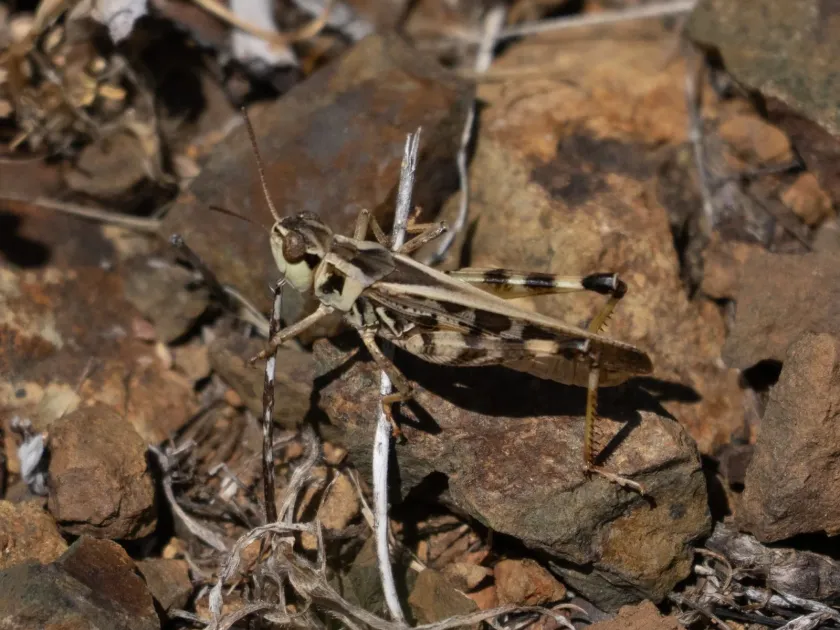
The Clear-winged grasshopper (Camnula pellucida) belongs to the family Acrididae within the order Orthoptera. Adult grasshoppers typically measure between 20 and 30 mm in length and exhibit a brownish to yellowish color pattern.
As the name suggests, the defining feature of this species is its clear, transparent wings, which often have dark patches. The pronotum features a distinct mid-dorsal ridge, serving as a key diagnostic character for entomologists conducting field assessments.
What it damages
This species is a significant generalist herbivore that targets a wide range of agricultural crops. It primarily infests cereal crops such as wheat, barley, and oats, but also poses a severe threat to corn and forage grasses used in livestock production.
During outbreak years, large swarms can devastate entire fields, moving rapidly across landscapes. The economic impact is substantial, as these insects can strip crops down to the ground, causing total loss of yield and severely impacting the financial stability of farms.
When it appears
The life cycle consists of one generation per year. The insect overwinters in the egg stage, with eggs laid in compact egg pods buried in the soil. Preferable egg-laying sites include dry, well-drained pastures and road verges.
In spring, when temperatures rise, the nymphs emerge from the soil. The insects undergo five nymphal stages before reaching the adult winged form. The adult stage is the most destructive, characterized by high mobility and the ability to migrate across large areas.
Signs of infestation
Infestation is first observed as patches of ragged, chewed foliage at the edges of crop fields. If left unmanaged, these patches expand quickly, resulting in stripped stalks and visible damage to the grain heads as the insects feed aggressively.
Field personnel can identify an active infestation by the presence of large numbers of grasshoppers jumping upon entry and the accumulation of frass on the ground. Defoliation that begins at field margins and spreads inward is a hallmark of this species' behavior.
Control measures
Effective management begins with cultural practices, specifically tillage of egg-laying grounds in the autumn or spring to destroy egg pods. Reducing weed cover along field edges also helps to discourage the insects from congregating in those areas.
- Applying contact or systemic insecticides targeting early-instar nymphs.
- Monitoring population densities using localized baiting or counting methods.
- Encouraging the presence of natural predators, such as birds and spiders.
- Utilizing biological control agents like Nosema locustae for long-term population reduction.
Taxonomy
- Latin name
- Camnula pellucida
- Order
- Orthoptera (locusts)
- Family
- Acrididae
- EPPO code
- CAMNPE
Discussion
No discussions yet — be the first.