
Apple sucker
Cacopsylla picta
Description
How to identify
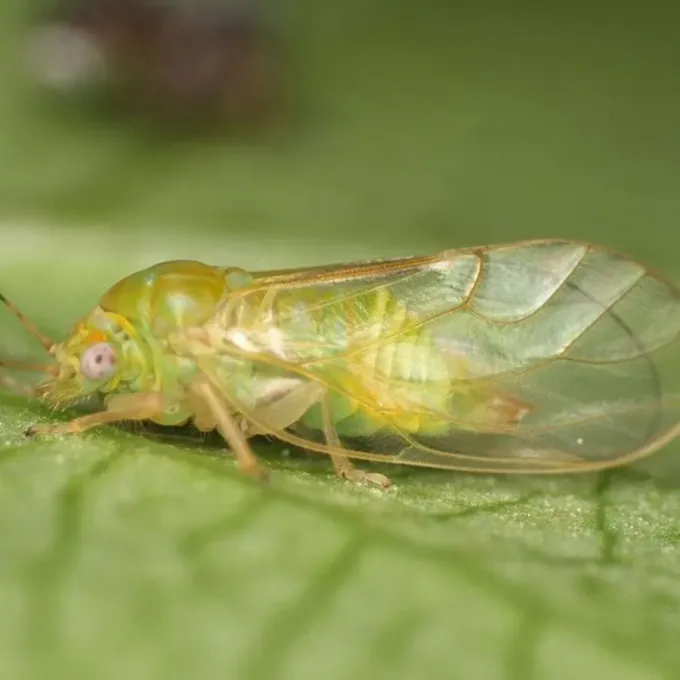
The apple sucker, scientifically known as Cacopsylla picta, is a small insect belonging to the family Psyllidae. Adults typically measure between 3 and 4 mm in length and possess strong hind legs for jumping, distinguishing them from other garden pests.
Their coloration is variable throughout the year. During the active growing season, they often display a greenish or pale yellow hue, while overwintering adults tend to develop darker, brownish, or reddish markings to blend into the tree bark.
The nymphs go through five distinct instars of development. These immature stages are generally slow-moving and are covered in a waxy substance they secrete themselves, which acts as a protective shield against predators and chemical sprays.
The eggs are small, oval-shaped, and usually bright yellow or orange when ready to hatch. They are typically laid by females in sheltered areas, such as bark crevices or around the base of buds, ensuring survival during the cold months.
A key identifying behavior of the adults is their agility; when disturbed, they jump rapidly, making them difficult to capture or observe without careful inspection of the foliage or branches during sunny, warm weather.
What it damages
The primary host for this pest is the apple tree (Malus domestica). The apple sucker feeds by inserting its mouthparts into the phloem of young leaves, shoots, and developing flower buds, drawing out sap and weakening the plant.
A major concern is that Cacopsylla picta is a known vector for phytoplasma diseases, specifically the pathogen causing the "apple proliferation" disease, which leads to the formation of "witches' brooms" and stunted fruit growth.
Feeding damage causes leaves to curl, yellow, and deform, leading to premature leaf drop. The removal of sap puts significant stress on the tree, reducing its energy reserves necessary for fruit development and winter survival.
Nymphs excrete a sugary substance known as "honeydew." This sticky residue accumulates on foliage and fruits, providing an ideal substrate for the growth of sooty mold, which impairs photosynthesis and reduces fruit quality.
Young trees are particularly vulnerable to heavy infestations. Stunting of terminal shoots and overall loss of vigor can severely affect the establishment of new orchards and lead to long-term economic losses for growers.
When it appears
Overwintering occurs either as fertilized females or eggs located in protected niches on the tree bark. Activity begins in early spring, synchronized with the bud swelling phase of the apple trees, requiring proactive monitoring.
Nymph hatching coincides with the opening of buds. They migrate immediately to the developing leaves and flowers to feed, making this period the most effective time for intervention with targeted contact or systemic insecticides.
Adults of the first generation typically appear toward the end of the blossom period. They are highly active and mobile, migrating between trees to feed and lay eggs for subsequent generations throughout the summer.
The number of generations per season is heavily influenced by regional climate conditions. In warmer years, the insect may complete multiple life cycles, significantly increasing the population density within the orchard by mid-summer.
As autumn approaches and temperatures drop, adults begin their transition to winter hibernation. They move into sheltered areas on the trunk or thick branches, where they remain in diapause until the return of favorable spring conditions.
Signs of infestation
The most recognizable sign of an infestation is the presence of honeydew. This sticky, sugary liquid coats the leaves and branches, giving them a shiny appearance that is easily spotted during a garden inspection.
Sooty mold colonization follows the honeydew secretion. Leaves affected by these fungi appear covered in a black, soot-like powder, which is a classic indicator that the population of sucking insects has been active for some time.
Terminal leaves often show distinct curling and deformation. Instead of flattening out, the leaf margins fold inward, creating a crumpled appearance that serves as a hidden nesting site for the nymphs.
Failure of flower buds to open properly is another critical symptom. Buds may appear withered or brownish, and if forced open, they may lack the strength to produce viable fruit, leading to poor crop set.
Finally, the sudden presence of large numbers of small, jumping insects upon shaking the branches is a clear confirmation of an established population that requires immediate management action to prevent crop loss.
Control measures
Management of the apple sucker requires an integrated pest management (IPM) approach to maintain orchard health while minimizing environmental impact and preserving beneficial insect populations.
- Apply horticultural oils in early spring to smother overwintering eggs before they hatch.
- Prune trees to improve air circulation and sunlight penetration, which discourages the insect from colonizing the dense inner canopy.
- Use systemic insecticides early in the season to target nymphs before they settle deep into the buds.
- Foster natural enemies, such as lady beetles and lacewings, by maintaining nectar-rich cover crops around the orchard.
- Monitor populations using yellow sticky traps to determine the best timing for insecticide applications based on actual pest pressure.
Taxonomy
- Latin name
- Cacopsylla picta
- Order
- Hemiptera (bugs, aphids, leafhoppers)
- Family
- Psyllidae
- EPPO code
- PSYLCO
Discussion
No discussions yet — be the first.