
Eleutherococcus psyllid
Cacopsylla fulguralis
Description
How to identify
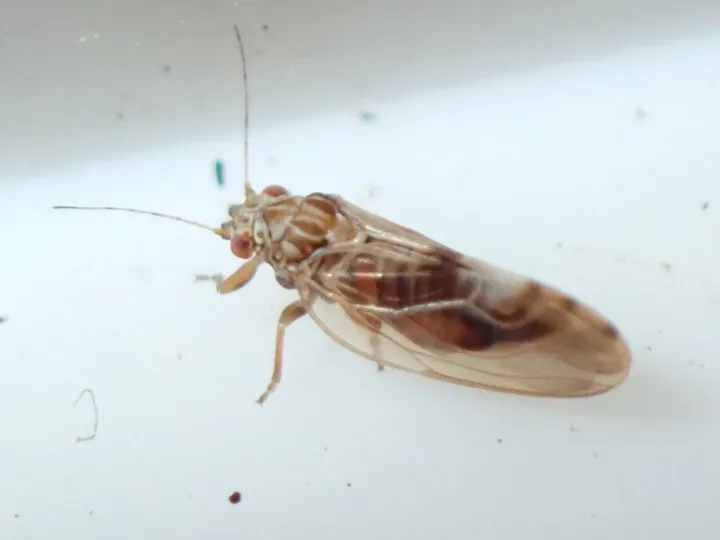
The Eleutherococcus psyllid (Cacopsylla fulguralis) is a small jumping insect belonging to the family Psyllidae, commonly known as jumping plant lice or suckers.
Adults possess well-developed wings and strong hind legs, allowing them to jump or fly between host plants, which makes them highly mobile and capable of quick dispersal.
The nymphs are the primary feeding stage; they are typically sedentary and often found on the underside of leaves, surrounded by protective waxy secretions.
Their morphological adaptation allows them to remain cryptic on the host plant, often blending in with the color of the bark or leaf tissue, which complicates manual detection.
This species is specifically adapted to feeding on certain members of the Araliaceae family, exhibiting a narrow host range that dictates its distribution and lifecycle patterns.
What it damages
The pest primarily infests Eleutherococcus senticosus, where it extracts phloem sap from young, actively developing shoots and foliage using its piercing-sucking mouthparts.
Severe infestations lead to physiological exhaustion of the plant, manifested by stunted growth, reduced leaf size, and an overall decrease in the plant's vigor and health.
The excretion of honeydew by the psyllids promotes the colonization of sooty mold, which blocks sunlight and interferes with the plant’s photosynthetic efficiency.
Mechanical damage caused by feeding can lead to distorted or curled leaves, which significantly impacts the aesthetic and medicinal value of the cultivated Eleutherococcus.
Prolonged stress from this pest makes the plant more susceptible to environmental factors, including winter damage, as the plant fails to accumulate sufficient nutrient reserves.
When it appears
Activity begins in the early spring, coinciding with the bud burst, when nymphs emerge from eggs to feed on the tender emerging leaves and developing shoot tips.
Multiple generations can occur throughout the growing season, with population peaks usually observed during periods of warm and dry weather conditions.
The lifecycle consists of several instar stages, with the population density often building up rapidly as the season progresses through the summer months.
Monitoring for the start of the season is crucial, as early-stage control is significantly more effective than attempting to manage high-density populations later on.
As the season comes to an end, the insects prepare for hibernation, with eggs often laid on the bark or near buds to ensure the survival of the next generation.
Signs of infestation
The initial signs of infestation include the curling and crinkling of young apical leaves, which may also show signs of chlorosis or abnormal discoloration.
The presence of sticky honeydew on the leaves and stems is a reliable indicator of active psyllid colonization, often attracting ants and dark fungal growth.
- Deformed, curled apical leaves on Eleutherococcus shoots.
- Sticky honeydew secretions found on foliage and stems.
- Sooty mold growth (black layer) on leaves and branches.
- Overall stunted shoot development during the spring.
- Jumping insects visible when foliage is disturbed.
Frequent scouting, especially checking the underside of leaves in the spring, is essential for detecting the pest before it causes extensive damage to the crop.
Plant health monitoring should also include looking for excessive ant activity, which often serves as an indirect sign of honeydew-producing insect infestations.
Control measures
Management strategies rely on the timely application of systemic insecticides that provide long-lasting protection for the young growth favored by the psyllids.
Effective control requires accurate timing, targeting the vulnerable nymph stages before they reach maturity and begin reproducing for the next generation.
Cultural practices, such as maintaining proper plant spacing and pruning, improve airflow and light penetration, reducing the suitability of the environment for the pest.
Biological control, including the use of beneficial insects such as lacewings or lady beetles, can be an effective component of an integrated pest management program.
Regular monitoring using yellow sticky traps can help track adult psyllid activity and provide an early warning to schedule chemical or biological control interventions.
Taxonomy
- Latin name
- Cacopsylla fulguralis
- Order
- Hemiptera (bugs, aphids, leafhoppers)
- Family
- Psyllidae
- EPPO code
- CCPSFU
Discussion
No discussions yet — be the first.