
Common buzzard
Buteo buteo
Description
How to identify
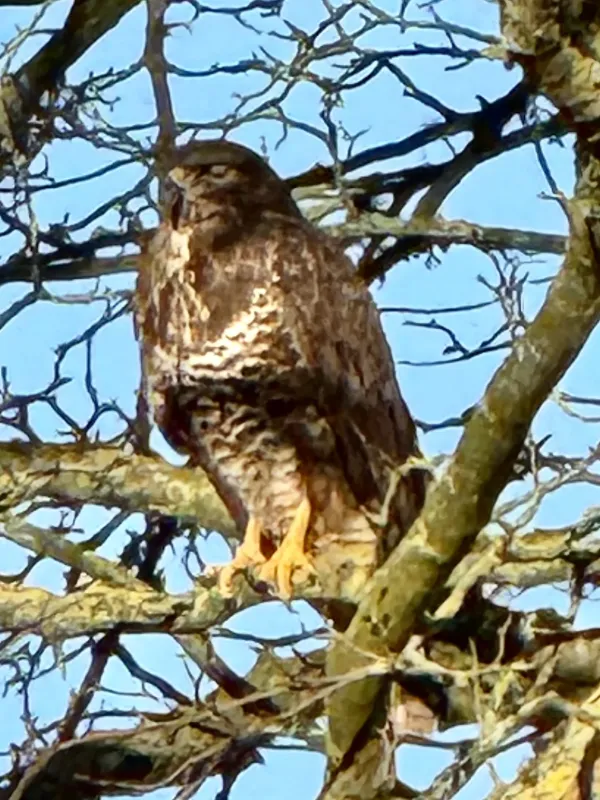
The common buzzard is a medium-sized bird of prey belonging to the Accipitridae family, widely distributed throughout various habitats.
These birds are characterized by a stout body, broad wings, and a relatively short, rounded tail, which is often fanned during soaring.
Plumage is highly variable in color, ranging from nearly white to dark chocolate brown, with many individuals showing distinct mottling.
A key identification feature is their habit of soaring in wide circles or sitting on fence posts and trees while scanning for prey.
The beak is sharp and hooked, designed for hunting, and their talons are powerful enough to capture small mammals and birds.
What it damages
Buzzards can pose a significant threat to free-range poultry farming, as they are capable of snatching chicks and ducklings from open spaces.
Large populations of these raptors near fish farms can lead to the loss of fingerlings, impacting production numbers and economic efficiency.
Their nesting habits sometimes involve using structures such as poles or buildings, which may lead to operational hazards and facility maintenance issues.
While their primary diet consists of rodents, their presence can still disrupt normal farming activities and stress domestic animals.
Damage to agricultural property can also occur when birds perch on irrigation or communication equipment, potentially causing mechanical failures.
When it appears
Buzzards are active throughout the year in many regions, although they are most aggressive during the nesting season from spring to early summer.
During autumn migration, bird concentrations may increase in certain areas, leading to heightened pressure on local farmsteads.
Winter months may see birds moving closer to residential and farm areas in search of food when natural prey becomes scarce.
Spring is the critical period for vigilance, as the birds actively patrol their territories to secure enough food for their growing brood.
The peak hunting season aligns with harvesting periods, when the movement of machinery disturbs rodents, making them easier targets for the raptors.
Control measures
Physical barriers such as mesh netting or protective roof coverings are the most effective way to secure young poultry from aerial predators.
Visual deterrents, including reflective tape and predator decoys, can discourage buzzards from establishing hunting perches near farm buildings.
Bioacoustic devices that broadcast distress calls or natural predator sounds serve as a high-tech solution to keep birds away from sensitive zones.
Effective pasture management and vegetation control reduce rodent habitats, which in turn discourages buzzards from patrolling the area.
Always verify local environmental regulations, as common buzzards are often protected species, requiring non-lethal and humane control methods.
Taxonomy
- Latin name
- Buteo buteo
- Family
- Accipitridae
- EPPO code
- BUTEBU
Discussion
No discussions yet — be the first.