

Pest · Coleoptera (beetles) · affects Fodder beet, Strawberry, Eggplant
Especially harmful
Pea leaf weevil
Sitona sp.
Description
How to identify
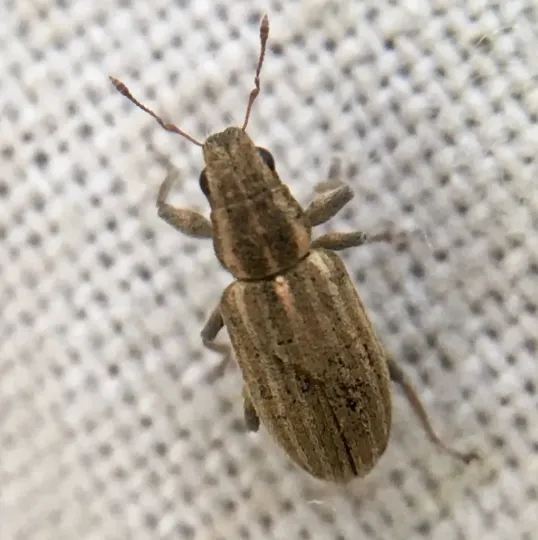
The pea leaf weevil (genus Sitona) is a small beetle, typically 3 to 5 mm long, characterized by a short, broad snout. Its body is covered with metallic or greyish scales, providing camouflage against the soil surface.
The larvae are legless, cream-white grubs with a distinct brown head. They are primarily found in the soil, living in close proximity to the roots of host plants where they complete their development.
Eggs are minute, initially white, and turn black as they mature. They are laid by females on the surface of the soil or on the stems and leaves of host plants during the spring growth season.
Adult beetles possess wings and are capable of migrating between fields, especially during warm, dry weather. They overwinter in the upper soil layers or under crop residue, emerging as soon as spring temperatures rise above 5°C.
The life cycle consists of one generation per year. Following emergence, they feed on leaves for a short period before mating and laying eggs, starting the cycle anew for the next agricultural season.
What it damages
Pea leaf weevils are significant pests of leguminous crops, including peas, beans, alfalfa, clover, soybeans, and lentils. Adults feed on the leaf margins, creating characteristic semicircular notches.
While their primary targets are legumes, they can also cause damage to fodder beet seedlings when other food sources are scarce. This secondary feeding can result in stunted growth and thinner stands of beet crops.
The larval stage is considered the most destructive. Larvae feed on the nitrogen-fixing root nodules of legume plants, which significantly disrupts the plant's ability to assimilate atmospheric nitrogen.
Root damage causes the plants to become stressed and less resilient to environmental pressures like drought. This root degradation often leads to substantial yield losses, even if the foliage damage appears minor.
In cases of heavy infestation, seedling mortality can be high. When adults feed heavily on the growing points of young sprouts, the plants fail to recover, often necessitating a complete reseeding of the field.
When it appears
Adults emerge from hibernation in early spring, typically during the first warm days. This coincides with the emergence of young seedlings, making the crop highly susceptible to early damage.
The peak feeding and egg-laying period for adults occurs in late spring and early summer. As the soil warms, larval development accelerates, intensifying the pressure on the root systems.
Pupation occurs within the soil, usually beginning in mid-summer. The new generation of beetles emerges in late summer, continuing to feed on vegetation before transitioning into their winter state.
Autumn triggers a shift in behavior, as beetles seek protective cover in soil or debris to survive the winter. Their activity level drops as temperatures decrease, marking the end of the annual infestation cycle.
Effective scouting during the early growth stages is essential. By tracking seasonal patterns, agronomists can apply protective measures exactly when the pest population is most vulnerable to intervention.
Signs of infestation
The most visible symptom of adult infestation is the presence of U-shaped or semicircular notches on the leaf edges. These patterns are distinct and leave the leaf veins largely intact.
Plants affected by larval feeding often exhibit yellowing or chlorosis, as the nitrogen supply is depleted. These plants appear stunted and lag behind the healthy sections of the field in terms of height and biomass.
During the early morning hours, adult weevils can be seen on the plants, though they drop to the soil and play dead when disturbed, making them difficult to spot without careful inspection.
For fodder beet, signs are less specific but include leaf margin damage similar to other defoliating insects. In severe cases, the seedlings may show signs of wilting due to the loss of root capacity.
- Semicircular notches on leaf margins.
- Yellowing and chlorosis of legume plants.
- Reduced biomass and stunted growth.
- Evidence of damaged root nodules upon excavation.
Control measures
Strategic crop rotation is the primary defense. Moving legumes away from previously infested fields disrupts the weevil’s life cycle and reduces the starting population of overwintering adults.
Deep autumn tillage is highly effective in burying and destroying overwintering adults. Maintaining weed-free field margins also removes alternative hosts and shelter for the beetles.
Chemical control is required when the pest population exceeds the economic threshold (typically 10-15 beetles per square meter). Pyrethroid-based insecticides are commonly applied to target adult populations.
Seed treatment using systemic insecticidal dressings is the most efficient preventative measure. This provides the seedlings with built-in protection against weevil feeding during the critical germination phase.
Regular field monitoring and adherence to integrated pest management (IPM) practices ensure that chemical use is minimized while maintaining high crop yields and soil fertility.
In brief
1
Damages crops
Content graph
Damages crops · 1
Content graph
Connections · Pea leaf weevil
Most often together:
Marketplace
Products · 2

Biology
Taxonomy
- Latin name
- Sitona sp.
- Order
- Coleoptera (beetles)
- Family
- Curculionidae
- EPPO code
- SITNSP
Community
Discussion
No discussions yet — be the first.