
Brochymena parva
Brochymena parva
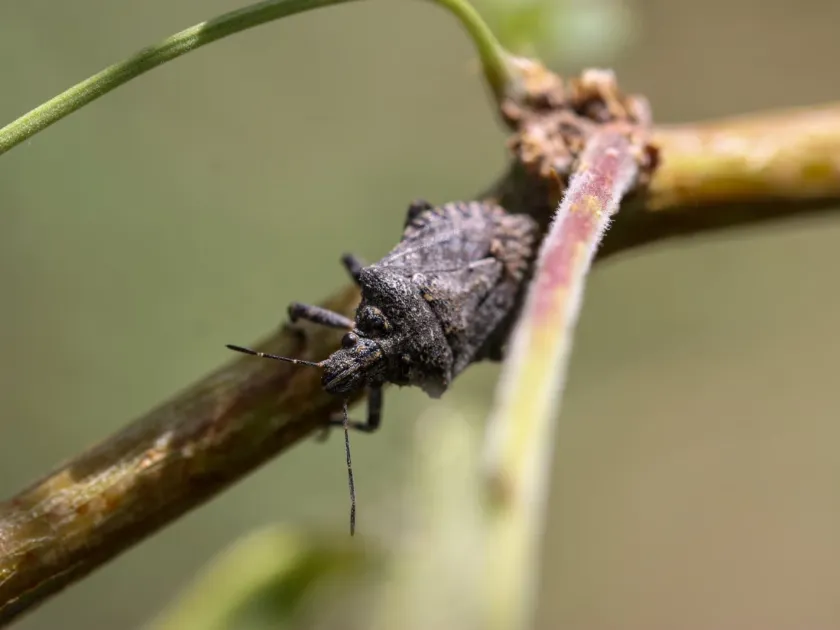
Description
How to identify
Brochymena parva is a species of stink bug within the family Pentatomidae, order Hemiptera. It is famously known as a bark-mimicking insect, possessing a rough, textured cuticle that renders it nearly invisible when resting on tree trunks.
The insect has a typical pentatomid body shape, characterized by an oval or shield-like profile. Its coloration is mottled with shades of gray, brown, and tan, perfectly replicating the appearance of lichen and bark on woody plants.
Adults possess specialized mouthparts called a rostrum, designed to pierce plant tissues and suck out fluids. The pronotum, the segment behind the head, usually features distinct lateral spines or teeth that aid in taxonomic classification.
The life cycle encompasses eggs, five nymphal instars, and the adult stage. Nymphs resemble miniature, wingless versions of adults and undergo several molts before reaching maturity, often congregating in groups during early development.
Eggs are typically deposited in clusters on the underside of leaves or within crevices of bark. They are uniform in size and shape, often serving as a key indicator for early-season scouting and population monitoring.
What it damages
Brochymena parva is a polyphagous insect that primarily targets woody perennials, including various fruit trees and ornamental shrubs. It can cause economic damage in both commercial orchards and residential landscapes.
By feeding on the sap, these bugs disrupt the plant's vascular system. They inject salivary enzymes into the plant tissue, which can cause localized necrosis, leading to tissue death around the feeding sites.
Young, succulent shoots and developing terminal buds are the most vulnerable parts of the plant. Damage to these areas frequently leads to stunted growth, curling, or the complete cessation of development for the affected shoot.
Fruit damage manifests as pitted, discolored, and necrotic spots on the skin. These injuries not only lower the fruit's aesthetic value but also create entry points for opportunistic fungi and bacterial pathogens, leading to premature rot.
Large populations feeding on a single tree can contribute to significant plant stress, potentially causing premature leaf drop and a general decline in the tree's health during periods of environmental pressure.
When it appears
The active season begins in early spring as temperatures rise, signaling the overwintering adults to emerge from their dormancy in search of host plants to feed and mate.
Peak activity levels typically occur during the mid-summer months when the plant hosts are in their most vigorous stage of growth and fruit development, providing an abundant food source for nymphs and adults.
Depending on regional climatic conditions, the species may undergo one or two generations per year. Warmer climates generally support a more extended reproductive period and higher pest pressure.
As daylight shortens and temperatures decline in autumn, the insects transition toward their hibernation sites. They seek out sheltered micro-habitats, such as deep bark furrows, leaf litter, or debris, to survive the winter.
Effective scouting protocols are essential during the late spring and summer months to monitor for the presence of nymphs, as they are often more sedentary and numerous than the elusive, well-camouflaged adults.
Signs of infestation
The initial signs of an infestation include the appearance of tiny, pale, or necrotic spots on leaves, which are the direct result of the bug's piercing-sucking mouthparts removing cellular contents.
Terminal shoot deformation is a hallmark sign. The injection of toxic saliva into growing tips causes them to twist or wither, often leading to a loss of apical dominance in small saplings.
On fruits, deep pitting or "cat-facing" damage is a common diagnostic indicator. This damage occurs when the bug feeds on the developing fruit, causing the tissue to stop growing in the area of the puncture.
The presence of small, dark fecal spots on the underside of leaves is a reliable sign of a settled population, even if the adult bugs remain hidden from casual observation.
- Pale, necrotic spots on foliage.
- Twisted or stunted shoot tips.
- Pitting and rot on developing fruits.
- Visible presence of shield-shaped bugs on tree bark.
Control measures
Cultural control is a foundational strategy. Removing leaf litter, pruning dead wood, and maintaining clean orchard floors reduce the availability of overwintering sites for the population.
Biological control agents, such as egg parasitoids and generalist predators, play a crucial role in suppressing populations. Encouraging these beneficial insects can provide long-term stability.
Chemical intervention with insecticides may be necessary during periods of high infestation. It is critical to select products that are effective against Hemiptera while minimizing impact on local pollinator populations.
Implementing a regular monitoring schedule using visual inspections or pheromone traps allows growers to identify the onset of an outbreak early, enabling the use of localized treatments.
Maintaining tree vigor through proper irrigation and fertilization ensures that plants can better withstand minor pest pressure without suffering from reduced yield or long-term structural decline.
Taxonomy
- Latin name
- Brochymena parva
- Order
- Hemiptera (bugs, aphids, leafhoppers)
- Family
- Pentatomidae
- EPPO code
- BROCPA
Discussion
No discussions yet — be the first.