
Brochymena obscura
Brochymena obscura
Description
How to identify
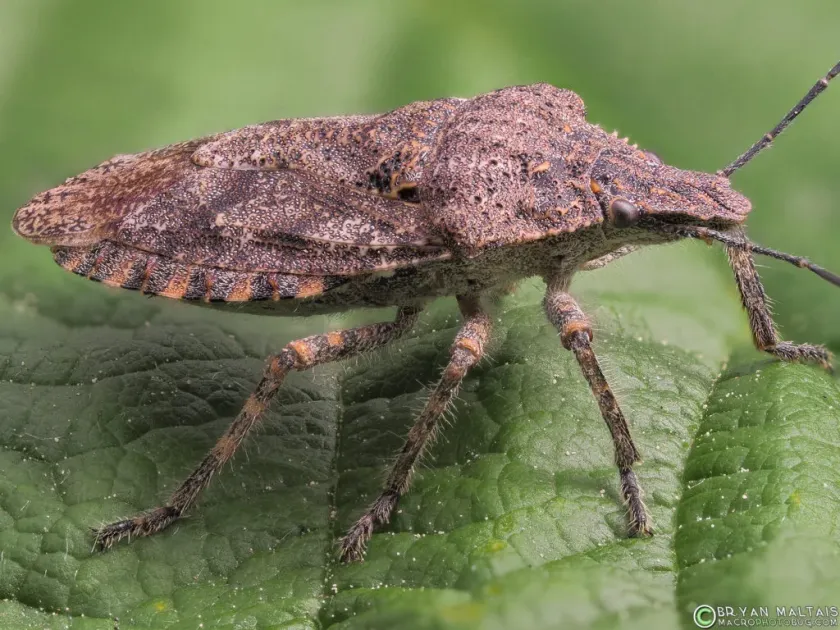
Brochymena obscura, commonly known as a type of rough stink bug, belongs to the family Pentatomidae. These insects are masters of camouflage, possessing a grayish-brown, textured exoskeleton that perfectly mimics the bark of trees.
Adults typically measure between 12 and 15 mm in length. Their bodies are flattened and oval, with prominent lateral projections on the pronotum. The surface of the cuticle is covered in tubercles, which further enhances their cryptic appearance against woody substrates.
They are members of the order Hemiptera. Unlike many other stink bugs that prefer herbaceous crops, this species is highly specialized for life on trees, making it a persistent resident in woody ecosystems.
Nymphs undergo several instars, gradually developing their wings and coloration. During the early stages, they are often found in clusters, moving slowly along twigs and branches to feed on plant sap.
These insects are primarily nocturnal or crepuscular, spending most daylight hours motionless. Their behavior makes them difficult to spot without close inspection of trunks and major limb crotches.
What it damages
This pest is known to feed on a wide range of fruit and ornamental trees, including apple, pear, peach, and various conifer species. They use their piercing-sucking mouthparts to penetrate the bark and soft tissues.
The primary damage occurs when the bug injects salivary enzymes into the plant tissue. These enzymes break down the plant cells, allowing the bug to extract sap, which causes localized necrotic spots and tissue collapse.
Fruit damaged by feeding often exhibits surface pitting, scarring, and deformities. These lesions not only ruin the appearance of the fruit but also serve as entry points for secondary pathogens and fungal decay.
Severe infestations can lead to the wilting of young shoots and stunted growth of saplings. Repeated feeding sessions weaken the tree's overall vigor, making it more susceptible to environmental stress.
In nursery settings, damage to the cambium layer or young green stems can have significant economic consequences, leading to reduced survival rates and poor structural development of the trees.
When it appears
The adults overwinter in diapause, typically sheltering in deep bark crevices, under leaf litter, or in protected cavities near host trees. They emerge in the spring as temperatures begin to rise consistently.
Feeding activity initiates during the bud-break phase, providing the insects with the necessary energy for reproduction. This early-season feeding can be particularly damaging to developing blossoms and small fruitlets.
The peak activity period usually occurs during the summer months, correlating with the rapid development of fruit. Depending on local climates, there may be one or more generations per season.
As autumn approaches, the bugs begin searching for suitable hibernation sites. This is a crucial time for pest management, as reducing the overwintering population can lower the risk for the following year.
Environmental factors, especially warm spring weather, can accelerate the emergence and colonization of trees. Monitoring for these pests should begin early in the season to prevent population build-up.
Signs of infestation
The most visible sign of infestation is the presence of small, sunken spots on the surface of developing fruit. These spots often harden or become discolored, marking the sites of previous feeding.
A distinctive, pungent odor, characteristic of the Pentatomidae family, is often detectable in the air around infested trees. This scent is released by the bugs when they are disturbed or threatened.
Egg clusters deposited on the underside of leaves or on twigs are a definitive sign that a reproductive population is present. Observing these clusters allows for early intervention before widespread damage occurs.
Gummosis, or the oozing of sap from the bark of fruit trees, can be a symptom of intensive feeding at the base of branches. The tree reacts to the bug's saliva by attempting to wall off the injury.
Distorted growth or sudden wilting of branch tips without signs of typical fungal pathogens should trigger an inspection for the presence of nymphs or adults hiding in the foliage.
Control measures
Cultural control measures include removing loose, dead bark from trunks and clearing out debris from the orchard floor. These actions minimize the availability of overwintering sites for the bugs.
Biological control relies on maintaining a healthy orchard ecosystem. Parasitoid wasps are among the most effective natural enemies, as they target the egg masses of these stink bugs, significantly reducing population growth.
Chemical control is generally reserved for situations where population density exceeds economic thresholds. Contact-residual insecticides applied after the flowering stage can be effective in reducing adult numbers.
When selecting pesticides, it is essential to consider the timing of application to minimize harm to non-target pollinators. Rotating active ingredients helps prevent the development of insecticide resistance.
Integrated Pest Management (IPM) programs should incorporate pheromone traps if available to monitor population spikes. This approach allows for timely, site-specific treatment rather than blanket spraying.
Taxonomy
- Latin name
- Brochymena obscura
- Order
- Hemiptera (bugs, aphids, leafhoppers)
- Family
- Pentatomidae
- EPPO code
- BROCOB
Discussion
No discussions yet — be the first.