
Brochymena annulata
Brochymena annulata
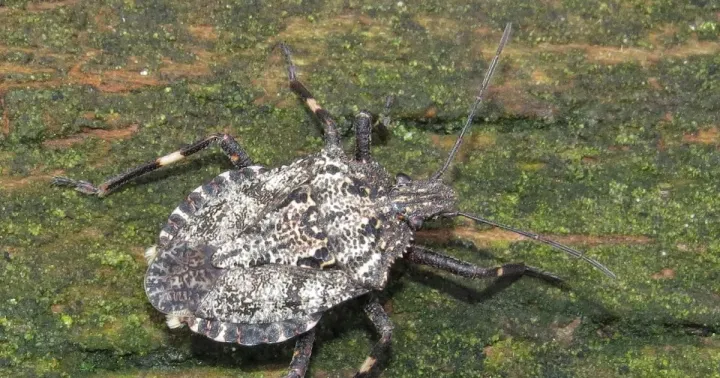
Description
How to identify
Brochymena annulata is a member of the Pentatomidae family, commonly referred to as rough stink bugs due to the coarse, tooth-like projections along the edges of the pronotum.
These insects are well-known for their excellent camouflage; their grayish-brown, mottled coloration perfectly mimics the texture and color of tree bark and lichen.
Adults typically grow to a length of 12–15 mm. They possess a characteristic shield-shaped body and a piercing-sucking mouthpart used to extract nutrients from plants.
Nymphs undergo several instars, gradually developing wing pads and becoming more similar to the adults as they mature, while retaining their habit of feeding on plant sap.
Unlike some other stink bugs, this species is highly arboreal, meaning they spend the majority of their life cycle on trees and woody shrubs, rarely descending to the ground.
What it damages
As polyphagous insects, Brochymena annulata species can feed on a wide range of host plants, preferring fruit trees such as apples, pears, and various stone fruits.
The primary damage occurs when adults and nymphs pierce the plant tissue to suck sap, which can lead to the wilting of young shoots and stunted growth of the plant.
Fruit damage is significant; when the insects feed on developing fruits, they inject salivary enzymes that cause necrosis and localized tissue death, leading to deformities.
The affected fruit often develops a bumpy or corky texture at the feeding site, making it visually unappealing and reducing its market quality significantly.
Furthermore, these feeding wounds create entry points for secondary pathogens like fungi and bacteria, which can cause fruit rot and reduce the overall shelf life of the harvest.
When it appears
Brochymena annulata typically overwinters as adults in protected locations, such as under leaf litter, in deep bark crevices, or in hollows within trees.
As spring temperatures rise, the overwintered adults emerge to feed on developing buds and foliage, beginning the cycle for the new growing season.
Peak activity is usually observed during mid-to-late summer, coinciding with the development of fruits, which provide the high-energy sap necessary for the final nymphal stages.
Depending on the latitude and climate, the species may complete one or two generations per year, with the final generation maturing by early autumn.
Once temperatures begin to drop in late autumn, the insects cease feeding and seek out their hibernation sites to survive the cold winter months.
Signs of infestation
The most common sign of a Brochymena annulata infestation is the presence of the insects themselves, though they are easily overlooked due to their bark-like appearance.
Observers may notice small, yellowish or brown necrotic spots on leaves and stems, resulting from the bugs' piercing-sucking feeding activity on plant tissues.
Deformed, pitted, or corky fruits are a clear indication of stink bug feeding, as the surface tissue around the bite mark hardens and stops growing normally.
Presence of molted nymphal skins on tree trunks or branches can also suggest that a colony of these insects has been active in the immediate vicinity.
- Corky spots on ripening fruit.
- Wilting of young terminal shoots.
- Presence of adults on bark.
- Small necrotic lesions on leaves.
Control measures
Cultural management is the first line of defense; removing debris and leaf litter near fruit trees reduces the number of suitable overwintering sites for the bugs.
For smaller infestations, manual collection in the early morning is effective, as the insects are less active and more sluggish at lower temperatures.
In commercial orchards, integrated pest management (IPM) practices focus on monitoring population levels before deciding on the use of selective insecticides.
Promoting a healthy environment for natural enemies, including parasitoid wasps that target stink bug eggs, can help keep populations below the economic injury level.
When chemical intervention is necessary, it is crucial to select products that are least harmful to pollinators and beneficial insects, applying them according to local guidelines.
Taxonomy
- Latin name
- Brochymena annulata
- Order
- Hemiptera (bugs, aphids, leafhoppers)
- Family
- Pentatomidae
- EPPO code
- BROCAN
Discussion
No discussions yet — be the first.