
Rough stink bug
Brochymena
Description
How to identify
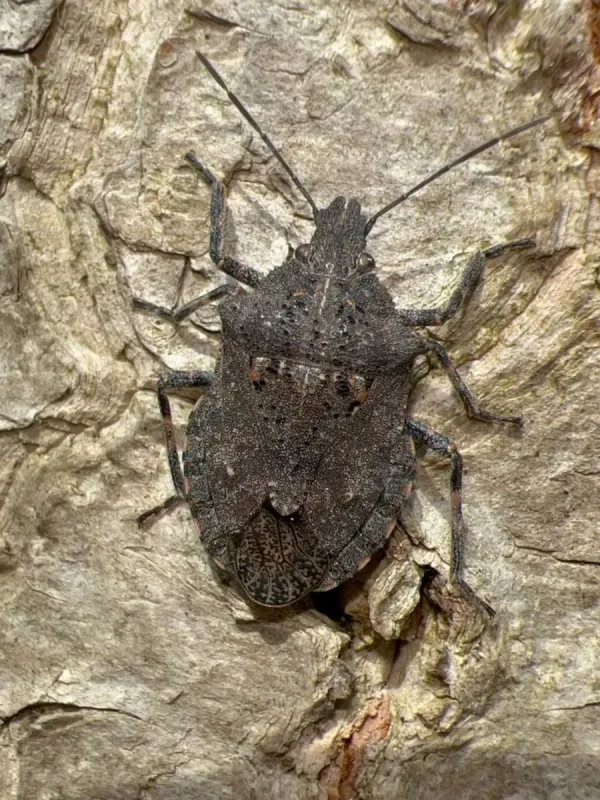
The rough stink bug (Brochymena), often called the tree stink bug, belongs to the Pentatomidae family. It earned its common name from its exceptional ability to mimic tree bark.
Adult insects feature a mottled grey to brownish color and a rough, textured cuticle that makes them perfectly camouflaged when resting on tree branches or trunks.
Adults typically measure between 12 and 18 mm in length. Their bodies have the characteristic shield-like shape common to all stink bugs, with flattened edges on the head.
Nymphs go through five distinct developmental instars, gradually changing their color and form until they resemble the adults, while maintaining excellent camouflage capabilities.
These bugs overwinter as adults, seeking shelter in protected areas such as bark crevices, leaf litter, or other sheltered spots in the orchard environment.
What it damages
The rough stink bug is a generalist feeder that causes significant damage to various woody plants, with a strong preference for fruit and nut-bearing species.
Primary hosts include apple, pear, peach, and plum trees, as well as nut trees like pecans, where they can cause economic losses in commercial orchards.
They feed by inserting their piercing-sucking mouthparts into tender shoots, leaves, and developing fruit, extracting plant sap and weakening the tree's health.
The injection of digestive enzymes during feeding causes localized necrosis, leading to fruit deformation, pitting, and premature drop, which renders the produce unmarketable.
Feeding on young nursery stock can stunt tree growth, cause bud damage, and increase susceptibility to secondary infections through the puncture wounds.
Signs of infestation
The first signs of infestation are often small, chlorotic spots on the leaves, which eventually lead to yellowing and premature leaf senescence if the population is high.
Fruit shows characteristic pockmarks or depressions, as the tissue around the feeding site softens and becomes discolored, often leading to secondary rot.
Upon inspection, you may find the insects sitting motionless on the bark; their camouflage is so effective that they are often overlooked during routine tree checks.
Excrement in the form of small, dark, watery spots on leaves or twigs is another visual indicator of the presence of these bugs in the canopy.
When branches are shaken, the bugs often fall to the ground and remain still, playing dead to evade detection, which is their typical defense mechanism.
Control measures
Effective management requires consistent monitoring of the orchard, particularly during the early stages of bud break and the initial development of fruit sets.
Manual collection and removal are effective for small-scale gardens; it is best to perform these inspections early in the morning when the insects are less mobile.
Chemical control with registered insecticides may be necessary in commercial settings when populations reach economic injury thresholds, always following label instructions.
Good orchard sanitation practices, such as removing debris and thinning out old, loose bark where possible, can reduce the number of suitable overwintering sites.
- Installation of sticky or corrugated cardboard trap bands on tree trunks.
- Maintaining healthy trees through proper irrigation and balanced fertilization.
- Conserving natural predators, including tachinid flies and predatory wasps.
- Pruning out heavily infested shoots to minimize the localized bug population.
Taxonomy
- Latin name
- Brochymena
- Order
- Hemiptera (bugs, aphids, leafhoppers)
- Family
- Pentatomidae
- EPPO code
- BROCSP
Discussion
No discussions yet — be the first.