
Brachystola
Brachystola
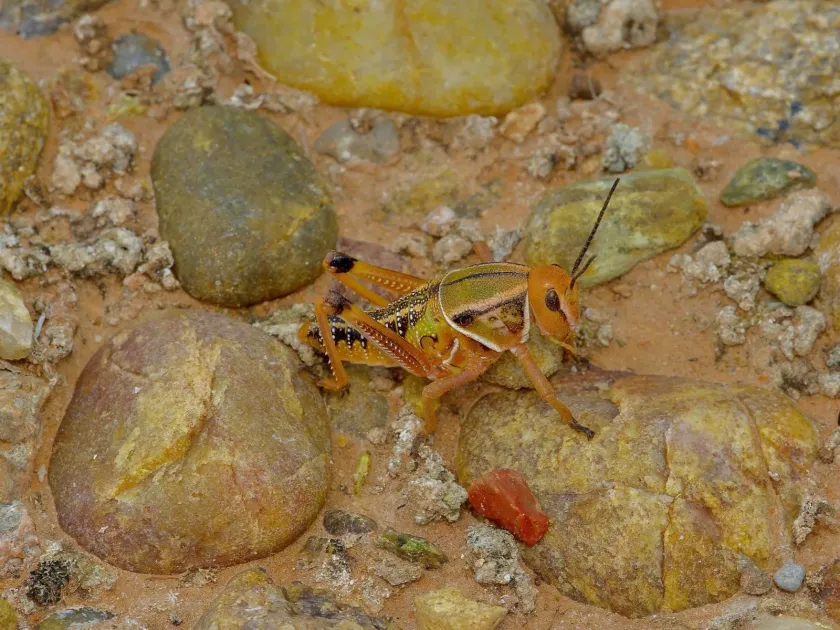
Description
How to identify
The Brachystola magna, commonly known as the eastern lubber grasshopper, belongs to the Romaleidae family within the order Orthoptera.
This insect is recognized by its robust, flightless body, which can grow up to 7 centimeters in length, making it a prominent field pest.
They feature a distinct crest on the pronotum and come in color variations ranging from olive green to mottled brown for camouflage.
Unlike many other grasshopper species, they lack functional wings and rely solely on jumping for locomotion within their habitat.
They prefer arid and semi-arid environments where they can easily find both open ground for nesting and abundant vegetation for feeding.
What it damages
Brachystola acts as a generalist herbivore, consuming a vast array of plant species, which creates significant pressure on local agriculture.
Agricultural crops such as wheat, corn, and sunflowers are particularly vulnerable to their feeding habits during high-density seasons.
They damage crops by skeletonizing leaves and consuming young sprouts, leading to stunted growth and loss of photosynthetic capacity in plants.
Pasturelands are also affected, as high populations can strip native grasses and legumes, reducing the overall biomass available for grazing.
Vegetable gardens located near infested prairie or fallow lands are often targeted, resulting in substantial losses if left unmanaged.
When it appears
The life cycle begins with overwintered eggs in the soil, which hatch in late spring as the ambient temperature rises consistently.
Nymphs undergo several growth stages throughout the early summer, slowly increasing their appetite and size until they reach adulthood.
Adults are most commonly observed during the peak of summer, from July through August, when they are sexually mature and highly mobile.
As autumn approaches, reproduction occurs, followed by egg-laying in the soil; then, the adult population dies off with the first hard frost.
Therefore, agricultural monitoring programs should be intensified during the mid-summer months to detect early signs of a population outbreak.
Signs of infestation
The most visible sign of infestation is ragged, uneven edges on leaves and stems where large chunks have been consumed by the grasshoppers.
Farmers can identify the pest by the presence of large, bulky insects that jump abruptly when disturbed while walking through the field.
Small, cylindrical fecal pellets found at the base of plants are a reliable indicator of high-density feeding activity in that specific area.
Severely damaged crops exhibit thinning foliage and visible wounds on the plant stems, which can make the crops susceptible to secondary infections.
In cases of extreme outbreaks, the overall plant cover in the affected area noticeably diminishes, leaving behind bare ground and skeletonized stems.
Control measures
Tilling the soil in the autumn is the primary cultural practice to disrupt the egg-laying sites and reduce the next generation's population.
Maintaining clean field borders by eliminating weeds and tall grasses limits the preferred breeding grounds for these flightless insects.
When populations exceed economic threshold levels, applying contact or systemic insecticides is the standard chemical intervention method.
Biological controls, including the use of entomopathogenic fungi or encouraging natural bird predators, are emerging sustainable options.
- Regular field scouting during early summer.
- Rotation of crops to disrupt food availability.
- Installation of perimeter barriers to prevent mass migration into fields.
Taxonomy
- Latin name
- Brachystola
- Order
- Orthoptera (locusts)
- Family
- Acrididae
- EPPO code
- BRASSP
Discussion
No discussions yet — be the first.