
Brachynema
Brachynema
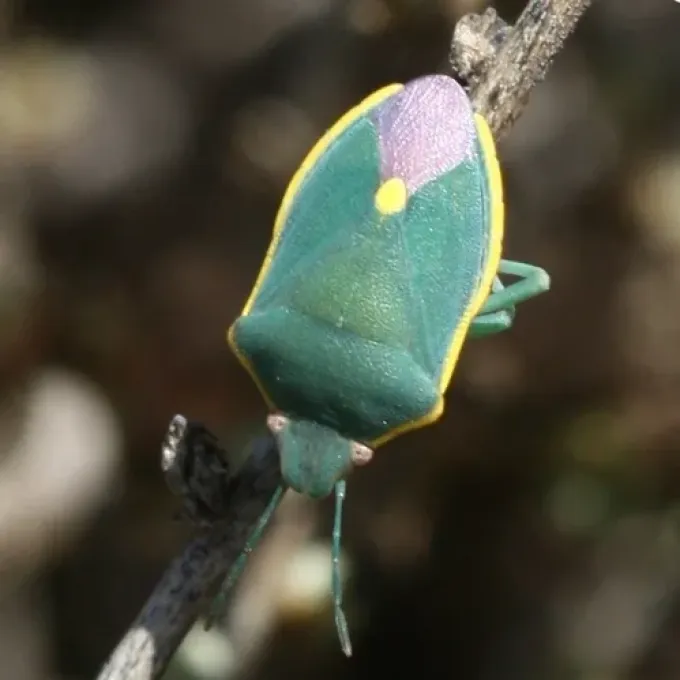
Description
How to identify
Brachynema belongs to the Pentatomidae family, commonly known as shield bugs. These insects are characterized by their shield-shaped bodies, which provide effective camouflage in their natural habitats.
Adult insects have a piercing-sucking mouthpart designed to penetrate plant tissues and extract nutrients. Their morphology is highly adapted to life on woody and herbaceous stems.
The life cycle follows a standard hemimetabolous pattern: egg, nymph, and adult. Development speed is largely dictated by ambient temperatures, with warmer weather accelerating the cycle.
They overwinter in the adult stage, hiding in plant debris, under bark, or within soil crevices, emerging when temperatures rise in the spring to begin their active feeding phase.
Female bugs deposit egg masses on the undersides of leaves, a strategic choice that protects their offspring from environmental stressors and potential predators.
What it damages
Brachynema is primarily known as a specialist pest that feeds on species within the Amaranthaceae family, most notably saxaul (Haloxylon) and various saltwort species.
In regions where these plants are vital for desert forestation, the pest acts as a significant threat to tree health, causing degradation of the vegetation cover.
While typically associated with wild desert vegetation, the bug may migrate to agricultural areas if suitable host plants are available, potentially impacting crop yields.
Damage occurs when the insect injects salivary enzymes while feeding, which disrupts the vascular transport of the plant and causes localized tissue death.
Continuous feeding causes the stunting of young shoots, yellowing of leaves, and a general decline in the plant's overall vigor and stress resistance.
Signs of infestation
The earliest signs of infestation are small, pale chlorotic spots on the leaves and stems, resulting from the bug's feeding punctures.
As the infestation progresses, growers may notice the twisting and deformation of terminal shoots, which struggle to grow normally due to nutrient blockage.
Closer inspection of the plant surfaces usually reveals the presence of frass (excrement) and the clusters of eggs laid by the females on the undersides of leaves.
Affected plants often display signs of wilting and premature dropping of leaves or needles, particularly during the hottest periods of the day.
In cases of severe infestation, the cumulative effect of feeding leads to a visible thinning of the plant canopy and a noticeable lack of new, healthy growth.
Control measures
Effective management begins with robust cultural practices, including the removal of weeds and plant debris that provide overwintering sites for adult bugs.
Chemical control involving systemic or contact insecticides can be effective if applied during the early nymph stages before the population reaches critical levels.
Regular field scouting is essential to identify egg clusters early, allowing for targeted interventions rather than broad-spectrum applications.
- Implementing sanitation measures by removing infested plant parts to reduce the localized population.
- Utilizing biological control agents that target specific stages of the shield bug life cycle.
- Maintaining plant health through proper irrigation and nutrition to help the plants recover from localized feeding damage.
Proper timing of applications is critical, as control efforts are most effective when the nymphs are young and more susceptible to environmental factors or treatments.
Taxonomy
- Latin name
- Brachynema
- Order
- Hemiptera (bugs, aphids, leafhoppers)
- Family
- Pentatomidae
- EPPO code
- BRNMSP
Discussion
No discussions yet — be the first.