
Brachycrotaphus tryxalicerus
Brachycrotaphus tryxalicerus
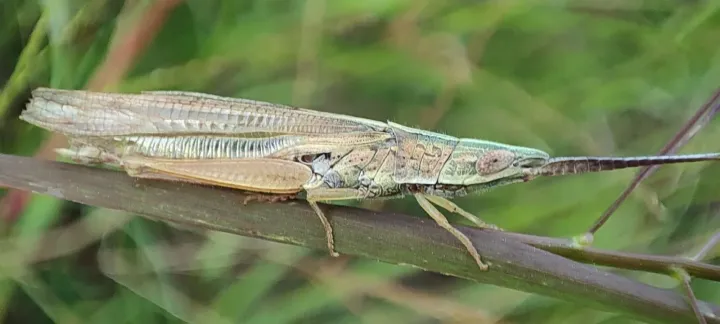
Description
How to identify
Brachycrotaphus tryxalicerus is a species of grasshopper belonging to the family Acrididae within the order Orthoptera.
The insect possesses an elongated body morphology typical of the Truxalinae subfamily, with hind legs adapted for efficient jumping.
A key identification feature is the conical, protruding head shape, which distinguishes it from many other acridid species commonly found in agricultural landscapes.
The coloration generally ranges from straw-yellow to light brown, providing effective camouflage against dry grasses and cereal stubble.
Adults are fully winged and capable of significant dispersal, allowing them to rapidly colonize neighboring fields in search of suitable food sources.
What it damages
This pest is primarily associated with feeding on monocotyledonous plants, showing a strong preference for various cereal crops.
Targeted hosts include wheat, barley, maize, millet, and sorghum, which are particularly susceptible during their early vegetative growth stages.
The grasshopper employs its chewing mouthparts to consume leaf tissue, significantly reducing the plant's total photosynthetic area.
Severe infestations can lead to extensive defoliation, negatively impacting the plant's ability to develop grain and ultimately reducing crop yield.
Beyond physical consumption, the wounding of plant tissues facilitates the entry of secondary pathogens, potentially leading to bacterial or fungal infections.
When it appears
The biological cycle of Brachycrotaphus tryxalicerus is strictly regulated by environmental factors, particularly soil temperature and moisture levels.
Nymphs typically emerge from overwintered egg pods in the soil once spring temperatures reach the threshold required for successful development.
The period of most intensive feeding coincides with the tillering and stem elongation phases of cereal crops, making these stages critical for monitoring.
Depending on regional climatic conditions, the species may complete one or multiple generations throughout the growing season.
As autumn approaches, females oviposit into the soil, where the eggs remain in diapause, ensuring survival through harsh winter months.
Signs of infestation
Early symptoms of an infestation manifest as ragged leaf margins where the insects have been feeding on the green tissue.
During field inspections, the presence of these grasshoppers is often signaled by sudden, erratic jumping of individuals upon disturbance.
Accumulation of frass (excrement) on the leaves and stems serves as a definitive indicator of feeding activity within the crop stand.
In high-density scenarios, patches of damaged or thinned vegetation become visible, indicating areas where local populations have concentrated.
Monitoring is most effective during early morning hours, as individuals are less active and easier to identify while resting on the lower foliage.
Control measures
Effective management begins with robust agrotechnical practices, such as deep plowing in late autumn to expose and destroy overwintering eggs.
Maintaining clean fallows and removing weeds from field margins reduces local nesting sites and alternative food sources for the grasshoppers.
Chemical control involving approved insecticides should be initiated if population levels exceed the established economic injury threshold.
Timely treatment of field borders is essential to prevent the migration of nymphs from non-arable lands or surrounding pastures into the main crop.
- Regular field scouting to detect early instar nymphs.
- Biological control options using fungal pathogens (entomopathogens).
- Optimizing sowing dates to ensure plants outgrow the most vulnerable phases before peak emergence.
Taxonomy
- Latin name
- Brachycrotaphus tryxalicerus
- Order
- Orthoptera (locusts)
- Family
- Acrididae
- EPPO code
- BRCYTY
Discussion
No discussions yet — be the first.