
Boreoiulus
Boreoiulus
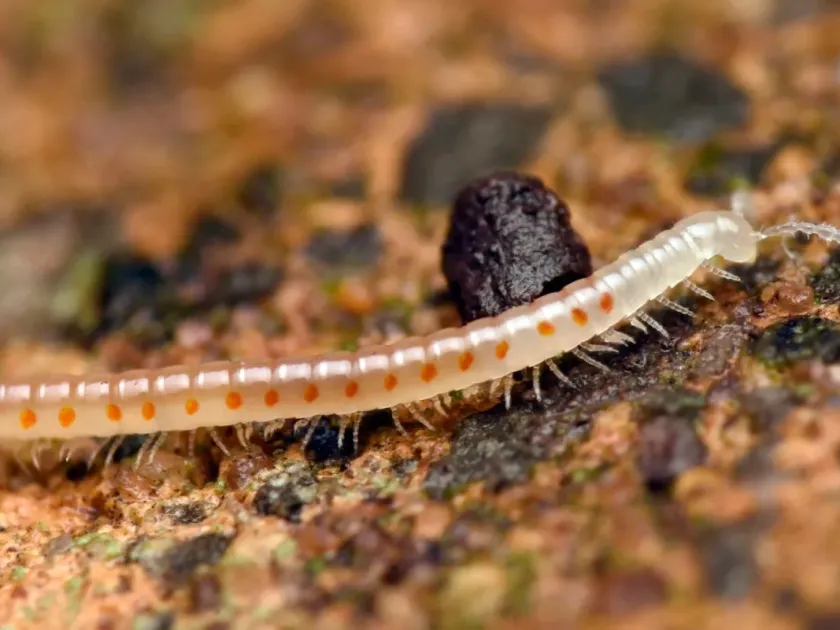
Description
How to identify
Boreoiulus is a genus of millipedes belonging to the class Diplopoda and the family Blaniulidae. These organisms are small, slender, and worm-like in appearance, characterized by segmented bodies covered with a tough, often pale or pinkish chitinous cuticle.
Adult specimens typically reach a length between 5 and 15 millimeters. They possess a high number of legs arranged in pairs on each body segment, which enables rapid movement through soil pores, fissures, and plant tissues.
Their life cycle is strictly tied to the soil environment, where they spend the majority of their existence. They are obligate inhabitants of moist substrates, thriving in environments rich in decaying organic matter.
Reproduction occurs underground, where females deposit eggs in small clusters. Larval development involves a series of molts, with each stage resulting in an increased number of body segments and pairs of legs.
Identifying this pest is challenging due to its cryptic and nocturnal lifestyle. They are most commonly discovered during soil inspections or when examining damaged tubers and roots where they aggregate.
What it damages
Boreoiulus acts as a polyphagous pest, causing significant damage to a wide range of agricultural crops. Vegetables, root crops, and tuberous plants are particularly susceptible when grown in open fields or greenhouses.
Economic damage is most notable in sugar beets, carrots, potatoes, and various vegetable seedlings. The pest causes harm by attacking seeds during germination and feeding on the subterranean organs of established plants.
In greenhouse settings, Boreoiulus can severely damage young seedlings by consuming delicate root tissues and basal stems. This feeding activity weakens the plants, often leading to total loss of the crop stand.
Root crops like carrots suffer from mechanical damage manifesting as superficial lesions and deep gouges. These wounds serve as entry points for secondary infections caused by various soil-borne fungal and bacterial pathogens.
The severity of the damage significantly increases in years with high soil moisture, as favorable conditions allow millipede populations to expand and migrate into the upper soil layers where plant roots are concentrated.
When it appears
Pest activity is directly correlated with hydrothermal soil conditions. Spring is considered the most critical period, as moist soil and moderate temperatures following sowing provide optimal conditions for activity.
During the summer months, if drought occurs, Boreoiulus tends to retreat deeper into the soil where moisture is conserved. However, in irrigated vegetable systems, their activity may remain high throughout the season.
In the autumn, as temperatures drop and rainfall increases, the pests become active again, damaging root crops left in the soil until harvest. This renders the produce unsuitable for long-term storage.
Overwintering takes place in the soil at varying depths. In the presence of crop residues left in the field, millipedes tend to congregate around these organic sources, maintaining viability until the following spring.
The development cycle of Boreoiulus is continuous under controlled conditions. In protected environments like greenhouses, they can produce multiple generations per year, complicating efforts to manage their population density.
Signs of infestation
The first indicator of an infestation is the presence of characteristic damage on underground plant parts. This typically appears as small, numerous holes or jagged edges on the roots or tubers.
Field observation often reveals thinning crops, where seedlings suddenly wilt. Examination of the root collar reveals eaten-away areas; such plants can be easily pulled from the soil due to extensive root damage.
Inspecting the soil immediately surrounding a damaged plant often reveals small, pale millipedes that quickly coil into a spiral when disturbed or exposed to direct light.
At harvest, root crops frequently exhibit deep ulcers, with colonies of Boreoiulus often found within or along the edges of the damaged tissue. The affected areas are prone to discoloration and rot.
The presence of the pest is also confirmed by the accumulation of excrement within the damaged tissues and a distinct, unpleasant odor emitted by the millipedes as a defensive mechanism when handled.
Control measures
Effective management of Boreoiulus relies on a system of agricultural practices designed to create unfavorable conditions for pest development within the soil profile.
- Deep autumn plowing to disturb and destroy overwintering sites.
- Crop rotation that excludes highly susceptible vegetable and root crops.
- Thorough removal of crop residues and weeds to reduce organic food sources.
- Management of soil moisture to prevent waterlogging, which attracts millipedes.
- Use of certified, high-quality seeds and implementation of optimal sowing dates.
Chemical control involving soil insecticides is possible, but efficacy is often limited by the difficulty of delivering the active ingredient to the pest within deep soil cracks and pores.
Biological control agents, such as entomopathogenic fungi or specialized nematodes, may suppress population levels, although they require precise temperature and moisture ranges to function effectively.
Phytosanitary monitoring is essential for success, allowing growers to estimate soil infestation density before planting and take timely action to disinfest the field if population thresholds are exceeded.
Taxonomy
- Latin name
- Boreoiulus
- Family
- Blaniulidae
- EPPO code
- BORLSP
Discussion
No discussions yet — be the first.