
Archiboreoiulus
Archiboreoiulus
Description
How to identify
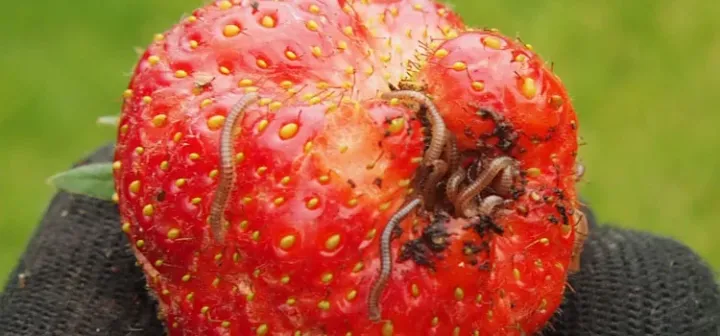
Archiboreoiulus is a genus of millipedes within the Blaniulidae family, characterized by a long, thin, cylindrical body. These millipedes belong to the class Diplopoda, meaning they possess two pairs of legs on most of their body segments, which distinguishes them from insects.
Adult specimens typically reach a length of 10 to 20 millimeters. Their coloration is generally pale, ranging from white to light brown, often featuring a distinct dark stripe running along the side of their body, which acts as a helpful identification marker for agronomists.
They are primarily nocturnal and hygrophilous, meaning they thrive in moist environments. During the day, they remain hidden in the soil profile, often aggregating in deep layers or beneath debris, which makes them difficult to observe during standard daylight inspections.
The life cycle of these pests involves a gradual development process. After hatching, the juvenile millipedes have fewer segments and legs than adults. With each successive molt, they gain additional segments and body length, a process heavily influenced by soil temperature and humidity levels.
Reproduction typically peaks during seasons with high soil moisture, such as spring or early autumn. Females lay eggs in clusters within the soil or near decaying plant matter, providing the offspring with immediate access to food upon emergence from the egg stage.
What it damages
Archiboreoiulus acts as a significant polyphagous pest, causing direct damage to various crops. They are particularly destructive to carrots, potatoes, beets, and the tender root systems of vegetable seedlings. Their feeding habits often cause irreparable damage to the early growth stages of plants.
The most severe damage occurs during the germination phase. By consuming the embryos of newly sown seeds, these millipedes can cause widespread crop failure, necessitating the reseeding of large areas and significantly increasing production costs for farmers.
On maturing root crops, they create deep, ragged pits and galleries. These injuries not only reduce the quality and market value of the produce but also serve as entry points for secondary pathogens, leading to fungal and bacterial rots that can devastate stored harvest.
In greenhouse environments, they pose a constant threat to young transplants. By grazing on roots and stem bases, they weaken the plants, leading to stunted growth, wilting, and in some cases, the total collapse of the plant due to its inability to absorb water and nutrients.
High infestation levels are frequently associated with soil management practices that leave large amounts of partially decomposed plant matter in the root zone. This organic material provides both a food source and a refuge, enabling the pest population to flourish and expand rapidly.
Control measures
Effective control starts with proper field preparation, particularly deep autumn plowing. This practice exposes the millipedes to the soil surface, where they become vulnerable to desiccation and natural predators, thus significantly reducing their numbers before the next growing season.
Soil pH management is another crucial component of integrated pest management. Since these millipedes generally prefer slightly acidic soils, liming the soil to move the pH toward neutrality can create a less hospitable environment, encouraging the population to relocate or decreasing their activity.
Sanitation is vital for prevention. It is essential to ensure that any compost or manure added to the soil is fully decomposed. Using semi-decomposed organic fertilizer is a major factor in attracting Archiboreoiulus, as it provides an ideal habitat for their growth and reproduction.
When populations exceed economic thresholds, the application of registered soil insecticides may be necessary. These treatments should be applied carefully according to regional agricultural guidelines to minimize impact on beneficial soil fauna while effectively targeting the millipede population.
- Use bait traps (e.g., sliced potatoes) to monitor population density and manually remove them.
- Remove crop residues immediately after harvest to deprive the pests of overwintering sites.
- Implement balanced crop rotation to reduce long-term soil infestation risks.
Taxonomy
- Latin name
- Archiboreoiulus
- Family
- Blaniulidae
- EPPO code
- ARCISP
Discussion
No discussions yet — be the first.