
Spotted snake millipede
Blaniulus guttulatus
Description
How to identify
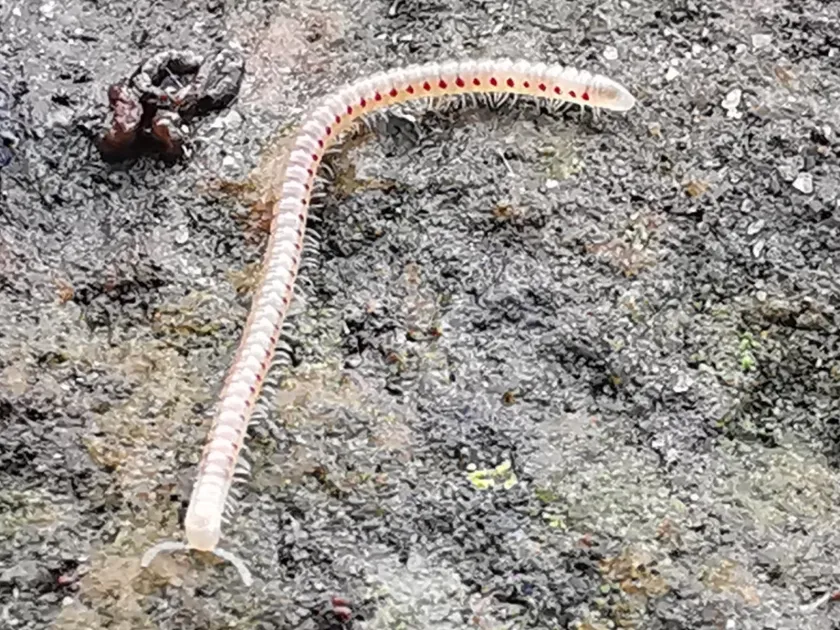
The spotted snake millipede (Blaniulus guttulatus) belongs to the order Julida and the family Blaniulidae. These small arthropods are cylindrical, thread-like in shape, and typically reach 10–18 mm in length.
The most distinctive feature of this species is the presence of two lateral rows of reddish or brownish spots along its pale, whitish-yellow body. As they grow, they gain more body segments, reflecting their biological development process.
Adult millipedes are highly mobile in the soil profile. They are photophobic, meaning they actively avoid direct sunlight and prefer cool, moist environments found deep within the soil or beneath decaying organic matter.
The life cycle encompasses stages from eggs to larvae and adults. Females lay clusters of eggs in the soil, from which young millipedes emerge; these juveniles resemble adults but are smaller in size and possess fewer legs.
Environmental factors such as high soil moisture and moderate temperatures are critical for their reproduction. Under ideal conditions, these millipedes can establish dense populations, significantly increasing their impact on vegetable crops.
What it damages
Spotted snake millipedes are polyphagous, meaning they attack a wide variety of plants. They are particularly destructive to root crops, including potatoes, carrots, and beets, as well as seeds and developing seedlings.
The pest uses its mouthparts to create deep, narrow tunnels within tubers, roots, and bulbs. This damage not only degrades the quality of the produce but also makes it highly susceptible to rotting and secondary diseases.
Once the tissues are damaged by millipedes, fungal and bacterial infections often take hold. This leads to the rapid decay of the vegetable, often causing the crop to become completely unmarketable or unusable.
Areas heavily amended with raw manure or high levels of decaying organic matter are particularly prone to infestation. Millipedes are attracted to these environments, where they feed on organic decay and subsequently switch to living plant tissue.
In addition to physical damage, large infestations can cause sparse crop stands by destroying seeds before they germinate or by consuming the tender roots of young plants, leading to wilting and eventual death.
Signs of infestation
The primary symptom of infestation is the presence of small, circular pits or cavities on the skin of tubers or root vegetables. Upon close inspection, millipedes can often be found hiding within these tunnels.
Wilting of young plants, despite adequate soil moisture, is another indicator. This often occurs because the root system has been compromised by feeding, preventing the plant from taking up essential water and nutrients.
When working the soil, gardeners may observe thin, light-colored millipedes writhing when their hiding spots are exposed. They are most active during the early morning hours or shortly after irrigation.
Dark, sunken lesions on vegetables at the time of harvest are a classic sign of millipede activity. These areas are often soft to the touch and indicate that the pest has created entry points for secondary pathogens.
Empty seed coats found in the soil when checking for germination failures suggest that millipedes have consumed the nutritious inner parts of the seeds, preventing the plants from ever establishing.
Control measures
Good agricultural practices are the first line of defense. Proper crop rotation and the removal of plant debris help break the millipede life cycle by reducing available hiding places and food sources.
Avoid using raw manure, as it serves as a powerful attractant for millipedes. Instead, incorporate well-composted organic matter and ensure the soil has adequate drainage to prevent the soggy conditions these pests thrive in.
Chemical control options include the use of soil insecticides where infestation levels are high. Always follow local regulations and label guidelines regarding application rates and target crops for effective pest management.
Monitoring using traps is a highly effective method. Place halved potatoes or carrots slightly underground, mark the spot, and check them every few days. Collect and destroy any millipedes found inside the traps.
Deep cultivation in the autumn can help by disrupting the soil and exposing millipedes to natural predators and colder temperatures. Maintaining a loose, well-aerated soil structure further discourages their development.
Taxonomy
- Latin name
- Blaniulus guttulatus
- Family
- Blaniulidae
- EPPO code
- BLANGU
Discussion
No discussions yet — be the first.