

Pest · Hemiptera (bugs, aphids, leafhoppers) · affects Onion, Fodder beet, Wild cabbage
Especially harmful
Potato aphid
Macrosiphum euphorbiae
Description
How to identify
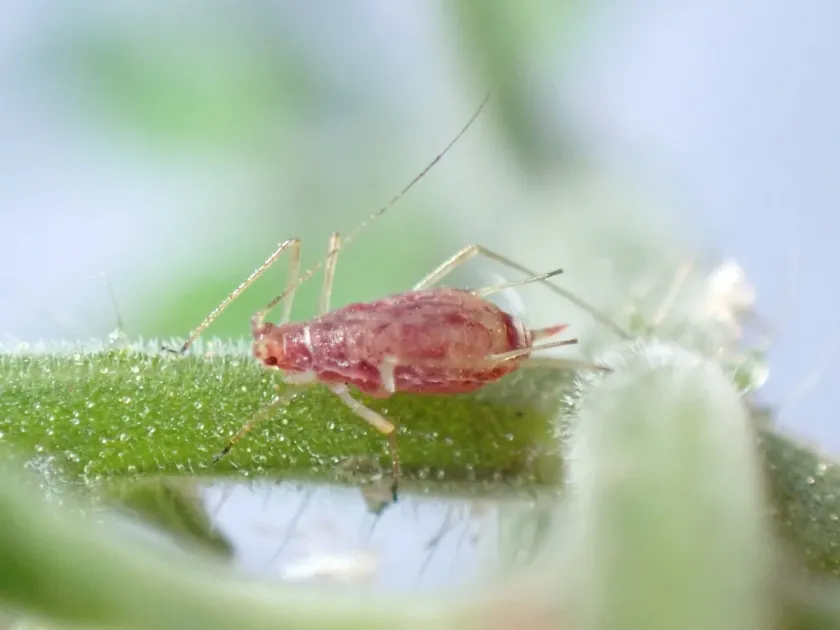
The potato aphid (Macrosiphum euphorbiae) is a member of the Aphididae family. These insects are relatively large, measuring between 3 to 4 mm in length. Their coloration is polymorphic, ranging from pale green to pink or yellowish, depending on the host plant and environmental conditions.
Adults are spindle-shaped and possess long antennae, which often extend beyond the tip of the abdomen. The cornicles are also notably long and slender. This species is easily distinguished from other aphids by its size and the specific morphology of its appendages.
The life cycle involves both apterous (wingless) and alate (winged) forms. Reproduction is primarily parthenogenetic during the growing season, allowing for rapid population growth. In many regions, they overwinter in the egg stage on weeds or perennial shrubs.
Development is highly influenced by temperature. While they thrive in moderate conditions, extreme heat can negatively affect their reproductive rate. Migration to potato fields typically occurs in late spring or early summer as winged dispersers move to host crops.
These insects are highly efficient at colonization. Once they establish a presence on a host, their numbers can escalate rapidly, especially when natural predators are suppressed by environmental stress or improper chemical use.
What it damages
As a polyphagous pest, the potato aphid infests a wide range of crops including potatoes, tomatoes, peppers, and eggplants. They feed by piercing the plant tissue with their stylets and extracting phloem sap, which deprives the plant of essential nutrients.
The primary agricultural threat is not just the sap consumption, but the transmission of viral diseases. Macrosiphum euphorbiae is a known vector for over 50 different plant viruses, including Potato Leafroll Virus and Cucumber Mosaic Virus, which cause significant yield losses.
Direct damage manifests as stunted growth, leaf curling, and chlorosis. When infestations are heavy, the plant's metabolic processes are severely disrupted, leading to smaller fruit sizes and reduced tuber development in potatoes.
The secretion of honeydew by the aphids creates a sticky surface on the leaves, which promotes the growth of sooty mold. This fungus blocks sunlight and hinders photosynthesis, further weakening the plant and lowering the quality of the harvested produce.
In greenhouses, the damage can be even more catastrophic. Without the checks and balances provided by natural predators in open fields, aphid colonies can quickly cover entire plants, leading to complete crop failure if left unmanaged.
Signs of infestation
Visual identification of an infestation starts with the inspection of new, tender shoots and the underside of leaves. Affected plants often exhibit curled or distorted leaves, which is a classic response to aphid feeding.
The presence of honeydew—a sticky, shiny substance on the leaves—is a reliable indicator. If sooty mold has begun to grow, the leaves will appear black or dusty, severely impacting the plant's health.
The presence of ants patrolling the plants is another key sign. Ants are attracted to the honeydew and will actively defend aphid colonies from predators such as ladybugs and lacewings, essentially farming the aphids for their own benefit.
You may also spot white, papery husks (cast skins) on the foliage. These are the exuviae left behind as the aphids molt through their various growth stages, signaling an active and expanding colony.
- Distorted, curled, or crinkled leaves at the terminals.
- Sticky residue (honeydew) on stems and leaves.
- Yellowing of leaves due to sap depletion.
- Presence of predatory ants on the plant.
- White shed skins scattered on leaf surfaces.
Control measures
Effective management begins with sanitation. Removing weeds from field borders and around greenhouses eliminates the primary reservoirs where aphids survive and overwinter, reducing the initial pressure on your main crops.
Biological control is highly encouraged. Encouraging natural enemies like lady beetles, hoverflies, and lacewings can keep aphid numbers below the economic threshold. In controlled environments, releasing predatory mites or wasps is a proven strategy.
If chemical control is necessary, select systemic insecticides that target sucking pests. These are most effective as they are absorbed by the plant, providing protection even in the hidden, curled areas where aphids often hide.
Regular scouting is vital to timing the interventions correctly. Always rotate the chemical groups of your insecticides to prevent the development of resistance, which is common in fast-reproducing aphid populations.
Ensure thorough coverage during application, focusing on the undersides of leaves and the growth tips. Integrated Pest Management (IPM) practices, which combine these methods, offer the most sustainable solution for long-term crop protection.
Reference
Connections · Potato aphid
Most often together:
Marketplace
Products · 1
Biology
Taxonomy
- Latin name
- Macrosiphum euphorbiae
- Order
- Hemiptera (bugs, aphids, leafhoppers)
- Family
- Aphididae
- EPPO code
- MACSEU
Community
Discussion
No discussions yet — be the first.