
Eucalyptus psyllid
Blastopsylla occidentalis
Description
How to identify
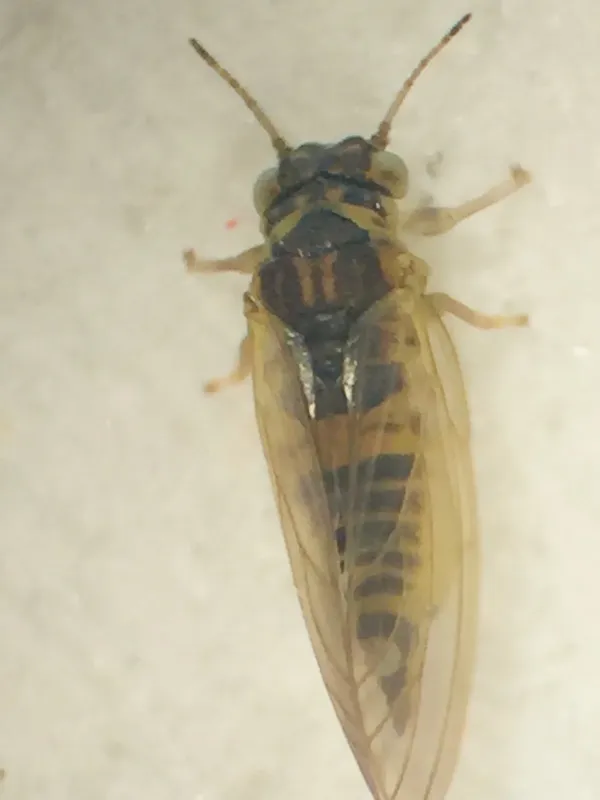
The Eucalyptus psyllid (Blastopsylla occidentalis) is a small insect belonging to the family Psyllidae, order Hemiptera, known for its significant impact on eucalyptus species.
Adults are tiny, typically measuring 2–3 mm in length, and possess a brownish coloration that allows them to blend in perfectly with the bark and foliage of their host trees.
These insects are characterized by their strong hind legs, which enable them to jump quickly when disturbed, making them difficult to capture or observe closely.
Nymphs are often found clustered on the underside of leaves or along succulent stems, frequently encased in protective white waxy secretions.
The life cycle involves incomplete metamorphosis, with populations capable of increasing rapidly in warm environments where host plants are abundant.
What it damages
This pest specifically targets Eucalyptus trees, feeding on the nutrient-rich sap found in young shoots, leaves, and tender twigs.
Heavy infestations can lead to stunted growth, leaf distortion, and, in severe cases, the death of young saplings, which is a major concern in forestry and nurseries.
The extraction of sap weakens the tree significantly, making it more susceptible to environmental stressors such as drought and diseases.
In ornamental landscaping, the physical damage caused by the psyllid results in loss of vigor and unattractive, deformed foliage that lowers the aesthetic value of the trees.
Prolonged feeding causes a general decline in the tree's health, often leading to a reduction in leaf canopy density and overall vitality over time.
Signs of infestation
The most common sign of infestation is the curling and distortion of young leaves, caused by the localized feeding activity of the psyllid nymphs.
Visible white, flocculent, or waxy deposits on the foliage are diagnostic indicators that the insect is present and currently feeding on the plant tissue.
The presence of honeydew secreted by the nymphs frequently leads to the development of sooty mold, which appears as a black, dusty coating on the leaves.
Leaves may show signs of chlorosis or spot-like necrotic areas where the insect has pierced the surface to extract sap, affecting the tree's photosynthetic ability.
Significant premature leaf drop is a classic symptom of an advanced infestation, indicating that the population pressure has exceeded the plant's tolerance levels.
Control measures
Effective management requires the application of systemic insecticides that are absorbed by the plant and target the sap-sucking insects directly.
Cultural practices, such as pruning and disposing of heavily infested branches, can significantly reduce the local pest population and prevent further spread.
Biological control agents, including various species of parasitic wasps and ladybird beetles, can be encouraged to naturally regulate psyllid populations.
Maintaining optimal tree vigor through balanced fertilization and adequate irrigation helps plants withstand and recover from psyllid-related damage.
Regular monitoring of young eucalyptus stands is crucial, as early detection allows for targeted treatments before the population reaches an uncontrollable level.
Taxonomy
- Latin name
- Blastopsylla occidentalis
- Order
- Hemiptera (bugs, aphids, leafhoppers)
- Family
- Aphalaridae
- EPPO code
- BLSPOC
Discussion
No discussions yet — be the first.