
Blastopsylla
Blastopsylla
Description
How to identify
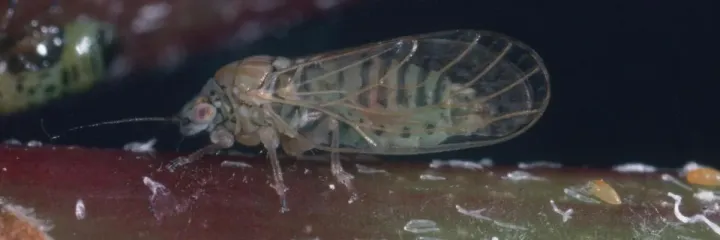
Blastopsylla, specifically the species Blastopsylla occidentalis, is a small insect belonging to the family Psyllidae, commonly known as the eucalyptus psyllid. These insects are classified within the order Hemiptera and are recognized by their ability to jump using their specialized hind legs.
Adult insects are typically very small, ranging in color from light brown to green, which provides excellent camouflage against the foliage of host trees. They possess well-developed antennae that are essential for navigating and finding suitable locations for feeding and oviposition.
The nymphal stages are sedentary for long periods and go through five instars before reaching adulthood. A distinctive feature of these nymphs is the production of white, flocculent wax filaments that cover their bodies, serving as a protective layer against environmental stressors and predators.
The life cycle is highly dependent on favorable temperature and humidity, which allow the species to complete multiple generations within a single season. In introduced ranges, the lack of natural predators often leads to rapid population explosions.
Females lay eggs in the tender tissue of leaf buds and shoot tips. This strategic placement ensures that the hatching nymphs have immediate access to the most nutrient-rich plant sap, facilitating their rapid development and survival.
What it damages
The primary hosts for Blastopsylla are various species of Eucalyptus. The pest specifically targets young, actively growing shoots and foliage, as these areas provide the concentrated nutrients required for the insect's lifecycle.
As the insects feed by piercing the plant epidermis and extracting sap, they cause significant physiological stress to the tree. This sap-sucking activity results in the loss of turgor pressure and the disruption of normal nutrient transport throughout the plant's vascular system.
Heavy infestations lead to leaf deformation, curling, and stunted growth of terminal shoots. In commercial eucalyptus plantations, this damage manifests as a significant reduction in biomass production and loss of tree vigor.
The feeding process also creates entry points for secondary pathogens. Furthermore, the excretion of honeydew by the psyllids promotes the growth of sooty mold, which coats the leaves and severely limits the plant's ability to perform photosynthesis.
Economic losses are notable in nurseries and reforestation efforts, where the health of young saplings is critical. Persistent infestations can lead to the death of apical meristems, forcing trees to develop undesirable branching patterns.
Signs of infestation
The first indication of a Blastopsylla infestation is the abnormal curling and distortion of young leaves. This symptom is caused by the toxic effect of the psyllid's saliva on the plant tissues during the feeding process.
Inspectors should look for the characteristic white, cotton-like wax secretions on leaf axils and shoot tips. These secretions are a tell-tale sign that nymphs are present and actively feeding, even if the insects themselves are hidden underneath.
The presence of honeydew, a sticky substance covering the foliage, is a common secondary sign. This sticky layer often attracts ants and other insects, which can serve as a warning sign for growers to conduct a more detailed inspection of the canopy.
As the infestation progresses, black sooty mold will begin to cover the honeydew-coated leaves. This mold not only hinders photosynthesis but also significantly degrades the ornamental or commercial quality of the eucalyptus specimens.
Severe infestations often result in the premature drop of leaves and the death of young branches. If terminal growth ceases, it is a clear indicator that the pest population has reached a critical level requiring immediate intervention.
Control measures
The first line of defense against Blastopsylla is strict quarantine and nursery hygiene to prevent the introduction of infested plant material. Regular monitoring of trees during the spring and summer is essential for early detection.
Biological control is the most sustainable long-term solution. The introduction of specialized parasitoid wasps, such as Psyllaephagus bliteus, has proven highly effective in reducing psyllid populations in various regions worldwide.
In nursery settings, systemic insecticides are the preferred chemical control method. By applying these products, the plant absorbs the active ingredients, which then protect the new growth from feeding nymphs for an extended duration.
For smaller infestations or in gardens, insecticidal soaps or horticultural oils can be applied to physically smother nymphs and reduce the population. These treatments are less toxic to the environment than broad-spectrum chemicals.
Good horticultural practices, including pruning and disposing of heavily infested shoots, help reduce the overall pressure of the pest. Ensuring trees receive proper irrigation and fertilization improves their natural resilience and ability to recover from damage.
Taxonomy
- Latin name
- Blastopsylla
- Order
- Hemiptera (bugs, aphids, leafhoppers)
- Family
- Aphalaridae
- EPPO code
- BLSPSP
Discussion
No discussions yet — be the first.