
Green potato bug
Biprorulus
Description
How to identify
The green potato bug (scientific name Biprorulus bibax) is a member of the Pentatomidae family, commonly known as shield bugs or stink bugs. Its common name is somewhat misleading as it is primarily a major pest of citrus rather than potatoes.
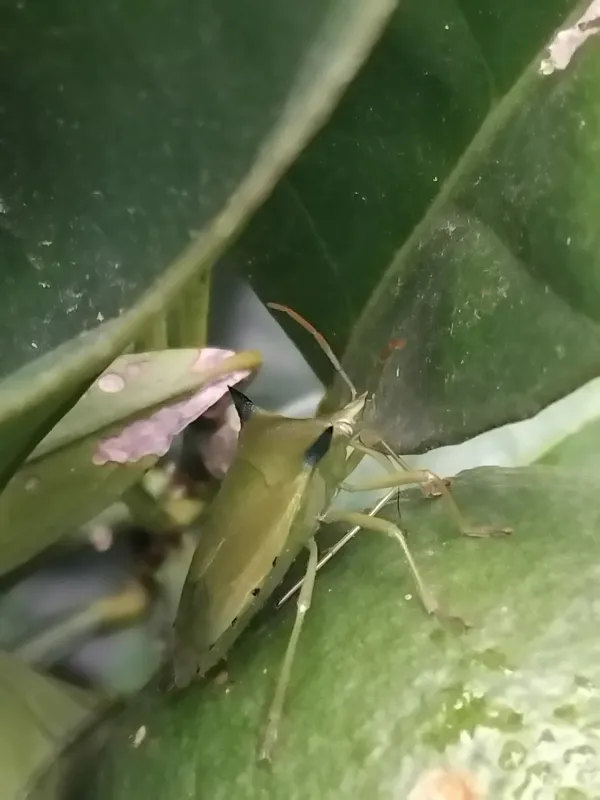
Adult insects are bright green, which provides excellent camouflage within the foliage of fruit trees. They are characterized by two distinct spines on the sides of the pronotum, which give the bug its specific appearance and common identification mark.
Measuring about 15 to 20 millimeters in length, these bugs possess a typical shield-like body shape. Their mouthparts consist of a strong, segmented proboscis designed for piercing plant tissues and extracting sap.
Nymphs go through several instars, gradually increasing in size and developing wing pads. While younger nymphs may have different color patterns compared to adults, their habit of congregating remains constant.
The eggs are typically laid in regular, neat clusters on the undersides of leaves. This placement provides the eggs with shelter from direct sunlight and physical damage, enhancing their survival rate.
What it damages
Biprorulus bibax is a specialized pest primarily affecting citrus crops, including lemons, oranges, and mandarins. They cause significant damage by feeding on both young shoots and developing fruit.
Feeding on fruit leads to characteristic necrotic spotting and depressions, often described as 'dimpling'. This damage makes the fruit unmarketable and susceptible to further rot.
When populations are high, the feeding activity can cause young fruit to drop prematurely. This directly impacts the total yield, often leading to substantial financial losses for commercial citrus growers.
In addition to physical damage, the punctures made by the bugs facilitate the entry of secondary pathogens, such as fungi and bacteria. This often results in internal decay of the fruit that is not immediately visible from the outside.
Continuous sap extraction weakens the tree, affecting its overall vigor. Severely infested branches may exhibit wilting or stunted growth, reducing the tree's ability to produce high-quality yields in subsequent seasons.
When it appears
The seasonal activity of the green potato bug is heavily influenced by climate. In temperate or tropical regions, they can have multiple overlapping generations throughout the warmer months.
Overwintering occurs in the adult stage. The bugs seek shelter in dense ground vegetation, under tree bark, or in other protected areas that provide stable temperatures during the colder months.
Activity begins to increase as temperatures rise in the spring. During this phase, adults migrate to host plants to feed and commence the mating process, marking the start of the breeding season.
The summer months represent the peak of infestation. This period coincides with the active development of citrus fruit, making the crop highly vulnerable to the feeding activity of both nymphs and adults.
As autumn approaches and day length decreases, the bugs prepare for diapause. Their feeding intensity drops, and they gradually move toward suitable overwintering sites to survive the winter season.
Control measures
Managing the green potato bug requires an Integrated Pest Management (IPM) approach to keep populations below the economic injury level.
- Regular monitoring using pheromone traps to detect population spikes.
- Manual removal of egg clusters on small-scale or young orchards.
- Applying targeted insecticides during the most vulnerable nymph stages.
- Promoting biological control through the conservation of natural predators.
- Maintaining orchard hygiene by removing weeds and pruning dense foliage.
Chemical control should be applied judiciously. It is essential to use products that are effective against shield bugs while minimizing harm to beneficial insects, such as pollinators and predatory wasps.
Pruning is a critical cultural practice. By opening up the tree canopy, growers not only improve light penetration but also make the environment less favorable for the bug's development and easier to treat with sprays.
Resistance management is vital. Growers should rotate between different classes of insecticides to prevent the population from developing resistance to commonly used active ingredients.
Taxonomy
- Latin name
- Biprorulus
- Order
- Hemiptera (bugs, aphids, leafhoppers)
- Family
- Pentatomidae
- EPPO code
- BIPRSP
Discussion
No discussions yet — be the first.