
Banasa dimidiata
Banasa dimidiata
Description
How to identify
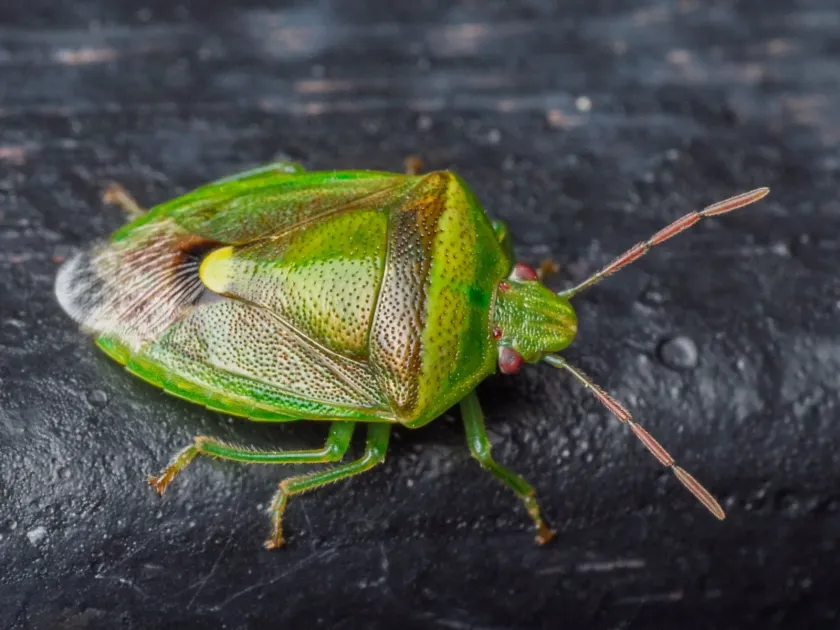
Banasa dimidiata is a member of the Pentatomidae family, commonly known as stink bugs. These insects possess an oval-shaped body, typically measuring between 8 to 10 mm in length, and exhibit a greenish or yellowish-brown coloration that provides excellent camouflage.
Adults feature well-developed wings, enabling them to migrate effectively between hosts. The head is relatively small and triangular, pressed against the pronotum, with five-segmented antennae that serve as a key morphological characteristic for scientific identification.
Nymphs go through several developmental instars. They resemble miniature versions of the adults but lack fully developed wings and reproductive organs, often displaying slightly different coloration patterns before reaching the adult stage.
Eggs are laid in clusters on the undersides of leaves. Each egg is barrel-shaped, often topped with a crown-like fringe of processes, which is a specific identifier for the species and aids in field scouting efforts.
These insects overwinter as adults in protected environments, such as leaf litter, bark crevices, or dense ground cover. They emerge in the spring, becoming active as temperatures rise and host plants begin their vegetative growth.
What it damages
Banasa dimidiata is a polyphagous insect that primarily targets fruit-bearing trees. It frequently infests apples, pears, and various wild rosaceous shrubs, which often act as the primary reservoir for population buildup.
Feeding occurs when the bug uses its piercing-sucking mouthparts to penetrate the skin of fruits and young shoots. This feeding process involves the injection of salivary enzymes, which break down plant cells and lead to localized tissue death.
Young fruitlets affected by feeding often become deformed or may drop prematurely. On mature fruits, the damage appears as corky spots, pits, or depressions, which significantly reduces the fruit's marketability and overall shelf life.
Excessive feeding on vegetative parts can result in chlorosis of leaves, curling, and stunted shoot growth. This stresses the host plant, potentially reducing yield and making the tree more susceptible to secondary pathogenic infections.
In cases of severe infestation, the cumulative damage to both fruit quality and tree vigor can lead to substantial economic losses, especially in high-density commercial orchards where precision crop management is essential.
Signs of infestation
The most reliable sign of an infestation is the visual detection of the bugs themselves, which are often found resting on the undersides of leaves. When disturbed, these insects may release a pungent defensive odor.
Visible damage on fruits presents as small, sunken, or corky spots. If the fruit is sliced, internal necrotic areas and discolored tissue near the bite marks will confirm the presence of feeding damage caused by these bugs.
The discovery of egg clusters on leaf undersides in the spring serves as a critical indicator for early intervention. Scouting for small groups of nymphs congregating after hatching is vital for preventing widespread damage.
Curled young shoots and premature yellowing of foliage can also indicate heavy feeding activity. These symptoms appear as the insects drain vital nutrients and water from the plant tissues during the peak growing season.
A sudden increase in fruit drop in the early stages of development, combined with visible bite marks on the surface of the fallen fruit, is a strong diagnostic sign that Banasa dimidiata or similar shield bugs are present.
Control measures
Cultural control measures are highly effective, including the removal of debris and leaf litter from under trees in late autumn to eliminate overwintering sites for the adult bugs.
Biological control relies on preserving natural predators and parasitoids, such as Trissolcus species, which are known to parasitize the eggs of various shield bugs and can help keep populations below economic thresholds.
Chemical control should be implemented only when scouting indicates that the pest population has reached a significant level. The use of approved systemic or contact insecticides is recommended, applied during the times of day that minimize impact on pollinators.
Installing sticky bands or traps on tree trunks can help capture nymphs as they move between foliage, providing a non-toxic method to monitor and reduce local pest pressure within the canopy.
- Regular monitoring of tree foliage starting in early spring.
- Sanitation of orchard surroundings to remove alternative host plants.
- Targeted insecticide applications during early nymphal stages.
Taxonomy
- Latin name
- Banasa dimidiata
- Order
- Hemiptera (bugs, aphids, leafhoppers)
- Family
- Pentatomidae
- EPPO code
- BANADI
Discussion
No discussions yet — be the first.