
Atteva
Atteva
Description
How to identify
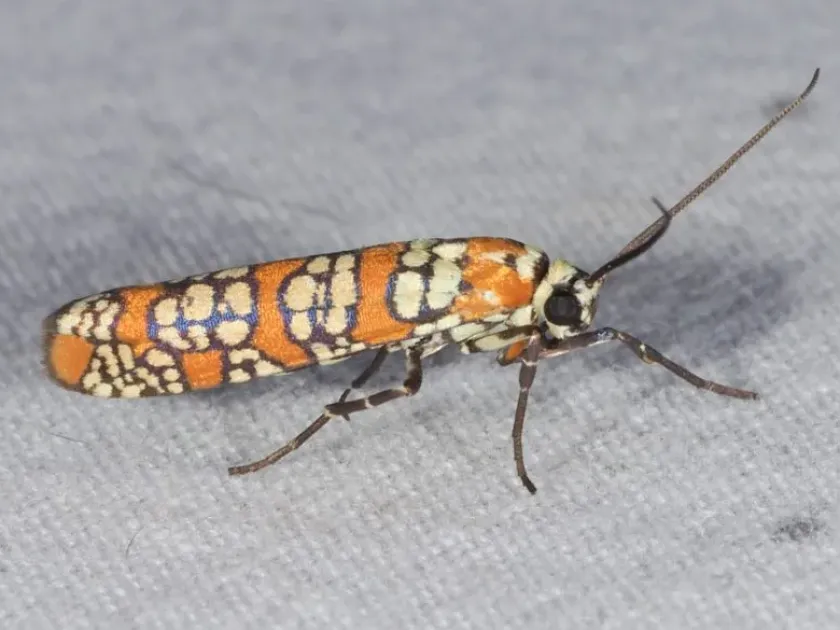
The genus Atteva belongs to the Yponomeutidae family (ermine moths), order Lepidoptera. Adults are small, distinctively colorful moths, often featuring bright patterns of orange, white, and black on their wings.
The life cycle involves complete metamorphosis, consisting of egg, larva (caterpillar), pupa, and adult (imago). Females typically lay eggs on the leaves of host plants in small clusters.
Larvae often exhibit a striped or spotted appearance, providing camouflage against the host foliage. They are highly active and capable of producing silk threads to create protective structures.
Pupae are formed within dense, spindle-shaped silken cocoons. These cocoons are usually clustered together on leaves or branches, providing a secure environment during the transition period.
Imago activity is mostly nocturnal or crepuscular, though some species may show daylight activity. The wingspan is generally moderate, making them recognizable among other local micro-moths.
What it damages
Atteva species affect a wide range of woody plants and shrubs. They are particularly noted for feeding on members of the Simaroubaceae family and various ornamental species in tropical and subtropical regions.
Damage is characterized by heavy defoliation. Caterpillars feed voraciously on leaf tissue, often leaving only the major veins intact, which drastically reduces the plant's photosynthetic capacity.
In addition to feeding, caterpillars construct communal silk webs. These webs can envelope entire branches, causing stress to the plant and blocking essential sunlight from reaching the leaves.
Heavy infestations can lead to premature leaf drop, stunted growth, and the dieback of terminal branches. This is particularly problematic for ornamental trees where aesthetic value is paramount.
While often localized, consistent annual infestations can significantly weaken a tree's health, making it more susceptible to secondary environmental stresses or pathogens.
Signs of infestation
The most prominent sign of an infestation is the presence of thick, communal silk webs covering the tips of branches and new shoots.
Leaves inside or near the webbed areas appear skeletonized, with tissue eaten away between the veins. This creates a tattered look that is easily spotted during inspections.
Presence of frass (caterpillar excrement) caught within the silk webbing indicates active feeding sites. You may also observe colonies of larvae feeding gregariously on the foliage.
White or yellowish cocoons hanging from the branches or leaves indicate that the larvae have reached the pupation stage, signaling the end of the feeding cycle for that generation.
In severe cases, the affected sections of the canopy may turn brown or wither, providing a clear visual contrast against the surrounding healthy green foliage.
Control measures
Mechanical removal is the most direct control method. Physically pruning and destroying the silk nests during the early stages of infestation can effectively curb the population.
Biological control using Bacillus thuringiensis (Bt) is highly recommended. This bacterium targets the larvae specifically and minimizes impact on beneficial insect populations.
In cases of significant outbreaks, systemic insecticides may be necessary. Applications should be timed to target early-instar larvae before they become too large and create heavy webbing.
Cultural practices such as maintaining tree vigor through proper watering and fertilization help trees withstand the stress of minor herbivory.
- Regular inspection of canopy tips during the spring and summer.
- Use of pheromone traps for monitoring adult moth populations.
- Encouraging natural predators such as parasitic wasps and predatory bugs.
Taxonomy
- Latin name
- Atteva
- Order
- Lepidoptera (butterflies)
- Family
- Yponomeutidae
- EPPO code
- ATTESP
Discussion
No discussions yet — be the first.