
Aspidiotus rigidus scale
Aspidiotus rigidus
Description
How to identify
Aspidiotus rigidus is a species of scale insect belonging to the family Diaspididae. These insects are highly specialized pests characterized by a hard, waxy protective shell (test) that shields the insect throughout its sessile adult stage.
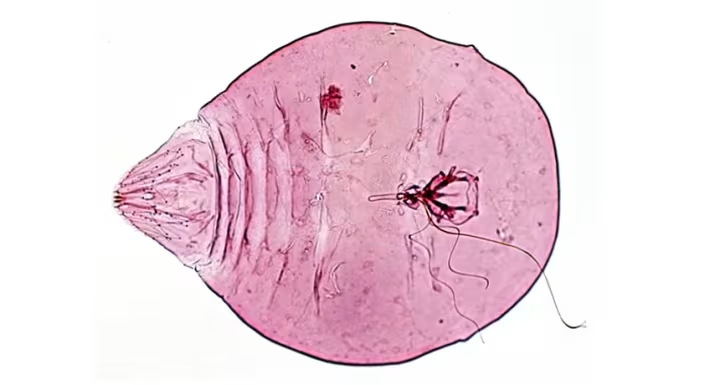
Adult females are almost circular in shape and typically brownish-grey, often blending into the bark or leaf surface of the host plant. They are permanently attached to the plant tissue once they begin feeding.
Adult males are winged and small, capable of flight to locate stationary females. However, their lifespan is extremely short and dedicated solely to reproduction, meaning they do not cause direct damage to plants.
The life cycle involves a crawler stage (the first instar larva). Crawlers are mobile and represent the primary dispersal phase, moving across the plant surface before settling to initiate feeding and secretion of the protective shell.
Taxonomic identification of Aspidiotus rigidus relies on microscopic analysis of the female's pygidium morphology, as visual identification in the field can be challenging due to similarities with other armored scale species.
What it damages
The primary host for Aspidiotus rigidus is the coconut palm (Cocos nucifera). This pest is considered a significant threat to coconut production, capable of infesting various parts of the tree, including fronds and trunks.
Beyond coconut palms, the insect may affect other species within the Arecaceae family. Its ability to thrive in tropical conditions allows it to establish large, damaging populations on commercial plantations.
Direct damage occurs as the insects feed on plant sap using their piercing-sucking mouthparts. This constant extraction of nutrients weakens the host tree, leading to physiological stress and reduced growth rates.
Severe infestations can cause yellowing, chlorosis, and eventual necrosis of leaves. In advanced cases, the stress predisposes the palm to secondary infections by fungi and bacteria, further compromising the tree's health.
In economic terms, Aspidiotus rigidus can lead to significant yield losses in coconut crops, affecting both nut size and the overall longevity of the plantation if left unmanaged.
When it appears
In tropical environments, Aspidiotus rigidus does not exhibit a dormant period. Instead, it maintains continuous generations throughout the year, provided that temperature and humidity levels remain favorable.
Population spikes are frequently associated with periods of high humidity and heat, which accelerate the life cycle and increase the success rate of crawler colonization on new host tissues.
The dispersal of crawlers between trees is often facilitated by wind currents or contact between overlapping palm fronds. Human activities, such as movement of machinery or pruning tools, can also spread the pest across a plantation.
The developmental rate is temperature-dependent. Under optimal tropical conditions, the time taken for a generation to complete is significantly reduced, facilitating rapid population growth in established orchards.
Continuous monitoring is essential for agronomists, as the absence of a distinct seasonality means that the pest can be introduced or spread at any point during the growing season.
Signs of infestation
Initial signs of infestation appear as discolored yellow spots or mottled patches on the leaflets. As the insect population expands, these spots often merge, leading to premature leaf drying.
Colonies of the scale insect appear as dense clusters of grey or brown scales, especially concentrated along the midribs of leaves and on petioles. The surface of affected areas feels rough or gritty to the touch.
Weakened plant health, characterized by stunted frond development and poor fruit production, is a hallmark of severe Aspidiotus rigidus infestations.
The presence of sooty mold on the foliage is a secondary indicator, as these fungi often grow on the honeydew-like secretions (though armored scales produce less honeydew than soft scales) or plant exudates near the feeding sites.
Professional inspection of the underside of fronds and the base of the crown is necessary to detect the earliest stages of colonization before the damage becomes irreversible.
Control measures
Managing Aspidiotus rigidus requires a multi-faceted approach, as the protective armor of the insect limits the effectiveness of many contact-based insecticides.
Systemic insecticides, applied via soil drenching or trunk injection, are often more effective because the toxin is transported within the plant sap, reaching the feeding insect directly through its mouthparts.
Cultural control measures include the judicious pruning of heavily infested fronds. Removed materials must be destroyed or buried far from the plantation to prevent re-infestation.
Biological control is vital for long-term sustainability. The preservation and promotion of natural predators and parasitoid wasps that feed on scale insects can significantly suppress population densities.
- Integrated Pest Management (IPM) strategies to reduce chemical reliance.
- Regular surveys and monitoring of sentinel trees.
- Use of narrow-range horticultural oils to smother the insects.
- Strict quarantine regulations for moving nursery stock between regions.
Taxonomy
- Latin name
- Aspidiotus rigidus
- Order
- Hemiptera (bugs, aphids, leafhoppers)
- Family
- Diaspididae
- EPPO code
- ASPDDR
Discussion
No discussions yet — be the first.