
Aspidiotus destructor
Aspidiotus destructor
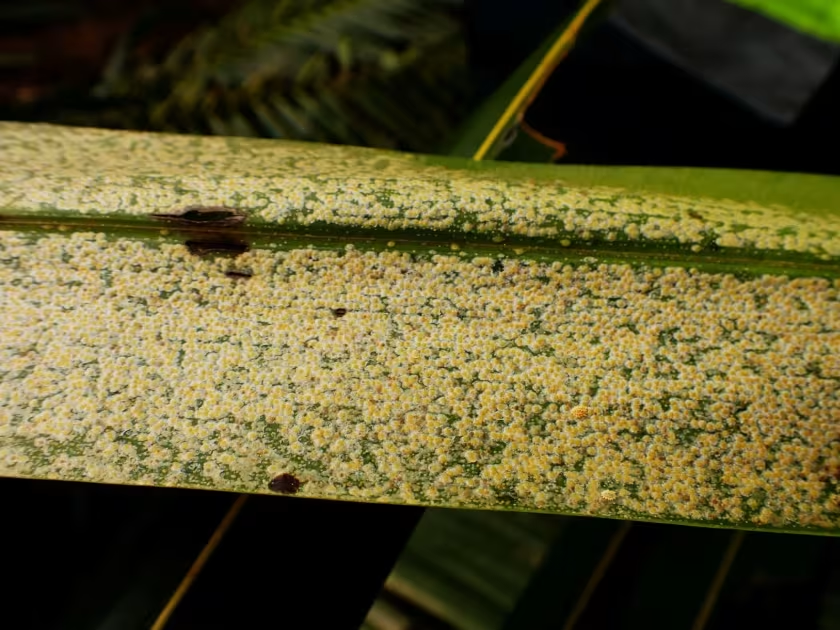
Description
How to identify
Aspidiotus destructor, commonly known as the coconut scale, belongs to the family Diaspididae. The adult female is characterized by a circular, flat, and transparent-yellow scale that measures approximately 1.5 to 2 mm in diameter.
Male individuals are significantly smaller, winged, and possess a more elongated body structure. Unlike females, males do not feed and are mobile, allowing them to locate and mate with the sessile females, which spend their entire lives attached to the host.
The primary dispersal stage is the first-instar nymph, often referred to as a "crawler." These nymphs are equipped with functional legs, enabling them to move across plant surfaces or be transported by wind, rain, or human activities to new host plants.
After finding a suitable feeding site, the crawler inserts its stylets into the plant tissue. Subsequently, it secretes a wax-like substance to form its protective scale. This cover is continuously enlarged through molting, providing robust protection against environmental threats.
Detection often involves inspecting the undersides of leaves and stems. Colonies appear as clusters of scale-like structures. Due to their coloration, they may blend in with the natural texture of the plant, requiring a keen eye for effective field identification.
What it damages
This pest is highly polyphagous, targeting a wide range of important crops, particularly coconut palms, bananas, mangoes, and various citrus species. It is also a significant nuisance in greenhouse environments, affecting diverse ornamental plants.
By inserting their mouthparts into the plant epidermis, these insects extract vital cell sap. This continuous feeding disrupts the plant's metabolic functions, leading to chlorosis, stunted growth, and potential necrosis of the affected tissues.
Heavily infested leaves frequently show severe yellowing and may drop prematurely. On fruit-bearing crops, the presence of these insects can lead to the malformation and reduced market value of the produce, as well as susceptibility to secondary rot.
The accumulation of honeydew secreted by the scales promotes the growth of sooty mold. This dark fungal layer blocks sunlight, further inhibiting photosynthesis and severely weakening the overall health of the host plant.
If the infestation remains uncontrolled, young plants may experience complete decline and mortality. The cumulative impact of sap loss and fungal infections makes this pest a serious concern in both tropical agriculture and indoor horticulture.
When it appears
The life cycle of Aspidiotus destructor is highly dependent on ambient temperatures. In tropical regions, the insect breeds continuously throughout the year, with multiple overlapping generations occurring in a single season.
Peak crawler activity typically coincides with warm, humid conditions. High temperatures significantly accelerate the developmental rate, often leading to rapid population explosions that can quickly overwhelm a plant if left unchecked.
In greenhouses, the pest thrives year-round, regardless of external seasonal changes. The consistent availability of host plants allows for a stable and persistent presence of the pest population throughout the winter months.
Dispersal is most intense during the crawler stage. These nymphs are highly vulnerable to environmental conditions but are also the most active in spreading to neighboring vegetation via wind drafts or contact with infested gardening tools.
Effective scouting should be intensified during periods of active plant growth, as the insect tends to prefer soft, nutrient-rich tissues. Monitoring for these population spikes is crucial for timely intervention.
Signs of infestation
The earliest signs of infestation are small, pale spots on the leaves where the insects have begun feeding. These spots often coalesce, forming larger chlorotic patches that diminish the plant's photosynthetic capacity.
The presence of physical scales on the undersides of leaves is a definitive indicator of the pest. These small, wax-like plates are firmly attached to the plant cuticle and cannot be removed without leaving a mark on the leaf surface.
The appearance of a sticky, glistening substance on foliage indicates the presence of honeydew. Within a short period, this residue is colonized by sooty mold, resulting in a dirty, black appearance that is highly characteristic of scale infestations.
General wilting and loss of turgor in the leaves, despite adequate watering, may suggest a systemic issue caused by the removal of plant sap. The overall plant will appear dull, weak, and may cease new growth.
Frequent association with ants is another sign. Ants are often attracted to the honeydew and will actively protect the scale colonies from predators, making it harder for the plant to recover naturally.
Control measures
Management starts with strict quarantine measures, ensuring all new plant arrivals are inspected before being introduced to a collection. Removing and destroying heavily infested plant parts is a quick way to reduce the immediate population density.
Systemic insecticides are generally the most effective, as they are absorbed into the plant tissues and reach the insects through feeding. Applying these products during the active crawler phase ensures better mortality rates.
Horticultural oils or insecticidal soaps can be used as a contact treatment. These work by physically coating the insects and blocking their spiracles, leading to death by suffocation, while leaving minimal toxic residues.
- Regular mechanical cleaning of infected surfaces using a soft brush.
- Introduction of natural predators like ladybird beetles or parasitoid wasps.
- Maintaining optimal irrigation and fertilization to boost the plant's natural defenses.
- Isolating infested plants to prevent cross-contamination within the greenhouse.
It is essential to rotate between different classes of insecticides to prevent the development of resistance. Always follow label instructions carefully to ensure both efficacy and the safety of the surrounding environment.
Taxonomy
- Latin name
- Aspidiotus destructor
- Order
- Hemiptera (bugs, aphids, leafhoppers)
- Family
- Diaspididae
- EPPO code
- ASPDDE
Discussion
No discussions yet — be the first.