
Aspidiella
Aspidiella
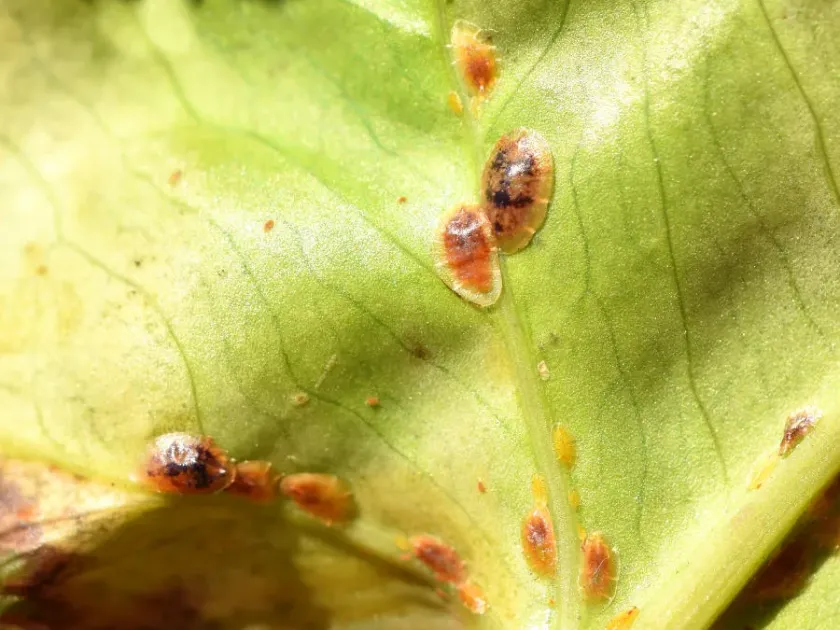
Description
How to identify
Aspidiella is a genus of insects belonging to the family Diaspididae (armored scale insects), which are part of the order Hemiptera. These are tiny insects characterized by the presence of a tough, waxy shield (scale) that protects the female, making them resistant to many contact insecticides.
The body of an adult female is concealed under a shield of rounded or oval shape, often matching the color of the plant bark or leaf surface. These insects are sedentary, spending almost their entire lives attached to a single point on the host plant.
For accurate species identification, specialists perform microscopic analysis of the pygidium — the terminal abdominal segment of the female — as external morphology of the scales can be nearly identical across different species within this genus.
The male Aspidiella possesses wings and developed legs, differing significantly from the female. However, it is short-lived, serving only a reproductive function, and is rarely encountered during standard visual inspections of plants.
The life cycle includes the egg, crawler (nymph), and adult stages. The crawler stage is the most critical for dispersal, as this is the only time the insect moves actively across the plant to find a suitable feeding site.
What it damages
This pest affects a wide range of plants, including fruit trees, ornamental shrubs, and houseplants. One of the most notable representatives of the genus is Aspidiella hartii, which is known to damage yams and other tropical crops.
Aspidiella feeds by piercing the plant epidermis with its mouthparts and sucking out sap. This results in the gradual depletion of plant tissues, disruption of photosynthesis, and compromised metabolic functions in the affected plant parts.
In cases of heavy infestation, the pest can cause premature leaf drop, shoot dieback, and even the total death of young plants. Severely infested trees become highly susceptible to secondary infections and environmental stress.
The damage is most severe in controlled environments like greenhouses or in warm climates where the absence of natural low-temperature population control leads to rapid proliferation of the pest.
The economic impact involves a reduction in the market value of produce and planting material, leading to direct financial losses for agricultural enterprises, nurseries, and botanical gardens.
Signs of infestation
The first sign of infestation is the appearance of small bumps or scales on trunks, branches, or leaves, which can be easily scraped off with a knife or fingernail, revealing the insect underneath.
Yellowing or discoloration of plant tissues is often observed around the colonization sites. The plant may appear stunted, with noticeably slowed shoot growth and a significant reduction in overall aesthetic quality.
A sticky substance known as honeydew is a secondary sign of sap-sucking pest activity. This substance serves as a substrate for the growth of sooty mold, which coats the leaves in a black layer, blocking sunlight and impeding photosynthesis.
In some cases, infestation is detected by the deformation of shoots or bark where colonies have gathered. With severe damage, bark necrosis may occur, under which entire colonies of scales settle.
Early detection requires regular inspections of the underside of leaves and branch forks using a magnifying glass with at least 10x magnification.
Control measures
The primary defense measure is rigorous phytosanitary control during the importation of planting material. Infested plants must be isolated and treated immediately or disposed of to prevent the spread of the pest.
Mechanical control involves the pruning and destruction of heavily infested shoots. Cleaning trunks of loose or dead bark, where larvae and eggs often hide, followed by proper disinfection, is also highly recommended.
Chemical control should be timed to coincide with the crawler emergence stage, as adult scales protected by their waxy shields are virtually immune to most contact sprays. Systemic insecticides that are translocated within the plant sap are more effective.
In greenhouse settings, the use of biological control agents such as predatory beetles or specific parasitic wasps, which prey on scale insects and naturally suppress their population, is considered an effective strategy.
- Regular washing of plants with insecticidal soap solutions.
- Application of horticultural oils to suffocate the insects.
- Use of systemic insecticides based on imidacloprid.
- Biological control through the release of beneficial entomophages.
Taxonomy
- Latin name
- Aspidiella
- Order
- Hemiptera (bugs, aphids, leafhoppers)
- Family
- Diaspididae
- EPPO code
- ASPISP
Discussion
No discussions yet — be the first.