
Arvelius albopunctatus
Arvelius albopunctatus
Description
How to identify
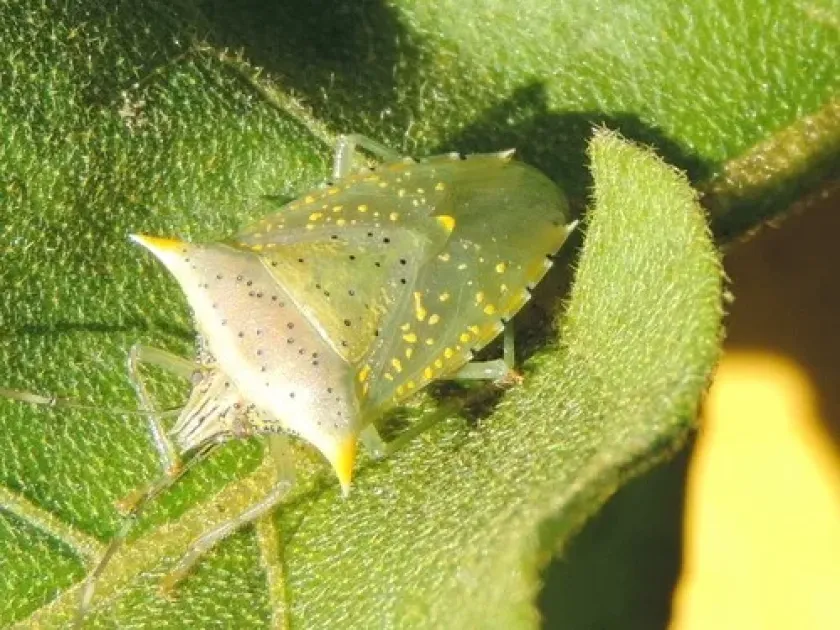
Arvelius albopunctatus is a species of shield bug belonging to the Pentatomidae family within the order Hemiptera. These insects are characterized by a distinct shield-shaped body and a greenish to yellowish-green coloration that helps them blend into foliage.
The name of the species refers to the small white dots distributed across its dorsal side, which serve as a reliable identification marker. Adult bugs typically measure between 10 and 13 mm in length and possess well-developed hemelytra and a piercing-sucking mouthpart.
Nymphs of this species resemble the adults but are smaller in size and lack fully formed wings. Their color can shift through developmental stages, ranging from light green to brownish, providing excellent camouflage against the stems and leaves of host plants.
The life cycle involves incomplete metamorphosis, progressing through egg, nymph, and adult stages. Females typically lay eggs in clusters on the undersides of leaves, a behavior that protects the brood from environmental factors and predators.
As warmth-loving insects, they thrive in agricultural environments where temperatures remain moderate. Their high mobility as adults allows them to migrate effectively between various host plants throughout the growing season.
What it damages
This pest primarily damages a variety of crops, including solanaceous plants like tomatoes, peppers, and eggplants, as well as several leguminous species. Both adults and nymphs feed on the plant sap by piercing the tissues.
During feeding, the bug injects saliva containing enzymes that facilitate external digestion, causing local tissue necrosis. This activity leads to significant deformation of fruits, which develop unsightly spots and become unmarketable for agricultural producers.
Severe infestations can lead to stunted growth and the premature wilting of shoots. When the bugs attack developing buds or flowers, the plant often drops them entirely, resulting in direct and measurable yield loss for the grower.
Furthermore, the physical punctures serve as entry points for various phytopathogens, including fungi and bacteria. These secondary infections often cause fruit rot, which can destroy large quantities of produce even after harvest if not properly managed.
The economic impact is particularly pronounced in open-field vegetable production, where the pest's agility allows it to exploit large areas. Rapid colonization of a field can lead to widespread damage if left unchecked during the critical flowering stages.
Control measures
Integrated pest management (IPM) is the most effective approach for controlling Arvelius albopunctatus. This begins with rigorous weed control, as many wild plants serve as reservoirs for the pest before they migrate to cultivated crops.
Monitoring programs are essential for early detection, utilizing both light traps and regular scouting for egg clusters on the undersides of leaves. Removing these clusters manually can significantly slow the population growth at the start of the season.
When infestation levels exceed the economic threshold, the application of contact or systemic insecticides is necessary. It is crucial to target younger nymphs, as they are generally more vulnerable to chemical applications compared to adult bugs.
Biological control methods involve the conservation of natural enemies, such as egg parasitoids and predatory insects. Encouraging these beneficial species can naturally regulate pest populations and reduce the reliance on synthetic chemicals.
- Crop rotation to disrupt the pest's reproductive cycle.
- Use of resistant varieties if available in the specific region.
- Installation of physical barriers on small-scale plots.
- Optimized irrigation to keep plants healthy and resilient to pest stress.
Taxonomy
- Latin name
- Arvelius albopunctatus
- Order
- Hemiptera (bugs, aphids, leafhoppers)
- Family
- Pentatomidae
- EPPO code
- ARVEAL
Discussion
No discussions yet — be the first.