
Juniper fruit moth
Argyresthia praecocella
Description
How to identify
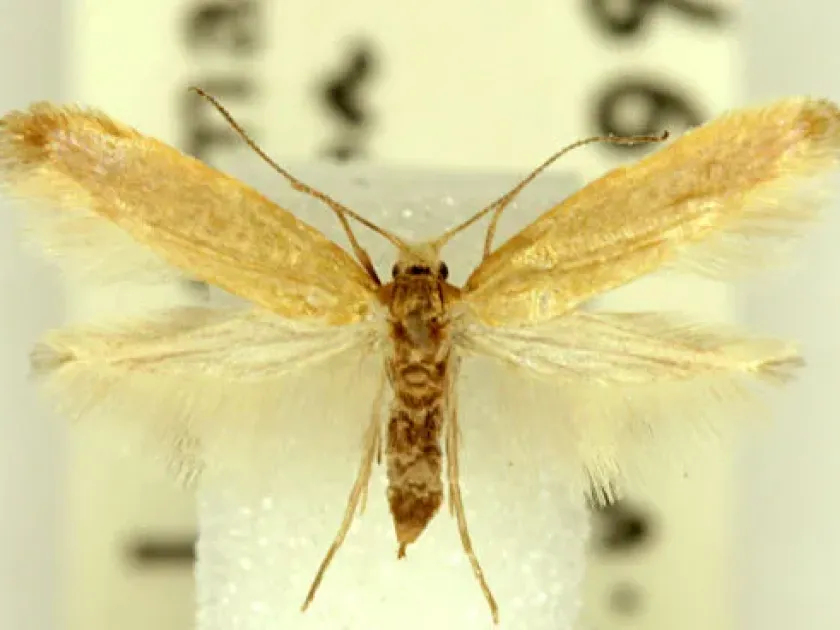
The Juniper fruit moth (Argyresthia praecocella) is a small moth belonging to the Yponomeutidae family. With a wingspan of roughly 10–12 mm, these moths feature characteristic golden-brown or grayish wing patterns.
The larvae are small, yellowish-green caterpillars with dark heads. They are rarely seen by gardeners because they reside inside the plant's tissues, specifically within fruits and young stems.
The species is taxonomically classified under the order Lepidoptera. Adults are nocturnal, showing activity mostly during twilight hours when they fly and mate near host plants.
The life cycle involves complete metamorphosis. They typically overwinter as larvae or pupae, hidden within bark crevices or sheltered parts of the host juniper tree.
Recognizing the adult moth or the specific damage patterns is vital for any professional gardener to manage the pest effectively before it reaches large numbers.
What it damages
The primary damage is caused by larvae feeding on juniper berries and developing shoots. By boring into the fruit, they destroy the crop and cause the berries to wither.
Feeding within young shoots disrupts the flow of water and nutrients, leading to the browning and eventual death of the affected branch tips. This significantly reduces the juniper's aesthetic appeal.
Severe infestations weaken the plant, making it highly susceptible to secondary attacks by other insects, like aphids or mites, and various fungal pathogens.
Over time, the cumulative damage leads to thinning of the foliage and can ruin the shape and form of topiary or ornamental juniper varieties.
In addition to physical damage, the loss of health makes the plant look unkempt, negatively affecting the overall landscape design.
When it appears
Adult moths typically emerge in late spring or early summer. This timeframe aligns with the availability of suitable berries and new growth for egg-laying.
Larvae are active throughout the summer, peaking in activity during the warmer months of July and August as they feed inside the tissues.
Pupation occurs by late summer or early autumn. The pupae stay protected in cocoons within the bark or needles, preparing for the upcoming winter season.
Monitoring for the presence of the pest should begin in mid-May to capture the onset of the moth flight and ensure timely intervention.
Understanding the life cycle is crucial because the larvae are most vulnerable to treatments before they have fully bored into the berries or stems.
Signs of infestation
The first signs of infestation include premature yellowing of berries and branch tips. Upon inspection, the interior of the berries may appear empty or hollow.
Tiny entry holes in the bark of young stems are a major indicator of larval presence. You might also notice fine frass or sawdust near these entry points.
Small strands of silk or webbing may be visible near the damaged shoots, as the larvae produce these to secure their environment during feeding.
If you see patches of dry, brown foliage appearing suddenly in the middle of summer, carefully inspect the stems beneath the affected area for borer activity.
Observing adult moths fluttering around the plant when shaken is a clear sign that a reproductive population is present and control measures are necessary.
Control measures
Sanitation is the most effective cultural control: prune and destroy all affected branches and collect dropped fruits to eliminate overwintering pupae.
Systemic insecticides applied during the early stages of infestation can be highly effective as they travel through the plant's tissues to reach the larvae.
- Prune damaged shoots immediately.
- Use pheromone traps for monitoring.
- Apply systemic insecticides in early summer.
- Maintain plant health with balanced fertilizers.
- Use eco-friendly biological control agents where possible.
It is essential to ensure thorough coverage of the foliage when applying protective sprays to catch the moths before they lay their eggs.
Continued observation throughout the season is recommended, as multiple generations or delayed development may occur depending on local climatic conditions.
Taxonomy
- Latin name
- Argyresthia praecocella
- Order
- Lepidoptera (butterflies)
- Family
- Yponomeutidae
- EPPO code
- ARGYPR
Discussion
No discussions yet — be the first.