
Cherry fruit moth
Argyresthia nitidella
Description
How to identify
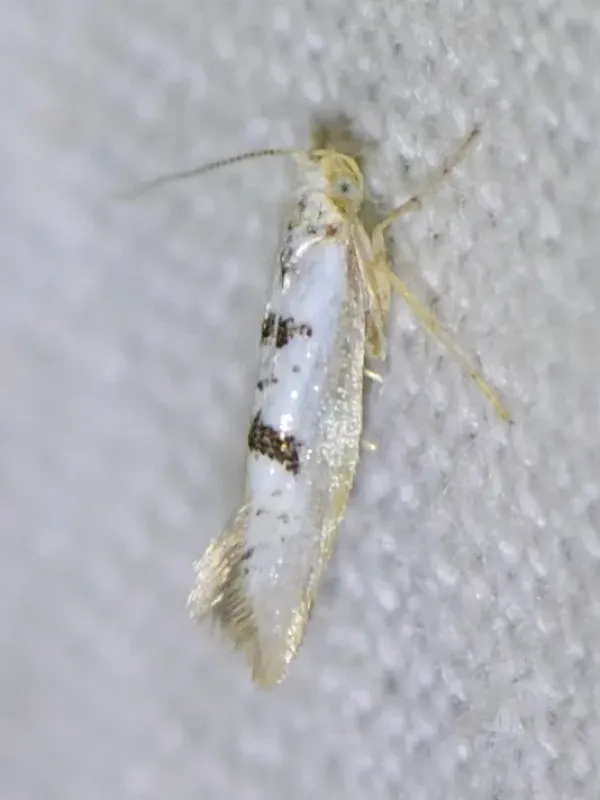
The cherry fruit moth (Argyresthia nitidella) is a small lepidopteran pest belonging to the Yponomeutidae family. Adult moths have a wingspan of approximately 10–12 mm, with distinctive metallic, golden-brown forewings adorned with white markings.
The larvae are small, usually 6–8 mm in length, displaying a light yellow or greenish body color with a prominent dark head. These larvae are highly mobile and start feeding on buds immediately after emerging from their winter diapause in early spring.
They overwinter as first-instar larvae within dense, white cocoons situated in bark crevices or branch bifurcations. This winter survival strategy makes them quite resilient to temperature fluctuations during the dormant season.
The life cycle is univoltine, meaning there is only one generation per year. After completing their development, the larvae pupate in the soil or protected cracks in the bark, with the adult flight occurring typically in early summer, coinciding with active tree growth.
Monitoring for this pest is crucial for effective management. Agronomists often use pheromone traps to identify the peak flight of adults, allowing for precision in timing insecticide applications before egg-laying begins.
What it damages
The primary hosts for this moth are cherry, sweet cherry, and plum trees. The damage is most severe during the bud-burst stage, where larvae burrow into the buds and consume the inner tissues, effectively destroying the floral and leaf primordia.
Later in the season, the larvae bore into the young succulent shoots. This boring activity creates tunnels inside the stem, which disrupts water and nutrient transport, leading to wilting, browning, and eventual death of the shoot tip.
Young trees in nurseries are particularly vulnerable to this pest. Repeated attacks on terminal leaders can cause severe malformation of the tree structure, which affects the long-term health and growth vigor of the fruit tree.
Damaged trees are more susceptible to secondary stressors, including bark diseases and fungal infections, as the wounds caused by the larvae provide an entry point for pathogens. This often leads to a decline in tree health over several seasons.
Significant economic loss can occur if the infestation is not managed. A single larva can compromise multiple buds, directly reducing the potential yield per tree before the fruit even has a chance to set.
Signs of infestation
The earliest symptom of an infestation is the failure of certain buds to open. These buds may appear dry or slightly open, revealing internal damage caused by the feeding larvae upon close inspection.
In late spring, the most prominent sign is the sudden wilting of young shoot tips. The foliage on these shoots turns brown and curls, creating a distinct "scorched" appearance that is easy to spot in an orchard.
Inside the tunnels of the damaged shoots, small dark fecal pellets (frass) are usually present. The entry points into these tunnels are often covered with fine silken webbing, which the larvae use for protection while moving.
During the flowering stage, dry inflorescences that fail to develop fruit serve as indicators of early larval damage. Opening these damaged buds will often reveal the presence of the larva or the remnants of its feeding activity.
- Non-opening or dead buds
- Wilting and browning of shoot tips
- Presence of larval frass in tunnels
- Silk webbing near damage sites
- Deformed leaves on affected branches
Control measures
The primary control method involves early spring insecticide applications, timed precisely with bud swelling. Systemic insecticides are generally most effective as they ensure the larvae ingest the poison while feeding inside the buds.
Integrated pest management includes regular sanitary pruning to remove and destroy infested shoots. By burning the pruned branches, growers can significantly reduce the local population of the pest before the larvae pupate.
Biological control using Bacillus thuringiensis (Bt) products is an excellent option during the peak larval feeding period. These biological agents provide an environmentally friendly alternative while minimizing the impact on beneficial insects.
Soil cultivation in the orchard under the canopy of trees can disrupt the pupation sites of the moth. Turning the soil in late autumn or early spring exposes the pupae to natural predators such as birds and ground beetles.
Maintaining optimal tree vigor through balanced fertilization and adequate irrigation is a key preventative measure. Healthy trees have a higher capacity to tolerate minor pest pressure and recover faster from mechanical damage.
Taxonomy
- Latin name
- Argyresthia nitidella
- Order
- Lepidoptera (butterflies)
- Family
- Yponomeutidae
- EPPO code
- ARGYNI
Discussion
No discussions yet — be the first.