
Larch miner moth
Argyresthia laevigatella
Description
How to identify
The Larch miner moth (Argyresthia laevigatella) is a member of the Yponomeutidae family within the order Lepidoptera. This small moth is a specialized pest that targets larch trees during its larval stage.
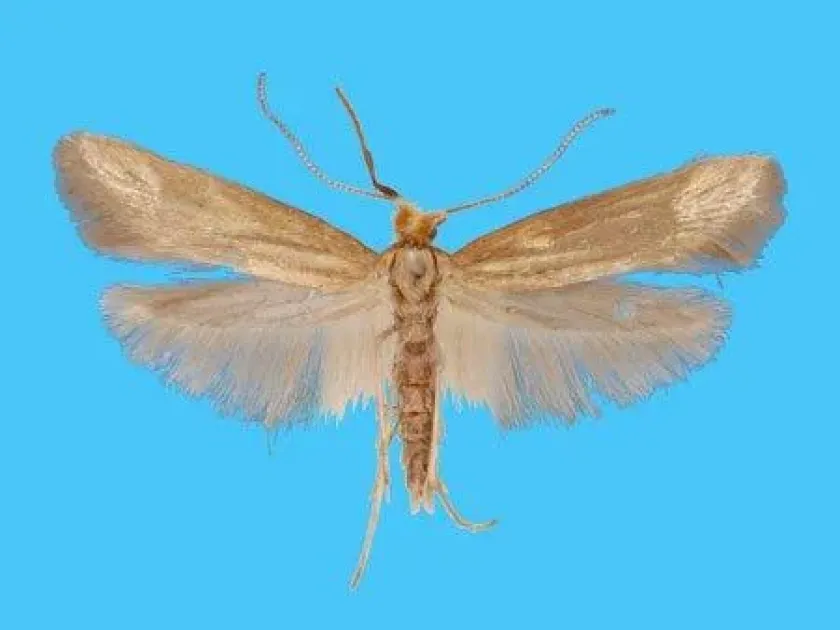
Adult moths have a wingspan of approximately 10 to 12 mm. Their forewings are often a metallic copper or grayish-brown color, which provides effective camouflage against the bark of larch trees.
The larvae are small, yellowish-green caterpillars with darker heads. They spend most of their feeding stage hidden inside the needles, making detection challenging for untrained observers.
This species is univoltine, meaning it completes one generation per year. The insect overwinters as a young larva, typically tucked away under bark scales or within dormant buds.
The lifecycle is tightly synchronized with the bud burst of larch trees, ensuring that the larvae have access to fresh, tender foliage immediately upon emerging from overwintering.
What it damages
The primary hosts are various species of the genus Larix (larch), including European and Japanese larch. Young trees and saplings are particularly susceptible to severe infestations.
The damage is caused by larvae mining the needles. They burrow into the foliage, consuming the interior tissues and leaving only a hollow shell, which disrupts the tree's photosynthetic capability.
Infested shoots often show reduced growth rates and stunted development. In severe cases, the affected needles turn brown and drop prematurely, causing the tree to look thin or unhealthy.
Repeated annual damage can weaken the tree, making it more susceptible to secondary attacks by other pests like bark beetles or various fungal pathogens that thrive on stressed hosts.
In forestry and ornamental settings, this moth causes significant aesthetic degradation, leading to economic losses in timber production and landscaping value.
Signs of infestation
The most visible sign is the discoloration of needles on young shoots in late spring. Affected needles turn yellow or reddish-brown while the rest of the tree remains green.
Close inspection reveals small entry holes in the needles where the larvae have penetrated. The needles appear hollowed out and are brittle when touched.
Deformation of the leading shoots, which often bend into a "shepherd's crook" shape, indicates structural damage caused by larvae mining near the base of the needles.
In early summer, tiny exit holes can be seen on the shoots as the mature larvae emerge to pupate, leaving behind empty mines.
- Premature needle drop in June.
- Discolored, drooping shoot tips.
- Visible hollow mines within individual needles.
- Stunted shoot growth in young trees.
Control measures
Effective management involves a combination of mechanical removal and targeted chemical or biological treatments applied at the correct developmental stage of the pest.
Pruning and destroying heavily infested branches before the larvae emerge in early summer is a highly effective way to reduce the local population of the moth.
Systemic insecticides are recommended for larger infestations, as these chemicals are absorbed by the tree and reach the larvae feeding inside the needles.
Biological control agents, such as microbial sprays containing Bacillus thuringiensis, can be used to manage the caterpillar population while minimizing harm to beneficial insects.
Regular monitoring of nursery stock and young plantations is crucial. Detecting the pest early allows for timely intervention, preventing the spread of the moth to surrounding healthy trees.
Taxonomy
- Latin name
- Argyresthia laevigatella
- Order
- Lepidoptera (butterflies)
- Family
- Yponomeutidae
- EPPO code
- ARGYLA
Discussion
No discussions yet — be the first.