
Spruce needle miner
Argyresthia glabratella
Description
How to identify
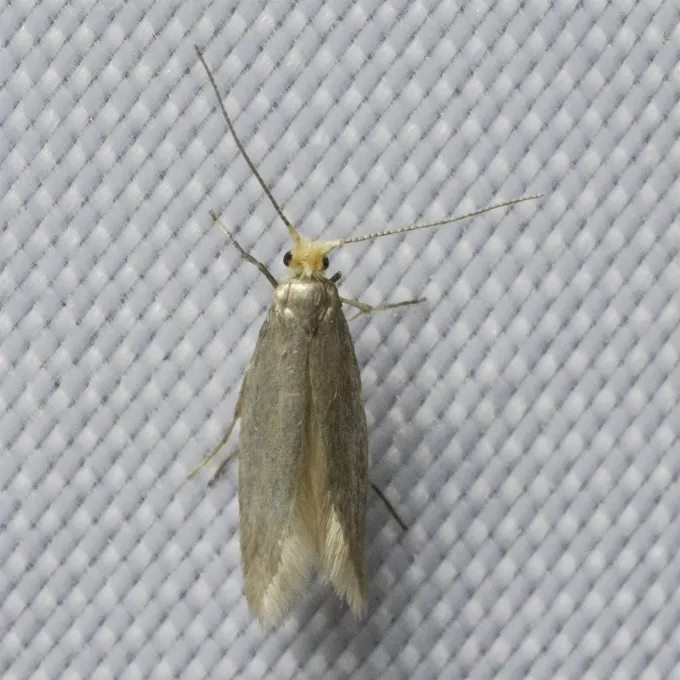
The spruce needle miner (Argyresthia glabratella) is a member of the Yponomeutidae family within the order Lepidoptera. The adult moth has a small wingspan, typically ranging from 8 to 10 mm.
The forewings are distinctively colored with shades of yellow and brown, featuring dark transverse bands. The hindwings are narrow and heavily fringed, which is a characteristic feature of this species.
The larvae, or caterpillars, are small, measuring about 5–6 mm. They typically have a pale yellow or greenish body with a dark head, making them visible once the bark of the shoot is peeled back.
The species overwinters as a larva inside the spruce shoots. Pupation takes place in the spring or early summer within the mined shoot or in a cocoon on the surface of the bark.
Adult moths are nocturnal and rarely observed during the day, which often makes their presence go unnoticed until physical damage to the tree becomes clearly visible.
What it damages
The primary host for this pest is Norway spruce (Picea abies). The larvae cause significant stress to the host tree by feeding on the internal tissues of the new shoots.
As larvae bore into the shoots, they disrupt the plant's vascular system, causing the distal part of the shoot to wither and eventually die off completely.
In ornamental settings and nurseries, the damage caused by these insects significantly reduces the commercial and aesthetic value of the spruce trees.
Repeated or severe infestations can lead to a thinning crown and overall lack of vigor, making the trees more susceptible to secondary attacks from bark beetles.
The damage caused by the larvae is permanent for the affected shoots, necessitating pruning and careful maintenance to restore the tree's original form and health.
When it appears
The flight period for adult moths occurs from June through early July. During this timeframe, mating occurs and eggs are laid near the base of the current year's buds.
Upon hatching, the larvae quickly bore into the shoot tissue, where they will reside and feed throughout the remainder of the summer and the following autumn.
During winter, the larvae remain inactive within the shelter of the shoots, effectively protected from severe freezing temperatures and external predators.
In the spring, as temperatures rise, the larvae resume feeding before eventually pupating inside the tunnels they have created throughout their development.
Understanding the life cycle is crucial because the window for effective chemical control is limited to the period when the larvae are moving to the shoots before boring inside.
Signs of infestation
The most prominent sign of infestation is the yellowing and subsequent browning of needles on the affected shoots, which contrast sharply with the rest of the healthy green crown.
Close inspection of the shoots will reveal small entry holes made by the larvae, often accompanied by small piles of sawdust-like frass (excrement) around the points of entry.
If you cut open a suspected shoot, you will find a distinct tunnel filled with frass, confirming that the internal tissues have been consumed by the larva.
Affected trees may show a visible reduction in the length of the annual growth, and in severe cases, the tips of the branches may appear curled or deformed.
Monitoring for adult moth presence with light traps or pheromone baits during the summer is a proactive way to detect the start of an infestation before symptoms appear.
Control measures
Systemic insecticides are the most effective method for controlling this pest, as the chemical can be absorbed into the plant tissue where the larvae are feeding.
Sanitation pruning should be performed in early spring to remove and destroy infested shoots, thereby physically reducing the population before the moths emerge.
Biological control agents, such as Bacillus thuringiensis, can be applied to target young larvae effectively before they become fully protected by the shoot bark.
Pheromone traps are highly recommended for monitoring purposes to determine the exact timing for insecticide applications, minimizing the number of unnecessary sprays.
Promoting tree health through proper fertilization, adequate watering, and mulch application ensures the spruce is more resilient against needle miner stress and recovery.
Taxonomy
- Latin name
- Argyresthia glabratella
- Order
- Lepidoptera (butterflies)
- Family
- Yponomeutidae
- EPPO code
- ARGYGL
Discussion
No discussions yet — be the first.