
Silver fir moth
Argyresthia fundella
Description
How to identify
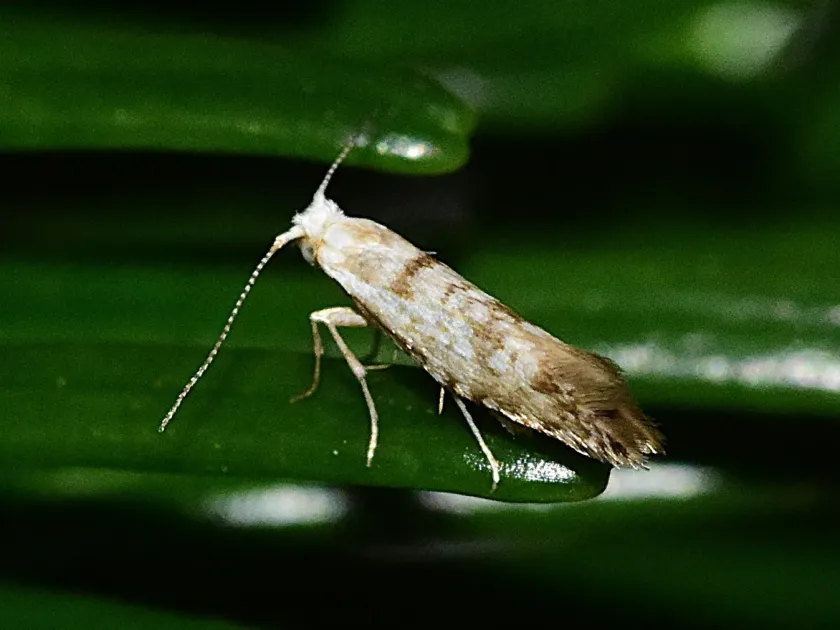
The silver fir moth (Argyresthia fundella) is a small moth belonging to the Yponomeutidae family within the order Lepidoptera. The adult moth features a wingspan of approximately 10–12 mm and possesses silvery-gray forewings often marked with darker patterns.
The larval stage consists of small yellow-green caterpillars with dark brown heads. These larvae feed internally, making them difficult to detect during the early stages of infestation. The pupae are formed inside the needles or small crevices of the bark, protected from environmental threats.
What it damages
The primary host for this species is the fir tree (Abies), particularly Abies alba and related species. Larvae feed exclusively on the current year's needles, tunneling into them to consume the inner tissues while leaving the outer epidermis intact.
Severe infestations can lead to significant needle loss and discoloration, which impacts the overall health and ornamental value of the tree. Weakened trees may eventually become targets for secondary pests, such as bark beetles.
When it appears
The silver fir moth has a single generation per year. Adults emerge during the summer months, typically between June and July, to mate and deposit eggs near the base of the fir needles.
Larvae hatch soon after and enter the needles, where they spend the winter in diapause. They resume feeding in the following spring, pupating in late spring or early summer to complete the cycle.
Signs of infestation
Symptoms of infestation include premature yellowing and browning of individual needles. When examined closely, needles appear hollowed out, often with a small exit hole at the base where the larva has vacated or continues to feed.
During spring, affected needles may detach easily from the branch. In cases of heavy infestation, the crown of the tree may look thin and prematurely withered, which is a key diagnostic indicator for foresters and arborists.
Control measures
Effective management involves a combination of chemical control and cultural practices. Insecticides should be applied during the peak egg-laying period or when young larvae are hatching to ensure optimal coverage.
- Application of systemic insecticides that are absorbed by the needles.
- Pruning and destroying heavily infested branches to reduce the pest population.
- Monitoring the population density using pheromone traps throughout the flight season.
- Encouraging natural predators, such as parasitoid wasps, to suppress moth numbers.
Taxonomy
- Latin name
- Argyresthia fundella
- Order
- Lepidoptera (butterflies)
- Family
- Yponomeutidae
- EPPO code
- ARGYFU
Discussion
No discussions yet — be the first.