
Cypress tip moth
Argyresthia cupressella
Description
How to identify
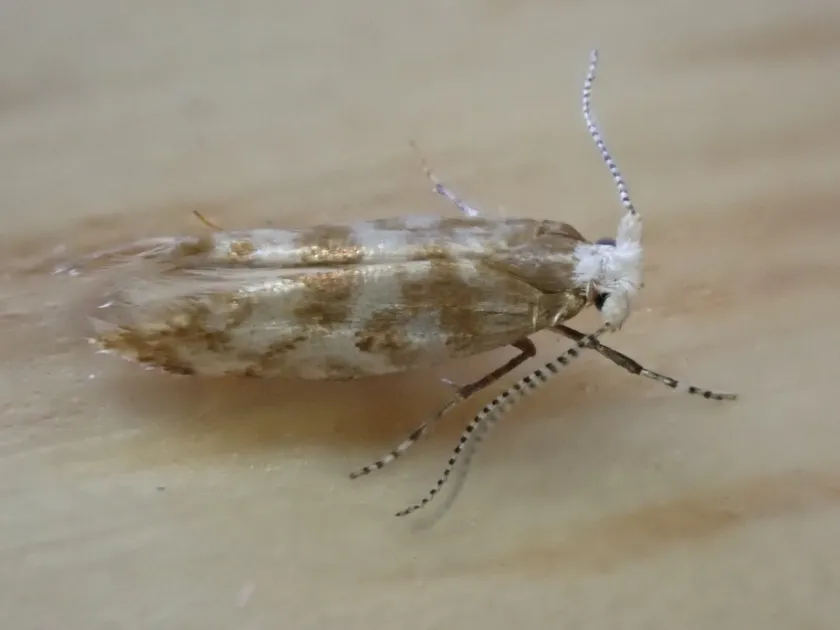
The cypress tip moth is a small member of the Yponomeutidae family. The adult moth has a wingspan of roughly 8–10 mm and is characterized by its slender body and pale, mottled coloration.
Adults are nocturnal and are rarely seen by gardeners during daylight hours, making their detection difficult unless monitoring tools like light or pheromone traps are used.
The life cycle consists of a single generation per year. The insect overwinters as a larva inside the needles, providing protection from harsh winter elements.
In spring, the larvae continue feeding before undergoing pupation, which typically occurs within the mined needle or a small, white silken cocoon attached to the foliage.
After the pupal stage, the moths emerge to mate and lay eggs near the tips of new growth, ensuring that the next generation of larvae has immediate access to food.
What it damages
The primary hosts of this pest include species within the Cupressaceae family, particularly Lawson cypress, arborvitae (Thuja), and various species of juniper.
The larvae are specialized miners that bore into the tips of young needles. They consume the internal tissues, effectively hollowing out the foliage from the inside.
As the larvae feed, the distal portions of the needles turn yellow, then brown, and eventually wither, leading to a scorched appearance of the affected branch tips.
While a light infestation may only cause minor aesthetic damage, severe outbreaks can lead to extensive dieback, thinning the foliage and reducing the tree's overall vigor.
Repeated damage over several years can stress the plant significantly, making it susceptible to secondary pests and various opportunistic pathogens.
Signs of infestation
The most visible symptom is the localized browning of branch tips, which often becomes apparent in the late spring or early summer as the larvae reach maturity.
Upon closer inspection, the damaged needles will appear papery and hollowed out. Tiny holes may be visible where the larvae initially entered the needle.
Frass, which resembles fine dust or small dark grains, is often present inside the hollowed-out needles or near the site of the damage.
In cases of heavy infestation, a light tap on the foliage may cause a significant drop of dead brown needles, revealing the underlying damage to the branch structure.
- Browning and dieback of needle tips.
- Hollowed-out needles with tiny entry points.
- Accumulation of fine granular frass.
- Presence of small white cocoons on the foliage in late spring.
Control measures
Sanitation is a critical management strategy. Carefully prune and dispose of infested branch tips before the adult moths emerge to prevent the next cycle of infestation.
Chemical control is most effective when applied at the right time. Systemic insecticides are generally preferred as they are translocated into the plant tissue, reaching the larvae.
Timing is essential: treatments should coincide with the peak egg-laying period or the immediate post-hatch phase, typically determined by monitoring adult flight activity.
Maintaining tree health through proper irrigation and balanced fertilization helps plants compensate for damage and recover more effectively from pest pressure.
Biological monitoring using pheromone traps can help pinpoint the exact emergence window, allowing for precise application of control measures while minimizing environmental impact.
Taxonomy
- Latin name
- Argyresthia cupressella
- Order
- Lepidoptera (butterflies)
- Family
- Yponomeutidae
- EPPO code
- ARGYCU
Discussion
No discussions yet — be the first.