
Short-winged grasshopper
Arcyptera microptera
Description
How to identify
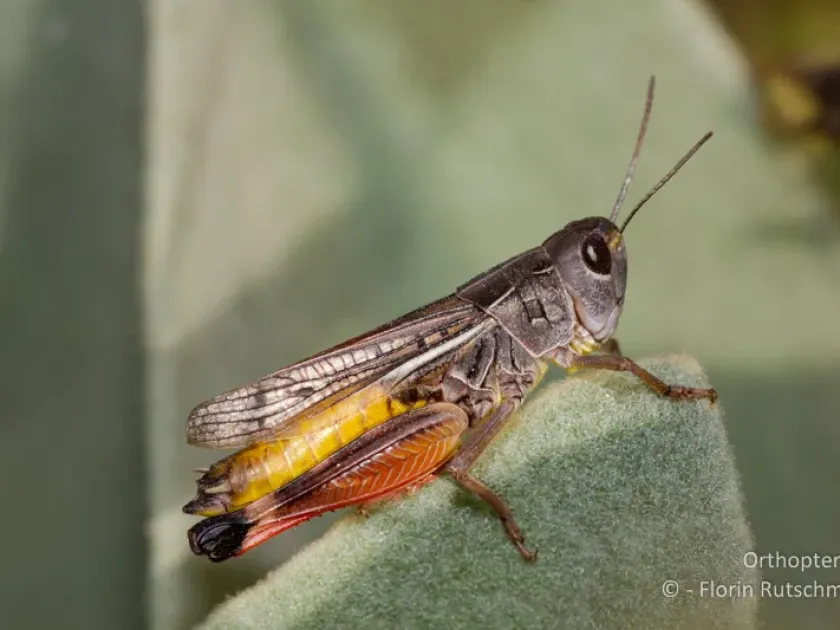
The short-winged grasshopper (Arcyptera microptera) belongs to the order Orthoptera and the family Acrididae. It is a medium-sized insect displaying significant sexual dimorphism.
The adult body color ranges from brown to olive-green, providing excellent camouflage in steppe environments. The most distinctive feature is its shortened tegmina (forewings), which in females rarely reach the end of the abdomen.
The head is large with medium-length antennae. The pronotum features a specific pattern, which serves as a key identifier for specialists conducting field surveys.
Larvae undergo five developmental stages (instars), gradually increasing in size. Wing pads become noticeable as early as the second or third instar, growing progressively with each molt.
This species prefers arid areas with sparse vegetation, where sunlight and soil warmth provide optimal conditions for the successful development of their egg pods.
What it damages
This grasshopper is a polyphagous insect, though it causes the most significant damage to members of the Poaceae family. They feed on plant vegetation throughout their active life stages.
Crops such as wheat, barley, millet, and oats are the most frequent victims. The pests consume leaves and stems, significantly reducing the plant's photosynthetic capacity.
The most dangerous period for infestations is during the tillering and stem elongation phases of cereals. High population densities can result in total crop destruction in specific areas.
Beyond agricultural fields, this grasshopper damages perennial grasses in pastures and hay meadows, reducing the nutritional quality and availability of forage for livestock.
During outbreak years, short-winged grasshoppers may migrate in search of fresh food sources, rapidly spreading across adjacent agricultural fields and gardens.
When it appears
The winter is passed in the egg stage, with eggs deposited in the soil in protective clusters called pods. Embryonic development completes in spring as the topsoil warms up.
Larval emergence typically occurs in May or early June, coinciding with the active growth phase of cereal grasses. This period is the most critical for monitoring.
Development from larva to adult takes approximately 30 to 45 days, depending on temperature. Feeding intensity increases significantly as the insect reaches maturity.
Adults emerge in mid-summer, usually in July, and remain active through August, feeding and laying eggs until the onset of the cold autumn weather.
There is typically one generation per year, which allows farmers to plan effective management strategies based on a predictable seasonal life cycle.
Signs of infestation
The first indicator of an infestation is irregular gnawing along the edges of cereal leaves. The edges appear ragged, uneven, or sometimes completely consumed.
Field inspection during the cool hours of the morning or evening reveals the presence of jumping insects that scatter as one approaches, helping to assess population size.
In fields with high population density, a noticeable thinning of the vegetation occurs. Stems often show mechanical damage, looking chewed and weakened.
The presence of insect frass (droppings) on leaves and soil surface is a clear sign of active grasshopper feeding in that particular zone.
In outbreak clusters, large areas may show a drastic reduction in biomass, often starting from field margins or borders near uncultivated land.
Control measures
Deep autumn plowing (tillage) is the primary cultural control method, as it brings egg pods to the surface, exposing them to winter frost, desiccation, or predation by birds.
Effective crop rotation is essential, as it reduces the suitability of the field for grasshopper reproduction and disrupts the life cycle of the pest.
Regular mowing of weeds along roadsides, field borders, and fallow land is necessary to keep the grasshopper population below the economic injury level.
- Application of contact-stomach insecticides when the threshold of damage is exceeded.
- Use of biological control agents, including entomopathogenic fungi and bacteria.
- Consistent field monitoring using sweep nets to track larval density and development.
Chemical treatments should be timed precisely to target early larval instars, as they are most vulnerable to control measures before they develop flight capabilities.
Taxonomy
- Latin name
- Arcyptera microptera
- Order
- Orthoptera (locusts)
- Family
- Acrididae
- EPPO code
- ARCPFL
Discussion
No discussions yet — be the first.