
Arcyptera brevipennis
Arcyptera brevipennis
Description
How to identify
Arcyptera brevipennis belongs to the order Orthoptera, family Acrididae. This species is commonly known as a grasshopper that displays distinct physical characteristics within its genus.
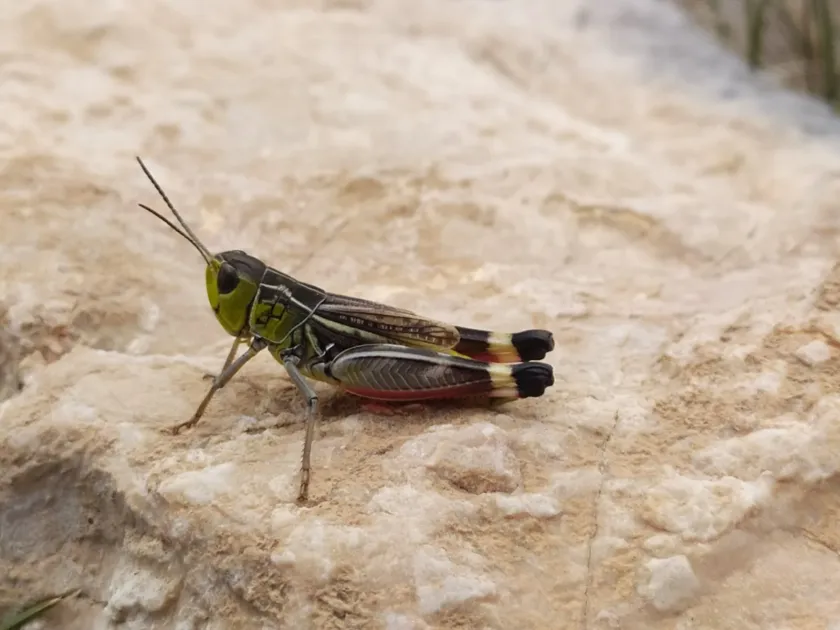
A key identifying feature of this species is its shortened wings; in females, the tegmina typically do not reach the end of the abdomen, while in males, they are better developed but still relatively short.
The body coloration ranges from greenish-brown to dark brown, providing excellent camouflage against the grassy environments they inhabit.
They possess a large head with well-developed compound eyes and powerful hind legs adapted for jumping, which is their primary method of escape from predators.
This species is frequently found in open areas, meadows, and forest edges where thin vegetation prevails, making them well-adapted to specific ecological niches.
What it damages
Arcyptera brevipennis is a polyphagous pest, meaning it feeds on a variety of plants, though it causes significant damage to cereal crops and pasture grasses.
The most severe damage occurs during the active growth stages of cereals, as the insects consume leaf tissue, which drastically reduces the photosynthetic capacity of the plants.
When population densities are high, these grasshoppers can destroy seedlings entirely by feeding on the growth points, leading to significant crop thinning and total yield loss.
Beyond cereal crops, they are known to impact grassland productivity by consuming green mass that is vital for livestock grazing.
During periods of drought or natural forage scarcity, these pests often migrate in large numbers from uncultivated edges into lush, managed agricultural fields.
When it appears
The life cycle of this species includes overwintering in the egg stage, with females laying eggs in the soil inside protective pods called oothecae at shallow depths.
In spring, as temperatures rise, the eggs hatch, and the first-instar nymphs emerge, usually starting in May depending on the regional climate.
The insects undergo five nymphal stages (instars), feeding aggressively throughout their development until they reach the adult (imago) stage.
Adult grasshoppers typically appear in mid-summer, remaining active throughout the season until cooler autumn temperatures cause them to perish.
This species is univoltine, meaning it completes only one generation per year, making the survival of the overwintering eggs crucial for the following season's population.
Signs of infestation
Initial signs of infestation include jagged, uneven leaf margins where the grasshoppers have been feeding, distinct from the smoother bites left by caterpillars.
Visual identification can be made by observing the grasshoppers jumping through the vegetation while walking along the edges of the field.
The presence of grasshopper frass—tiny, granular, dark-colored droppings found at the base of the stems—is a strong indicator of an established infestation.
In cases of high infestation, noticeable patches of "mown" or stripped vegetation appear, where the foliage has been heavily consumed.
Affected plants often show signs of stress, such as yellowing or stunted growth, ultimately resulting in reduced biomass and severe crop yield degradation.
Control measures
Effective management includes deep autumn plowing of field edges and idle lands, which destroys the oothecae and exposes the eggs to harsh environmental conditions and predators.
Maintaining clean field boundaries by regularly mowing weeds deprives the grasshoppers of their initial food source and prevents them from migrating into crops.
When economic injury levels are surpassed, chemical control using registered insecticides, such as pyrethroids or organophosphates, should be applied during the early nymph stages.
Regular monitoring of population density is essential for timing interventions before the insects become highly mobile adults.
- Monitor nymph population levels in late spring.
- Use crop rotation to disrupt the insect's habitat.
- Implement biological control agents like entomopathogenic fungi when applicable.
Taxonomy
- Latin name
- Arcyptera brevipennis
- Order
- Orthoptera (locusts)
- Family
- Acrididae
- EPPO code
- ARCPBR
Discussion
No discussions yet — be the first.