
Club-horned grasshoppers
Arcyptera
Description
How to identify
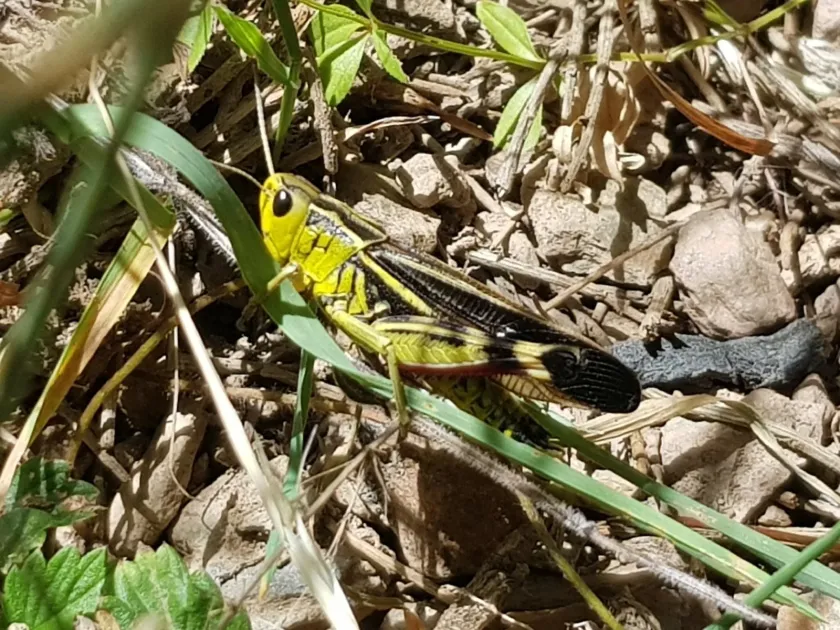
Club-horned grasshoppers of the genus Arcyptera belong to the Acrididae family within the order Orthoptera. Their common name refers to the distinct club-like swelling found at the tips of their antennae, which serves as a key morphological characteristic for identification.
These insects generally exhibit cryptic coloration, ranging from brownish-yellow to greenish, allowing them to blend into the surrounding vegetation. Their bodies are well-adapted for jumping and short flights, making them mobile within their habitat.
The life cycle consists of three distinct stages: egg, nymph, and adult. They overwinter in the egg stage, with females laying clutches in soil-based pods, often in undisturbed ground near grasslands or field margins.
Spring warming triggers the hatching of nymphs, which typically undergo several molts during their development. The nymphal period lasts for several weeks, depending on temperature and environmental conditions, before they reach the adult stage.
While typically not as devastating as migratory locusts, club-horned grasshoppers can reach high population densities in favorable years, posing a significant threat to agricultural productivity in specific regions.
What it damages
These grasshoppers are generalist feeders, known to damage a wide array of cultivated crops and wild grasses. Their polyphagous nature allows them to switch hosts depending on the availability of food sources during the growing season.
Cereal crops such as wheat, barley, rye, and oats are primary targets. Both nymphs and adults consume leaves and stems, which can lead to severe defoliation and a reduction in the plant's photosynthetic capacity, ultimately affecting grain yield.
Pastures and hay meadows also suffer from heavy infestation, leading to a decrease in the quality and quantity of forage. This impacts livestock production by reducing available grazing biomass and nutritional value.
In dry years, when wild host plants become scarce, these grasshoppers often migrate from uncultivated lands to adjacent crop fields, causing localized but intense damage that can lead to significant yield losses if left unchecked.
Furthermore, the physical injury to the plant tissue creates entry points for various fungal and bacterial pathogens, which can exacerbate the negative impact on the final harvest quality and market value.
Signs of infestation
The primary sign of infestation is the appearance of ragged, irregular feeding patterns on the edges of cereal leaves. As nymphs grow, these injuries become more pronounced, often resulting in leaves that look partially consumed.
Adult grasshoppers are easily spotted during field inspections. Their characteristic jumping movements and the audible stridulation produced by many species are clear indicators of their presence in the crop canopy.
Feeding residue, such as chewed leaf fragments left on the ground or stuck to the plants, as well as the presence of frass (excrement), provides additional evidence of localized pest activity within the field.
Early-season scouting is crucial; farmers should look for concentrated groups of nymphs along field edges, fencerows, or adjacent grassland areas where the eggs hatched before the insects dispersed into the crops.
In cases of high-density infestation, visible thinning of the crop stands occurs as the grasshoppers continue to consume the available leaf area, leading to stunted plant development and poor grain fill.
Control measures
Effective management begins with regular monitoring of grasshopper populations, particularly in the spring. Early detection allows for targeted treatments that can prevent the spread of the insects from borders into the main crop.
Cultural practices play a major role in suppression. Deep autumn tillage of fields and adjacent fallow land can destroy egg pods by exposing them to desiccation and natural predators, thereby significantly reducing the population for the next season.
Chemical control involving approved insecticides is necessary when population thresholds are exceeded. Applications are most effective when directed at early-instar nymphs before they become highly mobile and widespread across the field.
Biocontrol measures, such as maintaining habitats for natural predators like birds and predatory beetles, can help keep grasshopper populations in check. Avoiding broad-spectrum pesticides where possible preserves these beneficial species.
- Monitor field borders for nymph activity in the spring.
- Use deep tillage in autumn to disturb egg-laying sites.
- Apply targeted insecticides to field edges during early outbreaks.
- Keep field margins and irrigation ditches free of rank weeds.
Taxonomy
- Latin name
- Arcyptera
- Order
- Orthoptera (locusts)
- Family
- Acrididae
- EPPO code
- ARCPSP
Discussion
No discussions yet — be the first.