
Eastern imperial eagle
Aquila heliaca
Description
How to identify
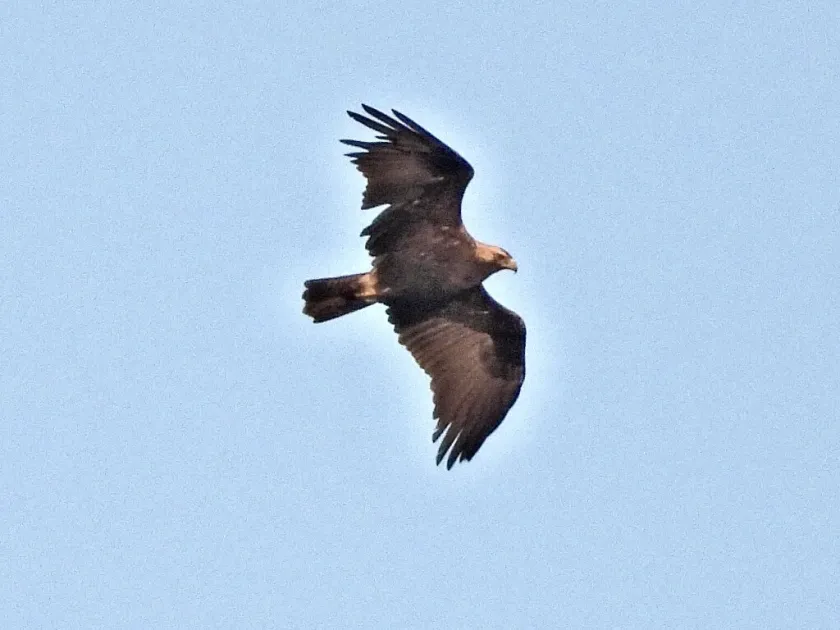
The Eastern imperial eagle is a large bird of prey within the Accipitridae family. It is characterized by a dark brown plumage and a distinct pale crown on its head, with a significant wingspan that aids in long-distance patrolling of open areas.
Juvenile birds often display a lighter, mottled appearance, which can be misidentified by non-specialists. These eagles prefer to nest in tall trees near agricultural fields, which provide an ideal vantage point for hunting.
The biology of this species is linked to the presence of small to medium-sized mammals. As an apex predator, it plays a vital role in balancing the populations of species that live within agricultural landscapes.
The species is strictly protected by international and local laws. It is considered a rare bird and must not be harmed under any circumstances in an agricultural or forestry environment.
Understanding that the imperial eagle is a protected raptor and not a crop pest is crucial for maintaining sustainable and ethical farming practices across the landscape.
What it damages
The Eastern imperial eagle does not damage agricultural crops. It does not feed on vegetation, grains, or fruits, nor does it disturb the soil or root systems of field crops.
Any negative classification of this bird as a pest is scientifically inaccurate. It does not possess the physiological traits required to cause damage to primary agricultural production.
The positive economic impact of the imperial eagle is substantial, as it actively hunts rodents such as voles and gophers that are responsible for significant crop losses annually.
By consuming these pests, the eagle provides an essential ecosystem service, helping farmers reduce the pressure of rodent populations without the need for intensive intervention.
The presence of such predators in the field is a sign of a healthy, functioning environment that can support the natural suppression of agricultural pests.
Control measures
There are no control measures required against the imperial eagle, as it is a beneficial species for agricultural systems. Conservation efforts are the only appropriate course of action.
Farmers should focus on protecting these birds by avoiding the use of hazardous rodenticides that could lead to the secondary poisoning of these raptors when they hunt in affected fields.
Strategic agricultural management should encourage the presence of raptors by preserving nesting sites and shelter areas, such as tree rows or peripheral vegetation on the farm.
Promoting environmental literacy among field staff is essential to ensure that farmers recognize and protect these natural allies instead of mistakenly treating them as a nuisance.
- Protect nesting sites and habitats
- Avoid the use of toxic rodenticides
- Encourage biodiversity in farm management
- Monitor rodent pressure naturally
Taxonomy
- Latin name
- Aquila heliaca
- Family
- Accipitridae
- EPPO code
- AQUIHE
Discussion
No discussions yet — be the first.