
Almond bug
Apodiphus amygdali
Description
How to identify
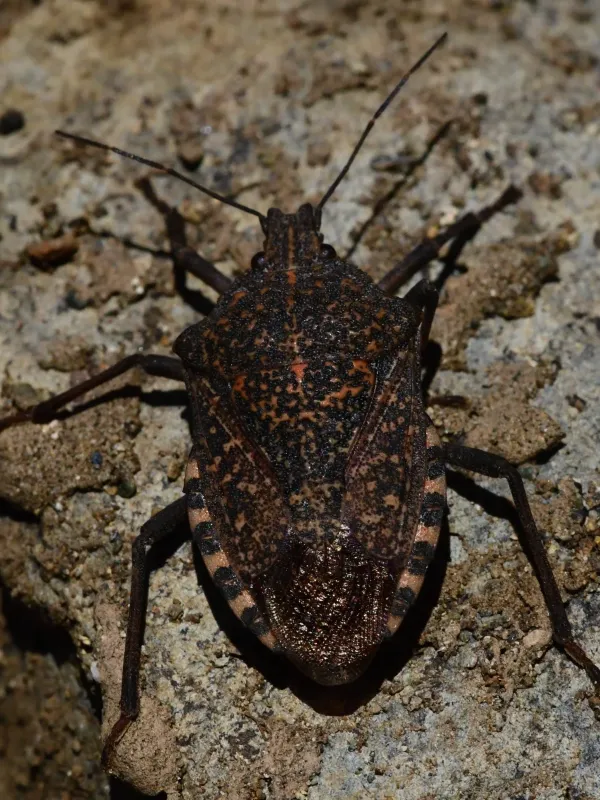
The almond bug (Apodiphus amygdali) is a prominent species within the Pentatomidae family, commonly known as shield bugs. Adults typically reach 15–20 mm in length and feature a distinctively flat, shield-shaped body characterized by a brownish-grey mottled pattern.
A key diagnostic feature is the broad head equipped with a specialized piercing-sucking mouthpart. The edges of the abdomen are often marked with light-colored patterns, which helps distinguish this insect from other similar stink bug species found in temperate regions.
The eggs are barrel-shaped and are typically deposited in clusters on the undersides of leaves or protected bark crevices. Each cluster usually contains between 10 and 20 eggs, providing a concentrated target for early-season manual removal.
Nymphs undergo five developmental instars, gradually increasing in size and complexity. Their coloration serves as effective camouflage, allowing them to blend into the bark of fruit trees, making them difficult to detect during standard scouting.
These insects are primarily arboricultural, spending the majority of their lifecycle within the canopy of trees. They exhibit a gregarious behavior, often clustering together in small groups on branches or fruit clusters during the heat of the day.
What it damages
The almond bug primarily attacks members of the Rosaceae family, including almond, peach, apricot, apple, and pear trees. In addition to commercial fruit crops, they are known to thrive on various woody ornamental trees like poplar and willow.
The damage is caused by the insect injecting toxic saliva into plant tissues while feeding on sap. This process leads to localized tissue necrosis, malformation of young shoots, and general physiological stress on the host plant.
Fruit infestation is particularly severe, as the bugs target developing fruitlets. This results in premature fruit drop, pitting, and the formation of hardened, corky areas under the skin, which significantly degrades fruit marketability.
On affected branches, localized feeding can cause gumosis (exudation of gum) and surface cracking of the bark. These wounds become secondary infection sites for pathogens, which may lead to dieback of small twigs and branches.
Chronic infestation weakens the overall health of the tree, reducing its ability to produce energy reserves. Over several seasons, this cumulative damage can lead to reduced yields and a decline in the tree's overall vigor.
When it appears
The almond bug typically produces one to two generations per year, depending on the climatic conditions of the region. They spend the winter in the adult stage, seeking shelter under loose bark, in leaf litter, or in protected gaps in orchard infrastructure.
Emergence from hibernation occurs in early spring as temperatures rise consistently above 10-12 degrees Celsius. Initially, the adults feed on developing buds and tender young leaves, which is a critical time for monitoring potential population explosions.
The reproductive phase and subsequent egg-laying peak in late spring. This period aligns with the formation of the first fruitlets, creating an ideal food source for the emerging nymphs, which start feeding immediately upon hatching.
Population density typically reaches its peak during the mid-to-late summer months. During this period, the increased metabolic activity of the insects corresponds with the rapid development of fruit, making them a major threat to harvest quality.
As autumn approaches, the insects decrease their feeding intensity and start moving towards their overwintering sites. This migratory behavior towards the base of the trunk or protected cavities marks the end of the active damage cycle for the year.
Signs of infestation
Early symptoms include the presence of numerous small chlorotic spots on leaves where the bugs have pierced the tissue to feed. Over time, these spots can enlarge or cause the leaf to curl and become misshapen due to cell death.
Gumosis on twigs and young branches is a classic indicator of almond bug activity. These small resinous drops are the tree's reaction to the insect's piercing mouthparts and are often found in areas with high insect concentration.
Deformed fruit with distinct depressions or darkened pits is a clear sign of infestation. Peeling back the skin in these areas often reveals hardened, discolored pulp that is unpalatable, rendering the fruit unsuitable for fresh consumption.
The characteristic pungent odor released by the bugs when disturbed is a reliable field diagnostic tool. A quick shake of the branches during the early morning hours will often reveal the presence of these insects as they emit their alarm pheromones.
Finding cast-off nymphal skins (exuviae) on the trunks or main branches confirms successful colonization and indicates that the pest is actively developing within the specific tree canopy.
Control measures
Management strategies involve a combination of orchard sanitation and targeted intervention. Removing loose bark from trunks during the dormant season significantly reduces available overwintering sites for adult populations.
Manual collection of adults and nymphs during the early morning or evening hours is highly effective in smaller, high-value orchards. Using a collection tray or sheet underneath the branches before shaking them can help concentrate and destroy the pests.
In cases of heavy infestation, systemic insecticides can be applied during the early nymph stages. It is crucial to adhere to strict pre-harvest intervals and choose products that minimize impact on beneficial pollinators and predatory insects.
Promoting natural biological control agents, such as predatory beetles or birds, can help suppress population numbers. Integrated Pest Management (IPM) practices focus on maintaining ecological stability to naturally limit the bug's proliferation.
- Implementing regular sanitation to remove fallen leaf litter and plant debris.
- Monitoring population levels using pheromone or light traps if available.
- Applying insecticidal soaps for early-stage nymph control in organic or small-scale gardens.
- Pruning and destroying severely infested branches to reduce local population pressure.
Taxonomy
- Latin name
- Apodiphus amygdali
- Order
- Hemiptera (bugs, aphids, leafhoppers)
- Family
- Pentatomidae
- EPPO code
- APDPAM
Discussion
No discussions yet — be the first.