
Apodiphus
Apodiphus
Description
How to identify
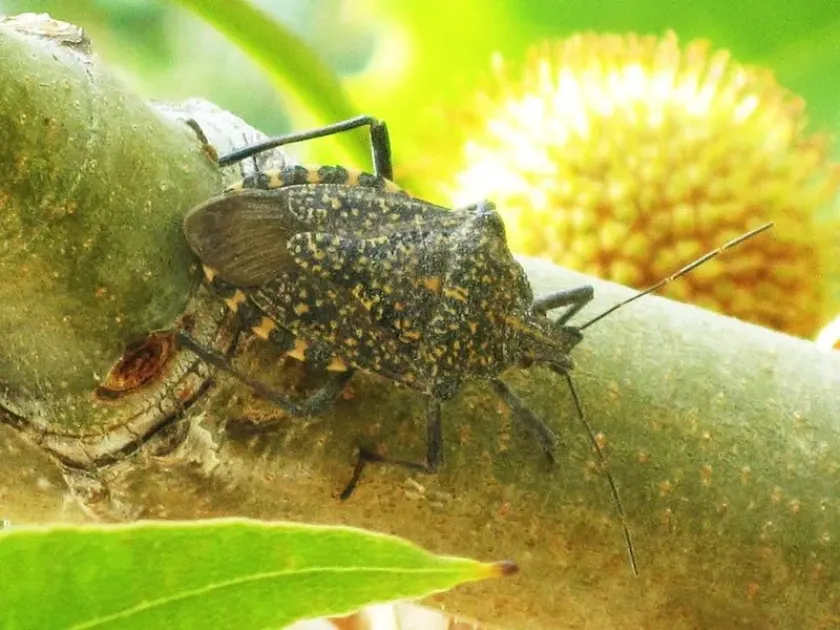
The Apodiphus bug (scientific name: Apodiphus) belongs to the order Hemiptera and the family Pentatomidae, commonly known as shield bugs. Adult insects typically exhibit a shield-like body shape, ranging from 15 to 20 millimeters in length.
Their coloration is generally mottled, ranging from greyish-brown to yellowish-brown, which provides excellent camouflage against tree bark. The head is elongated, and the pronotum features sharp lateral corners, a diagnostic characteristic of the genus.
Nymphs undergo several developmental stages, gradually resembling the adult form. Unlike mature bugs, nymphs are wingless and smaller, yet they possess a specialized piercing-sucking mouthpart designed for feeding on plant sap.
This pest leads a mostly secretive lifestyle, residing within tree canopies and on the undersides of leaves. During the day, they remain inactive, often hiding in bark crevices or among dense foliage to avoid predators and extreme heat.
Reproduction occurs through egg-laying, with females depositing dense clusters of eggs on leaves or young shoots. A single female can produce several dozen eggs, contributing to rapid population growth under favorable environmental conditions.
What it damages
Apodiphus is a polyphagous pest that affects a wide variety of woody plants, including stone and pome fruit trees. Almond, peach, apricot, apple, and poplar trees are among the most frequently attacked host plants.
The pest uses its proboscis to pierce young shoots, leaves, and developing fruits to extract vital plant juices. This process disrupts the plant's metabolic functions, leading to stunted growth and overall development impairment.
Necrosis of tissues often occurs at the puncture sites on young shoots, leading to curling, wilting, and premature leaf drop. Severe infestations on young saplings can significantly reduce their survival rate and overall health.
Feeding damage to fruits causes deformation, unsightly spots, and a loss of commercial value. In cases of intense pest activity, significant yield loss occurs as damaged fruits often drop from the tree before reaching maturity.
Furthermore, the puncture wounds serve as entry points for various pathogenic fungi and bacteria. This facilitates the development of secondary infections, which can result in the dieback of individual branches or even whole trees.
When it appears
Adult bugs overwinter in protected sites, such as under fallen leaves, in deep bark crevices, or in the upper soil layers. As temperatures rise in the spring, they emerge from diapause to begin their active season.
Mass emergence typically coincides with the beginning of the fruit tree growing season. During this period, they actively feed on buds and young foliage to regain energy after the winter dormancy period.
The peak of activity occurs during the summer months, marked by mating and continuous egg-laying cycles. The development of a single generation can take between four to six weeks, depending on local temperature conditions.
In regions with warm climates, Apodiphus may complete two or more generations within a single growing season. This requires consistent monitoring throughout the summer to prevent significant population spikes.
In autumn, as daylight hours shorten and temperatures drop, the new generation of adults begins searching for suitable overwintering locations. This migration process is gradual and largely dependent on prevailing weather patterns.
Signs of infestation
The primary indicators of an Apodiphus infestation include small, pale spots on leaves that eventually develop into necrotic lesions. Careful inspection of the tree canopy often reveals the insects resting on branches.
The presence of egg clusters on the undersides of leaves provides clear evidence of ongoing reproduction. These clusters are usually composed of several dozen eggs arranged in neat, orderly rows.
Curling of young shoots and wilting without visible signs of fungal disease often point to hidden feeding activity by the bugs. If a branch is shaken, adult bugs are often dislodged, quickly moving to hide in nearby vegetation.
Damaged fruits exhibit characteristic depressed spots, which harden and become corky over time. This is a direct consequence of the injection of salivary enzymes by the bug during the feeding process.
- Yellowing and premature curling of leaves.
- Presence of insect excrement on leaf surfaces and twigs.
- Premature dropping of young fruit sets due to intense sap feeding.
Control measures
Agronomic control methods include the regular removal of plant debris, fallen leaves, and weeds, which serve as overwintering habitats. Timely pruning of affected branches is also essential to eliminate egg clusters.
Biological control emphasizes the preservation of natural enemies, including parasitoids and predatory insects. The application of bio-insecticides based on entomopathogenic fungi has shown potential in reducing local populations.
Chemical control should be timed to coincide with the nymph hatching period, as nymphs are generally more susceptible to insecticides. The use of contact and systemic insecticides helps to suppress rapid outbreaks.
For effective monitoring, the use of pheromone traps or systematic visual inspections during morning hours is recommended. This allows growers to make informed decisions regarding treatment before significant damage occurs.
It is crucial to rotate chemical products with different active ingredients to prevent the development of pesticide resistance. All treatments must be conducted in strict accordance with local regulations and pre-harvest intervals.
Taxonomy
- Latin name
- Apodiphus
- Order
- Hemiptera (bugs, aphids, leafhoppers)
- Family
- Pentatomidae
- EPPO code
- APDPSP
Discussion
No discussions yet — be the first.