
Limacodid moth
Apoda limacodes
Description
How to identify
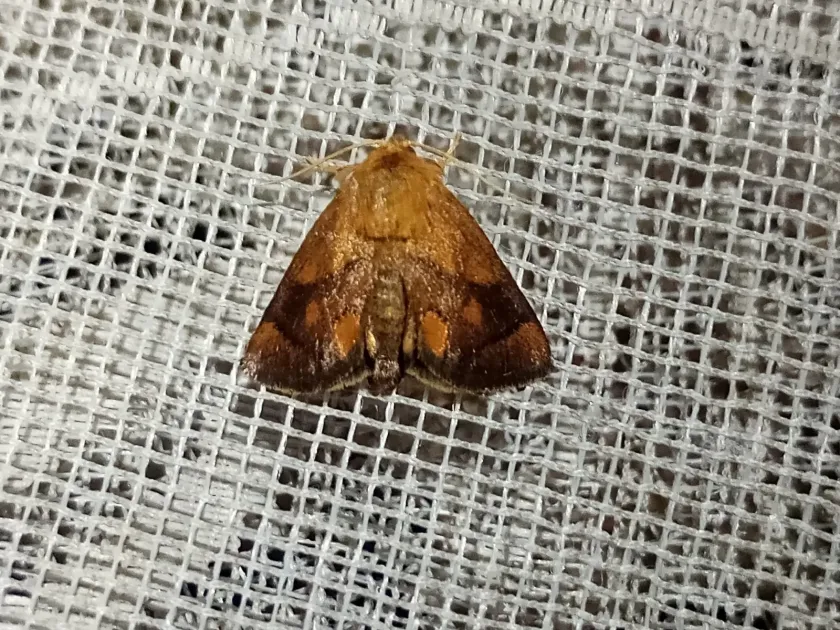
Apoda limacodes, commonly known as the limacodid moth or festoon, is a member of the Limacodidae family. The adult moth has a wingspan of approximately 25-30 mm and is characterized by ochre-yellow forewings with two distinct dark transverse lines.
The larvae are particularly unique, earning them the nickname "slug caterpillars." They have a flattened, oval body shape, which is bright green with reddish dorsal lines, and they lack true legs, moving instead on a sticky ventral surface.
This species is univoltine, meaning it produces only one generation per year. The larvae overwinter in firm, parchment-like cocoons located either in leaf litter or in the crevices of tree bark.
Pupation takes place in the spring, and adult moths emerge during the summer months to mate. The cryptic behavior of both the larvae and the moths makes them difficult to monitor during early development stages.
Caution is advised when handling the larvae, as their bodies are covered with glandular stinging hairs that can cause skin irritation or allergic reactions in humans upon contact.
What it damages
The larvae feed on a variety of deciduous trees and shrubs. Common hosts include oak, beech, lime, and hornbeam, but they are also known to infest orchard species such as apple, pear, and plum trees.
Feeding occurs primarily on the undersides of the leaves. As the larvae grow, they consume the leaf tissue, leaving behind only the veins, which significantly impacts the plant's ability to photosynthesize.
Heavy infestations can lead to substantial defoliation, particularly in the lower and middle canopy, which weakens the overall vigor and health of the tree.
For fruit trees, the damage directly impacts yield quality and fruit size, as the tree redirects energy from fruit development to compensate for the loss of foliage.
The damage is typically localized, but if left unmanaged, the cumulative impact over several seasons can severely stress the host plant, making it susceptible to secondary pest attacks.
Signs of infestation
The most visible sign of infestation is skeletonized leaves. The larvae eat the leaf tissue, creating a web-like appearance where only the major leaf veins remain intact.
Early-stage damage appears as small, irregular holes or patches on the leaf surface. As the larvae mature, these patches expand until the entire leaf is degraded.
Finding the larvae requires close inspection of the leaf undersides, where they remain motionless for long periods, effectively camouflaged against the leaf tissue.
At the end of the summer, one may spot the cocoons tucked into bark cracks or near the base of the tree trunk, signaling the transition to the overwintering stage.
An increase in bird activity within the canopy during mid-summer may also serve as a bio-indicator that larvae are present and feeding on the foliage.
Control measures
Mechanical removal is a viable solution for small-scale infestations. Gardeners should wear thick gloves to prevent skin irritation when hand-picking the larvae from affected leaves.
Good horticultural practices, such as removing fallen leaf litter and cleaning tree trunks, help destroy the overwintering cocoons and disrupt the life cycle of the pest.
Biological control methods, specifically the use of Bacillus thuringiensis sprays, are highly effective against younger larvae and are safer for non-target beneficial insects.
Chemical insecticides should be reserved for severe outbreaks where economic damage is likely. It is essential to apply these during the peak feeding period of the larvae for maximum impact.
Maintaining a healthy garden ecosystem by providing habitats for natural predators, such as wasps and various bird species, can help regulate the population of Apoda limacodes naturally.
Taxonomy
- Latin name
- Apoda limacodes
- Order
- Lepidoptera (butterflies)
- Family
- Limacodidae
- EPPO code
- COCDLI
Discussion
No discussions yet — be the first.