
Aphalara itadori
Aphalara itadori
Description
How to identify
Aphalara itadori is a species of jumping plant louse belonging to the family Psyllidae. These insects are small, typically measuring between 2 and 3 millimeters in length, and are structurally adapted for leaping to escape predators.
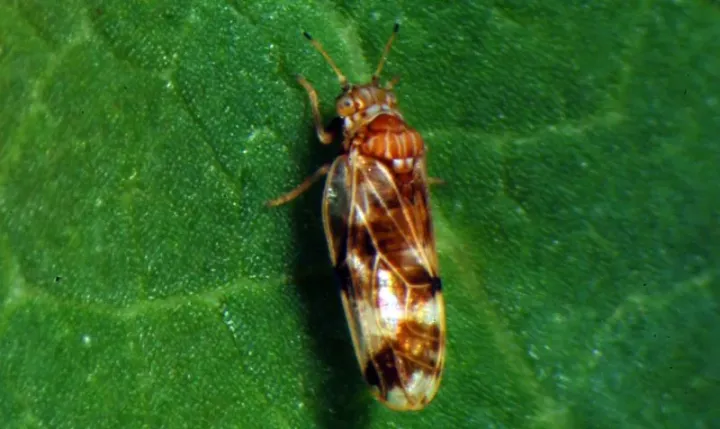
The adult insect has a body shape that is characteristic of the family, with clear, roof-like wings and a yellowish-brown coloration that provides camouflage on the stems of its host plant. Their antennae are relatively long, used for sensory perception.
The nymphal stages are notable for secreting a white, waxy substance that covers their bodies. This secretion acts as a protective barrier against environmental stressors and desiccation, which is essential during their sedentary feeding phases.
The life cycle is closely synchronized with the phenology of its primary host plant. Aphalara itadori can produce multiple generations per season, allowing the population to build up quickly in areas where the host plant is abundant.
These insects are specialized feeders, and their development depends entirely on the availability of specific host tissue. They thrive in environments where the host plant provides sufficient shelter and food resources throughout the summer months.
What it damages
The primary host for Aphalara itadori is Japanese knotweed (Reynoutria japonica), a highly invasive plant species. Consequently, this psyllid is widely recognized as a beneficial agent in biological weed control programs.
The damage caused by the insect involves sap-sucking, which depletes the plant's resources. Large populations of the insect can significantly reduce the vigor, height, and overall biomass of the knotweed, inhibiting its spread.
This species is not a pest of agricultural crops. It has undergone extensive host-specificity testing to ensure that it does not pose a risk to cultivated plants, making it a safe choice for integrated pest management strategies.
Symptoms of feeding include stunted growth, leaf curling, and necrotic spotting at the feeding sites. The physiological stress caused by the insect helps to shift the competitive balance in favor of native vegetation.
The economic value of this psyllid lies in its role as a sustainable alternative to chemical herbicide application. By curbing invasive populations naturally, it contributes to environmental conservation efforts.
Signs of infestation
The most visible sign of infestation is the presence of white, fluffy waxy deposits on the leaves and stems of Japanese knotweed. These deposits are produced by the nymphs and are easily spotted upon close inspection.
Adults can be detected by disturbing the stems of the host plant; they are highly active and will jump away, which is a telltale sign of a psyllid infestation. Their presence is usually concentrated in the upper, more tender parts of the plant.
Feeding damage can lead to visible deformations of the leaves, where tissues become puckered or chlorotic. In severe cases, the entire shoot may exhibit signs of wilting due to the intensity of sap extraction.
Secondary signs include the growth of sooty mold on the foliage, which thrives on the honeydew excreted by the insects. This black coating is a strong indicator of a substantial and long-standing colony.
Gradual thinning of the knotweed stand over the growing season is a sign of long-term pressure from the psyllid population, indicating that the biological control agent is effectively reducing the plant's reproductive success.
Control measures
As Aphalara itadori is a beneficial agent for controlling invasive weeds, active control of this insect is generally not practiced. Instead, management strategies often focus on promoting its establishment and dispersal.
Natural enemies, such as lacewings and ladybeetles, serve as the primary limiting factor for the population. Maintaining biodiversity in the surrounding landscape helps support these natural control mechanisms.
Chemical insecticides should be strictly avoided in areas where biological control programs are in place. Broad-spectrum pesticides would kill the psyllid, reversing the progress made in suppressing the invasive knotweed.
Phytosanitary regulations are in place to prevent the unauthorized movement of this insect. While it is beneficial for specific targets, it should not be introduced into new regions without thorough environmental assessment.
Management of the host plant environment, including minimizing mechanical soil disturbances, can help stabilize the microhabitat for the psyllids, ensuring their persistence and effectiveness as a biological control tool.
Taxonomy
- Latin name
- Aphalara itadori
- Order
- Hemiptera (bugs, aphids, leafhoppers)
- Family
- Aphalaridae
- EPPO code
- APLRIT
Discussion
No discussions yet — be the first.