
Aphalara
Aphalara
Description
How to identify
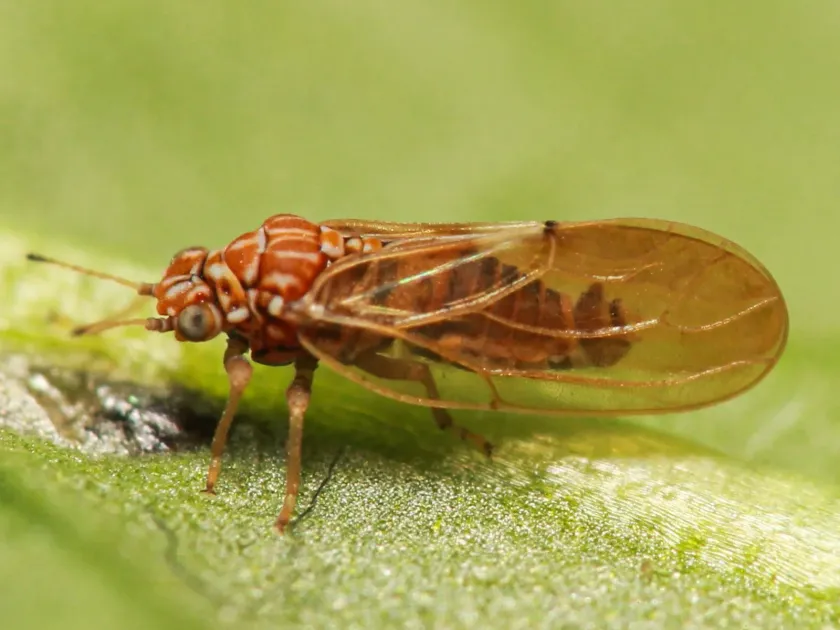
Aphalara is a genus of insects belonging to the family Psyllidae, commonly known as jumping plant lice, within the order Hemiptera.
These insects are characterized by their small size and powerful hind legs, which enable them to jump efficiently when disturbed.
Adults often exhibit cryptic coloration that blends with their host plants, making them difficult to spot during routine field inspections.
The nymphs are relatively sedentary and are usually found on the undersides of leaves, often covered in waxy secretions produced for protection.
Identification at the species level usually requires specialist equipment to examine the structure of the wings and reproductive organs of adult specimens.
What it damages
Aphalara species primarily target plants within the Polygonaceae family, with sorrel and knotweed being frequent hosts.
These pests feed on phloem sap, using their piercing-sucking mouthparts to penetrate the plant tissues, which disrupts the flow of nutrients.
Feeding damage leads to physiological stress in the plant, often causing growth inhibition and a reduction in overall crop yield.
The continuous extraction of plant fluids weakens the host, making it more susceptible to environmental stressors and drought conditions.
Additionally, some psyllid species are known vectors of plant viruses, potentially introducing disease into healthy fields through their feeding activity.
When it appears
The lifecycle of Aphalara is highly dependent on ambient temperatures and the phenology of their specific host plants throughout the year.
Overwintering typically takes place in the adult stage, with insects seeking shelter in leaf litter, bark crevices, or protected grassy areas.
As spring temperatures rise, the overwintered adults emerge, move to host plants, and begin feeding and mating cycles.
Several generations can occur within a single growing season, leading to significant population increases during the peak summer months.
As daylight hours decrease and autumn arrives, the insects enter a state of dormancy to prepare for the cold winter period ahead.
Signs of infestation
The most common sign of an Aphalara infestation is the curling and distortion of young, developing leaves at the growing tip of the plant.
Chlorotic spots often appear on the foliage where the insects have inserted their mouthparts to draw out plant juices.
- Severe leaf curling and deformation of shoots.
- Presence of sticky honeydew secreted by nymphs on leaf surfaces.
- Growth of sooty mold fungus on top of honeydew deposits.
- Reduced plant vigor and stunted growth of the overall crop.
- Clusters of small, waxy-looking nymphs on the leaf undersides.
Honeydew accumulation can attract ants, which often farm the psyllids, further complicating natural population control efforts.
Regular visual checks of the leaf undersides and apical buds are essential for the early detection of these damaging pests.
Control measures
Cultural control practices, such as removing weed hosts from the Polygonaceae family, are critical for reducing the local pest population.
Maintaining healthy, vigorous plants through proper irrigation and fertilization can help crops tolerate minor psyllid infestations.
If chemical intervention becomes necessary, systemic insecticides applied early in the season can be highly effective in managing outbreaks.
Encouraging beneficial insects, such as lacewings and predatory ladybugs, provides a sustainable way to keep pest numbers below economic thresholds.
Proper field hygiene, including the removal and destruction of crop residues after harvest, effectively eliminates potential overwintering sites.
Taxonomy
- Latin name
- Aphalara
- Order
- Hemiptera (bugs, aphids, leafhoppers)
- Family
- Aphalaridae
- EPPO code
- APLRSP
Discussion
No discussions yet — be the first.