
Aonidiella inornata scale
Aonidiella inornata
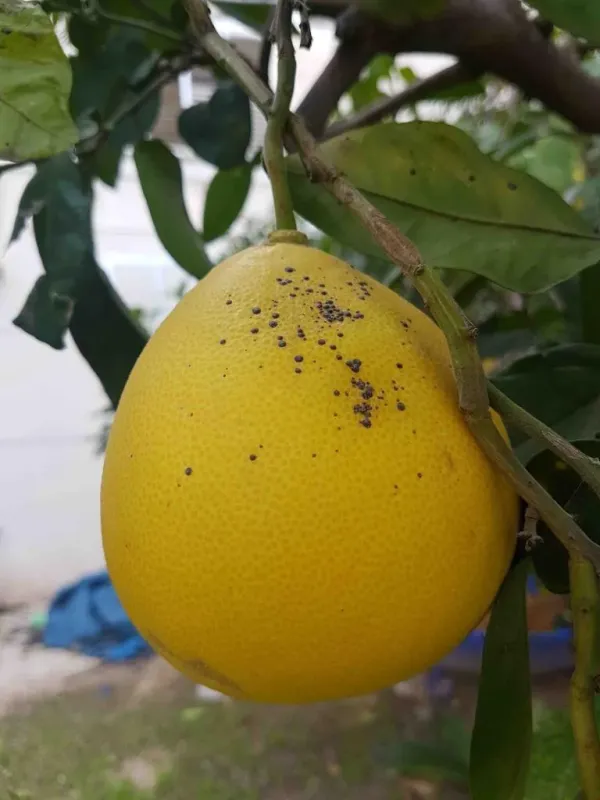
Description
How to identify
Aonidiella inornata belongs to the Diaspididae family (armored scale insects). This small insect, in its adult stage, is essentially sessile and protected by a hard, circular waxy scale cover.
Females exhibit a reddish-brown or yellowish-tan coloration, with their bodies completely concealed under the scale. Males are significantly smaller, winged, and capable of active flight to locate mates.
The first-instar nymphs, commonly referred to as "crawlers," represent the only mobile stage, allowing the species to actively disperse across the host or be carried by wind to nearby plants.
This species is a typical sucking pest adapted to tropical and subtropical environments, frequently infesting ornamental foliage and various fruit-bearing crops.
Systematically, this species is closely related to the California red scale, though it possesses distinct morphological characteristics of the pygidium, which are identified by specialists through microscopic examination.
What it damages
Primary hosts for Aonidiella inornata include various citrus species such as lemon, orange, and mandarin. The pest also affects a wide array of tropical and subtropical shrubs.
Damage is inflicted upon young shoots, leaves, and fruits, significantly reducing both the aesthetic appeal and the economic market value of the harvest in agricultural settings.
Under conditions of high infestation density, colonies of these scale insects can cover large sections of bark on branches and stems, leading to desiccation and premature leaf drop.
Fruit damage manifests as yellowish or brown spots where the insects have inserted their mouthparts, rendering the produce unsuitable for the fresh fruit market.
Heavy infestations weaken the host's overall immune system, making the plant highly susceptible to secondary fungal infections and viral pathogens spread during sap flow.
Signs of infestation
The presence of the scale is easily identified by the characteristic flat, circular plaques found on the leaf surfaces, usually along the midrib, and on young woody stems.
A major warning sign is the yellowing and curling of leaf blades at the site of insect feeding, which is often mistakenly attributed to nutritional deficiencies or mineral imbalances.
During the early stages of infestation, microscopic bumps appear on the bark; when removed, they peel away with the waxy cover, leaving a small mark on the plant tissue.
Large populations of females and nymphs are often accompanied by honeydew secretion, which subsequently promotes the development of sooty mold, coating the plant in a black, powdery layer.
Stunted growth, lack of new vegetative flushes during the growing season, and the gradual dieback of twigs are definitive symptoms of a critical infestation level.
Control measures
Controlling this scale insect requires an integrated pest management (IPM) approach, beginning with strict phytosanitary standards and regular monitoring of plant health.
The most effective chemical strategy involves the application of systemic insecticides, which translocate through the plant sap and remain toxic to sucking pests at all development stages.
During the peak activity period of the crawlers (typically early summer), treatments with contact insecticides or horticultural oils are recommended to block the insects' respiratory spiracles.
Biological control involves the strategic release of natural enemies, such as parasitic wasps and predatory lady beetles, which help maintain the population below the economic threshold.
- Pruning and removal of heavily infested plant parts.
- Installation of sticky traps to monitor crawler emergence.
- Implementation of balanced fertilization to enhance host resistance.
Taxonomy
- Latin name
- Aonidiella inornata
- Order
- Hemiptera (bugs, aphids, leafhoppers)
- Family
- Diaspididae
- EPPO code
- AONDIN
Discussion
No discussions yet — be the first.