
San Jose scale
Aonidiella aurantii
Description
How to identify
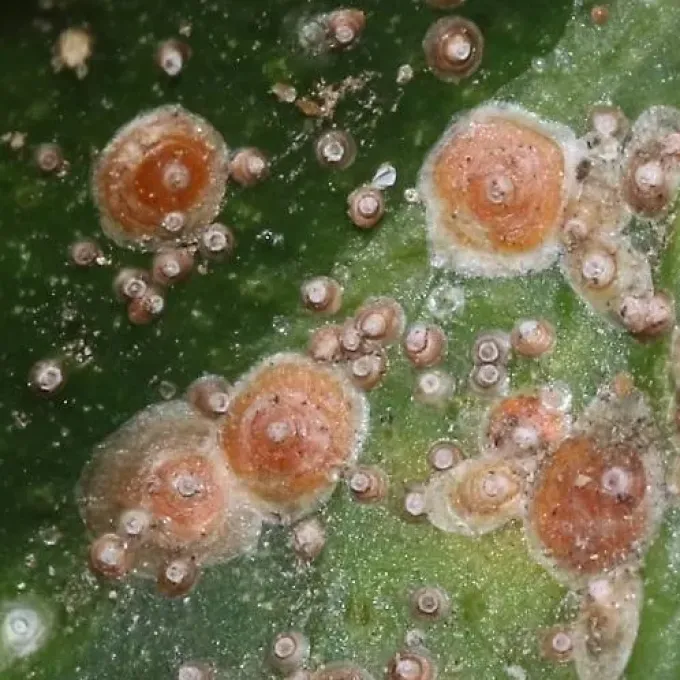
San Jose scale (Quadraspidiotus perniciosus) is a destructive armored scale insect belonging to the family Diaspididae. The adult female is sedentary and protected by a hard, circular, grayish-brown scale about 2 mm in diameter, which hides her soft body.
Adult males are much smaller than females, possess wings, and are capable of flight, allowing them to locate mates. However, the most active stage in the dispersal of the pest is the first-instar nymph, commonly known as a "crawler."
Crawlers are microscopic, yellow, and highly mobile. They move across the bark and leaves of the host plant to find a suitable feeding site, where they settle, insert their mouthparts, and begin secreting their protective armor.
This species is highly prolific, producing multiple generations per year depending on the climate. Overlapping generations often result in a continuous presence of crawlers during the growing season, complicating chemical control efforts.
The insect is a notorious quarantine pest in many parts of the world, capable of causing widespread destruction in nurseries and commercial orchards if left unmanaged.
What it damages
San Jose scale is a polyphagous pest that feeds on a wide range of fruit and ornamental trees. Primary hosts include apples, pears, peaches, plums, nectarines, and cherries, as well as woody plants like roses and hawthorns.
By sucking sap from bark, leaves, and fruit, the pest causes significant physiological stress to the plant. Continued feeding leads to branch dieback, stunted growth, and a general decline in the tree's health and vigor.
Fruit infestation is particularly detrimental as it causes red or purplish spots to develop around each feeding site. These blemishes render the fruit unmarketable and significantly reduce the harvest value.
At high population levels, the scales can completely cover the bark of branches and the main trunk. This layer of insects can cause cracks in the bark, creating entry points for secondary pathogens and fungal diseases.
If the infestation is severe and left untreated, young trees can be killed within a few seasons, while mature trees may suffer from significant crop loss and reduced fruit quality.
Signs of infestation
The most distinctive sign of infestation is the appearance of a grayish, dusty layer on the bark, consisting of thousands of tiny overlapping scales. When scraped, this layer appears as a crust that easily peels away from the bark.
Reddish-purple halos or spots on the surface of fruit are a definitive diagnostic feature of San Jose scale feeding. These symptoms are a localized reaction of the plant tissue to the salivary toxins injected by the insect.
During the summer, the presence of tiny, mobile yellow crawlers on new shoots or leaf surfaces indicates active reproduction. Monitoring these crawlers is essential for timing insecticide applications.
General symptoms of decline include withered leaves, premature leaf drop, and the gradual dying back of terminal twigs. Heavily infested trees may exhibit poor development and lack of new vegetative growth.
When purchasing nursery stock, it is vital to inspect for any abnormal bumps or gray crusts on the bark. Introducing infested trees is one of the most common ways this pest spreads to new orchards.
Control measures
A successful integrated pest management strategy begins with cultural practices, such as proper pruning to remove heavily infested branches. Maintaining good orchard hygiene and ensuring trees are not stressed helps them better withstand pressure.
Chemical control is most effective when targeted at the crawler stage, before they form their permanent, protective scales. Systemic insecticides are often used to provide long-lasting control as they are taken up by the plant's vascular system.
Dormant oil sprays applied in late winter or early spring are highly effective for killing overwintering scales. This practice is a cornerstone of management, as it reduces the initial population density before the growing season begins.
Biological control plays a significant role in managing populations; beneficial insects like the predatory beetle Chilocorus bipustulatus and various parasitic wasps can significantly suppress scale numbers without the use of broad-spectrum pesticides.
Using pheromone traps to detect the emergence of adult males helps in timing control measures precisely. This strategy minimizes unnecessary sprays, protects beneficial insect populations, and ensures more effective management of the pest.
Taxonomy
- Latin name
- Aonidiella aurantii
- Order
- Hemiptera (bugs, aphids, leafhoppers)
- Family
- Diaspididae
- EPPO code
- AONDAU
Discussion
No discussions yet — be the first.