
Antestiopsis thunbergii
Antestiopsis thunbergii
Description
How to identify
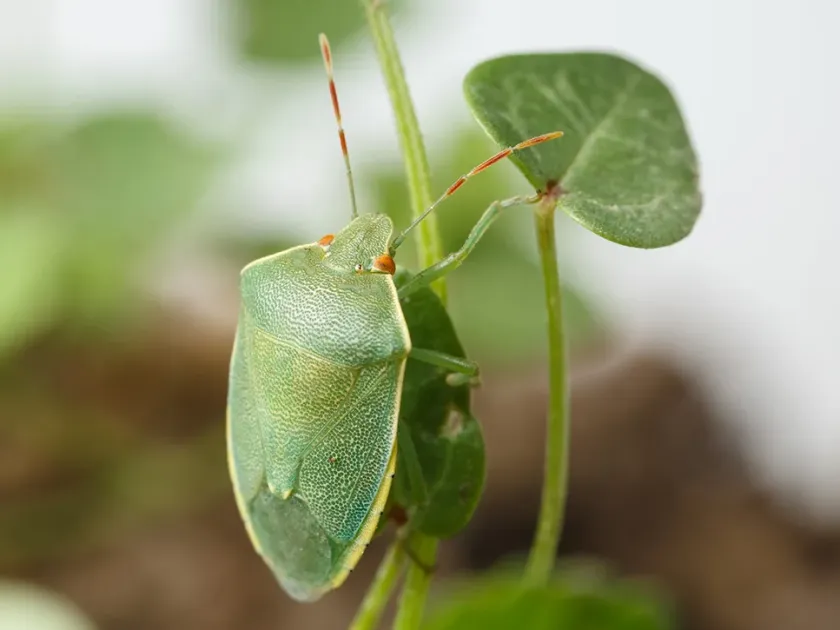
Antestiopsis thunbergii, commonly known as the variegated coffee bug, is a member of the Pentatomidae family (stink bugs) within the order Hemiptera.
Adult bugs exhibit a mottled appearance with a mixture of brown, orange, and white colors, providing excellent camouflage on the bark and leaves of coffee trees.
The insect is shield-shaped and typically measures between 6 to 8 millimeters in length, making it elusive when population density is low.
The eggs are cylindrical and are usually deposited in neat, organized batches on the underside of leaves, which serves as a vital diagnostic feature for field scouting.
Nymphs undergo several developmental stages, gradually changing color and form until they reach the adult stage, characteristic of the species.
What it damages
The primary host plant is the Arabica coffee tree (Coffea arabica), where the bug inflicts significant economic damage to the plant's reproductive organs.
The pest feeds on the sap of developing berries by piercing the skin with its proboscis, causing direct injury to the coffee bean contained within the fruit.
Secondary infections occur through the puncture wounds, often introducing pathogenic fungi like Nematospora coryli, which causes bean rot and ruins the flavor profile.
Damage caused by this bug leads to a substantial reduction in the quality of the harvest, rendering the beans unsuitable for export or premium coffee production.
In cases of severe infestation, Antestiopsis thunbergii can destroy up to 50% of the crop, causing premature berry drop and malformation of the developing seeds.
When it appears
The life cycle of Antestiopsis thunbergii is closely tied to the phenological phases of the coffee tree, with activity peaking during flowering and fruit setting.
In tropical climates, the bug breeds continuously throughout the year, provided there is a constant supply of host plant tissues for feeding.
Populations tend to grow most rapidly between wet seasons, as warmer temperatures significantly accelerate the incubation period of the eggs.
Nymphs are most active during the day, frequently moving to young shoots and fruit clusters to feed intensively on the sap available in these succulent tissues.
Dispersal to new parts of the plantation usually occurs immediately after the major flowering period when new fruit set becomes available to the pests.
Signs of infestation
Initial visual evidence of infestation includes the appearance of necrotic spots on young coffee berries, which tend to darken over time due to tissue damage.
Infested berries may change color prematurely, shrivel, or show signs of rot if secondary fungal infections take hold through the feeding punctures.
Finding egg masses on the undersides of leaves is a definitive sign that a new generation of nymphs will emerge soon, requiring immediate attention.
The wilting of young shoot tips, where adult bugs cluster to feed, is another indicator of a high infestation level within a specific section of the field.
In field assessments, scouts use the "shake-sheet" method, where branches are tapped over a light-colored cloth to dislodge the bugs for easier counting.
Control measures
Biological control strategies involve utilizing native parasitoid wasps, such as egg parasitoids, which naturally suppress the bug populations in the ecosystem.
Cultural management includes regular pruning of coffee trees to improve canopy aeration and light penetration, effectively reducing the bug's preferred habitats.
Chemical control with insecticides should be reserved for periods when the economic threshold is exceeded to minimize harm to beneficial predators and pollinators.
It is essential to rotate the active ingredients of chemical pesticides to prevent the development of resistance within Antestiopsis thunbergii populations.
Consistent monitoring during critical fruit-setting stages is crucial for the early detection of hotspots, allowing for targeted rather than blanket applications.
Taxonomy
- Latin name
- Antestiopsis thunbergii
- Order
- Hemiptera (bugs, aphids, leafhoppers)
- Family
- Pentatomidae
- EPPO code
- ANTEOB
Discussion
No discussions yet — be the first.