
Antestiopsis
Antestiopsis facetoides
Description
How to identify
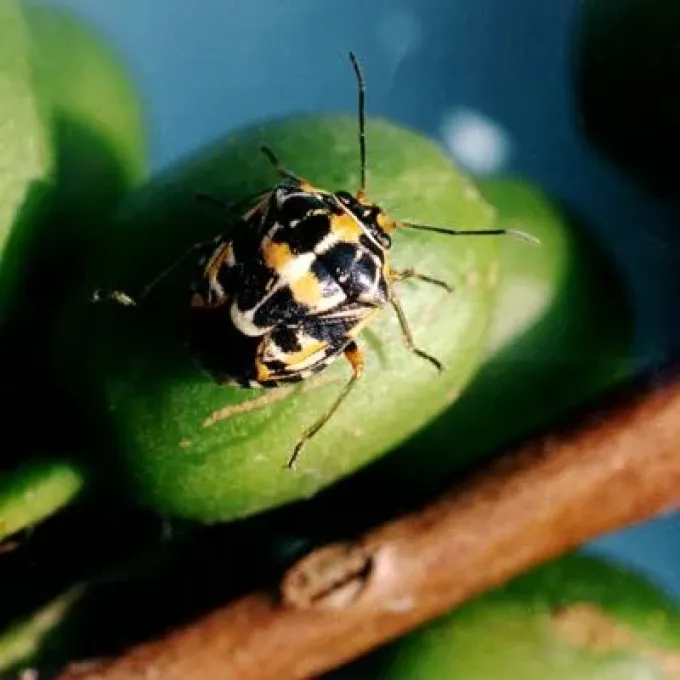
Antestiopsis (Antestiopsis facetoides) is a small, shield-shaped bug belonging to the Pentatomidae family, widely known as a major pest of coffee plants. Adults typically exhibit a variegated pattern of brown, red, and yellow, which serves as camouflage against coffee stems and leaves.
The life cycle of this insect consists of three main stages: egg, nymph, and adult. Females typically deposit their eggs in distinct clusters on the underside of coffee leaves, ensuring the safety of the developing embryos from predators and environmental stressors.
Nymphs undergo several developmental instars, gradually increasing in size and developing wing pads before reaching maturity. Depending on the local climate, the entire generation cycle can take anywhere from a few weeks to several months, allowing for rapid population growth.
These bugs are highly adapted to the coffee canopy environment, where they hide in the junctions of branches and leaves. Their cryptic coloration makes them difficult to spot during routine inspections, often leading to underestimation of their numbers until damage becomes visible.
Environmental factors such as high humidity and stable warm temperatures are ideal for their reproduction. A single plant can host several generations of these bugs simultaneously, making continuous monitoring essential for effective management in coffee-growing regions.
What it damages
The primary damage caused by Antestiopsis occurs on the developing coffee berries. Using their needle-like mouthparts, the bugs pierce the fruit wall to feed on the liquid endosperm, which significantly impacts the development of the coffee bean.
As the bug feeds, it injects digestive enzymes into the bean, which often leads to the development of fungal infections and bacteria. This process causes the berries to rot, become discolored, and eventually drop prematurely from the tree, leading to massive yield losses.
The most severe impact is the qualitative degradation of the harvested coffee, commonly known as the 'potato defect.' Beans attacked by these bugs develop a distinct unpleasant flavor that ruins the entire batch, making the product unacceptable for premium export markets.
In addition to fruit damage, the insects may feed on tender shoots and leaf buds, causing tip necrosis and stunted growth. Such damage compromises the overall vigor of the coffee tree and reduces its reproductive capacity for the following production cycles.
If left uncontrolled, an infestation can result in the loss of a significant percentage of the potential harvest. The economic consequences are not only due to lower yields but also due to the increased costs of manual labor required for sorting out damaged berries.
Control measures
Monitoring the pest population is the cornerstone of effective management. Using pheromone-based traps helps in detecting the presence of the bugs early, allowing farmers to take action before the infestation reaches a critical threshold.
Cultural practices, such as proper pruning, are essential for pest suppression. By removing excessive branches, farmers improve air circulation and light penetration, creating a microclimate that is less favorable for the bugs' survival and reproduction.
Biological control remains a sustainable strategy, involving the conservation of natural enemies such as parasitic wasps and tachinid flies. Maintaining surrounding vegetation can support these beneficial insects, which naturally keep the Antestiopsis population in check.
Chemical intervention should be considered a last resort, applied only when monitoring reveals that the bug density exceeds the economic injury level. It is crucial to use systemic insecticides judiciously and rotate chemical groups to prevent the buildup of pesticide resistance.
An integrated pest management (IPM) approach that combines regular orchard sanitation, biological monitoring, and timely selective spraying provides the best results. This multifaceted strategy helps maintain healthy coffee yields while minimizing the environmental impact on the plantation.
Taxonomy
- Latin name
- Antestiopsis facetoides
- Order
- Hemiptera (bugs, aphids, leafhoppers)
- Family
- Pentatomidae
- EPPO code
- ANTEFD
Discussion
No discussions yet — be the first.