
Anestia bug
Antestiopsis cruciata
Description
How to identify
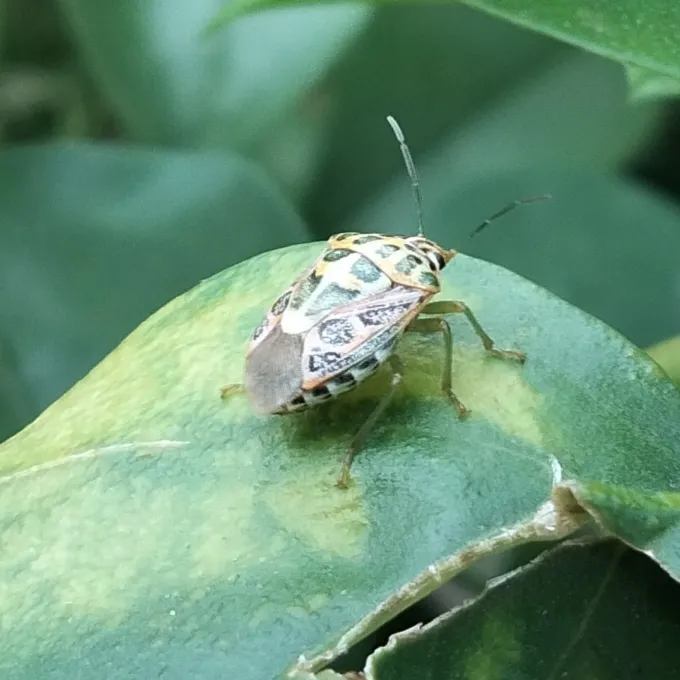
The coffee anestia bug (Antestiopsis cruciata) is a significant pest belonging to the Pentatomidae family, commonly known as shield bugs or stink bugs. These insects are easily recognized by their shield-shaped bodies and distinctive coloration patterns.
Adult bugs typically measure between 6 and 8 mm in length. Their shells range from dark brown to olive green, accented with vivid red or yellow markings. These markings serve as a primary visual identifier for field scouts.
The life cycle consists of the egg stage, five nymphal instars, and the adult stage. Female bugs lay their eggs in small, neat clusters, usually on the underside of coffee leaves, providing them with protection from direct sunlight and predators.
Nymphs emerge as pale-colored, gregarious insects that feed in groups. As they progress through the five molting stages, they gradually develop the characteristic adult coloration and increased mobility required for migration and reproduction.
Monitoring the bug population requires visual inspection during the early morning hours. Using yellow sticky traps or pheromone baits can significantly improve the accuracy of detecting initial infestations before they spread across the plantation.
What it damages
The primary hosts for Antestiopsis cruciata are Coffea arabica and Coffea canephora. Using their piercing-sucking mouthparts, these bugs feed on the berries and young succulent shoots of the coffee plant.
Feeding on coffee berries is particularly destructive, as the bugs inject toxic saliva into the developing seeds. This saliva leads to the degradation of the seed tissue, resulting in "potato-like" off-flavors that are notorious in the coffee industry.
The physical damage caused by these bugs also creates entry points for various fungal and bacterial infections. This leads to berry rot, causing them to blacken and drop prematurely, which significantly reduces the overall harvest yield.
In cases of severe infestation, coffee plants show signs of stunted growth and general decline. The constant loss of sap from the shoots weakens the tree, reducing its ability to bear healthy fruits in subsequent seasons.
For high-end coffee production, even minor infestations are catastrophic. The presence of the Anestia bug effectively downgrades the quality of the coffee, rendering it unsuitable for the premium export market.
When it appears
The population dynamics of the Anestia bug are heavily influenced by the coffee tree's growth cycles and local climatic conditions. They thrive in environments with moderate temperatures and high humidity, often peaking during the rainy seasons.
These bugs are multivoltine, meaning they produce multiple generations per year. This rapid reproduction cycle allows them to quickly overwhelm coffee plantations if not managed during the early stages of the growing season.
The insects concentrate on developing berries during the flowering and fruiting phases of the coffee plant. This period is the most critical time for plantation management, as the berries are highly attractive food sources.
During drier, harsher periods, the bugs tend to retreat into the dense canopy of the trees or hide in nearby weeds. This survival strategy ensures that a residual population remains present to restart the cycle when conditions improve.
Understanding these seasonal fluctuations is essential for developing a proactive spray schedule. By targeting the bugs when they are most active or exposed, farmers can drastically minimize their impact on the final harvest.
Signs of infestation
Early symptoms of infestation include the appearance of tiny dark spots on the skin of green coffee berries. These spots indicate where the bug has pierced the berry with its proboscis to extract sap.
Inside the berry, one can observe localized tissue necrosis and irregular grain development. These damaged areas often become darkened and deformed, which is a clear marker for farmers to check for bug activity.
The presence of frass (insect excrement) on the undersides of leaves and on the berry clusters is another strong indicator of a colony. Often, these deposits are accompanied by the growth of sooty mold, which thrives on the sugary secretions.
Unexpected fruit drop is another sign of bug pressure. Plants often abscise berries that have been severely compromised by the bugs as a defensive mechanism to conserve resources.
Leaf curling and the yellowing of shoot tips can occur if a high density of bugs is feeding on the tender, vegetative parts of the coffee plant, interrupting the plant's normal nutrient transport.
Control measures
Cultural control practices, such as proper pruning, are essential. By maintaining an open canopy, the plantation becomes less favorable for the bugs, as increased airflow and sunlight exposure discourage colony formation.
Biological control methods focus on protecting and encouraging natural enemies, such as egg-parasitoid wasps (e.g., Telenomus species). Maintaining biodiversity near the coffee fields provides a habitat for these beneficial insects.
Chemical control should be employed with caution and strictly when threshold levels are exceeded. Selectivity is key to ensure that beneficial pollinator insects are not harmed during the process.
- Removing weed hosts that serve as alternative food sources for the bugs.
- Utilizing monitoring tools like pheromone traps for precise timing of interventions.
- Manual collection and destruction of infested berries during the early stages.
- Implementing strict quarantine protocols for new planting materials to avoid introducing eggs.
An integrated pest management (IPM) approach remains the most sustainable method. By combining cultural, biological, and minimal chemical interventions, farmers can effectively protect their coffee quality.
Taxonomy
- Latin name
- Antestiopsis cruciata
- Order
- Hemiptera (bugs, aphids, leafhoppers)
- Family
- Pentatomidae
- EPPO code
- ANTECR
Discussion
No discussions yet — be the first.