
Coffee berry bug (variegated)
Antestiopsis
Description
How to identify
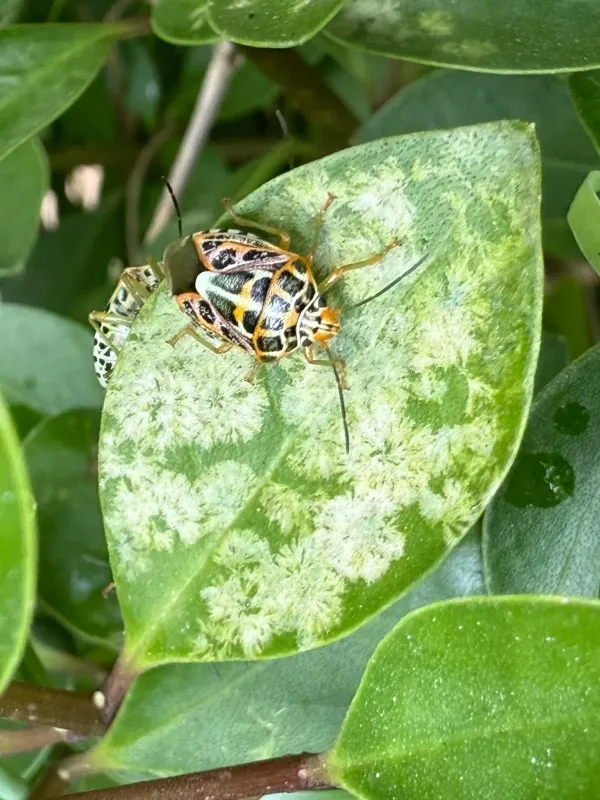
The coffee bug (Antestiopsis) belongs to the Pentatomidae family (stink bugs) of the order Hemiptera. This is a small insect, approximately 6–8 mm in length, with a shield-like body structure characteristic of shield bugs.
The coloration of the pest varies from mottled brown-black to orange with distinctive geometric patterns on the back. These bright markings often serve as a warning signal to predators in the wild.
The bug's life cycle includes the egg stage, five nymphal instars, and the adult stage. Females lay their eggs in compact clusters of 10–12 on the underside of coffee tree leaves.
Younger nymphs are rounded and often stay in groups, while adults are more mobile and disperse throughout the plant in search of the most succulent berries.
Under tropical conditions, the development of one generation can take from 30 to 50 days, allowing the pest to rapidly increase its population size during the season.
What it damages
The primary host of Antestiopsis is the coffee tree (Coffea arabica, Coffea canephora). The pest prefers to feed on the sap of young shoots, floral buds, and developing berries.
Infestation of flower buds often causes mass shedding, leading to a critical loss of potential yield before the berries even begin to ripen.
Mature berries are damaged when the bug punctures the grain shell with its rostrum. In addition to mechanical damage, the bugs inject saliva into the plant tissues, which contains enzymes that cause necrosis and the development of fungal infections.
Consumption of beans damaged by these bugs leads to a specific flavor defect known as the "potato taste," which makes the coffee unsuitable for high-quality market sales.
Besides direct damage, the punctures facilitate the entry of the fungus Nematospora coryli, which causes internal rotting of the bean tissue.
Signs of infestation
The first sign of infestation is the presence of characteristic egg clusters on the underside of leaves, which are barrel-shaped and often cream or light green in color.
On young leaves and shoots, deformation, curling, and stunted growth are observed due to the extraction of sap at the growing points.
The massive drop of flower buds and undeveloped berries beneath the tree canopy is a alarming signal of a high pest population density in the field.
When inspecting berries, dark spots can be seen at the puncture sites. Inside the beans of infested berries, brown spots or areas of rot are frequently found.
The presence of a specific unpleasant odor released by the bugs when threatened can also indicate a high density of the pest in the coffee orchard.
Control measures
The most effective method is regular monitoring of plantations using visual inspection of trees and the use of pheromone traps for the early detection of insect migration.
Agrotechnical practices, such as regular tree pruning to ensure good aeration and light penetration, reduce the attractiveness of the canopy for pest breeding.
Biological control involves conserving populations of natural enemies, such as parasitic wasps of the Scelionidae family, which destroy the eggs of the coffee bug.
Chemical control using systemic or contact insecticides is performed only when the economic threshold is exceeded to avoid destroying beneficial insects.
- Hand-picking of insects in cases of low-level infestation.
- Sanitary cleaning of the plantation from fallen berries and plant debris.
- Application of fungal-based biopesticides to suppress adult populations.
- Maintaining proper row spacing to impede the migration of bugs.
Taxonomy
- Latin name
- Antestiopsis
- Order
- Hemiptera (bugs, aphids, leafhoppers)
- Family
- Pentatomidae
- EPPO code
- ANTESP
Discussion
No discussions yet — be the first.