
Antestia
Antestia
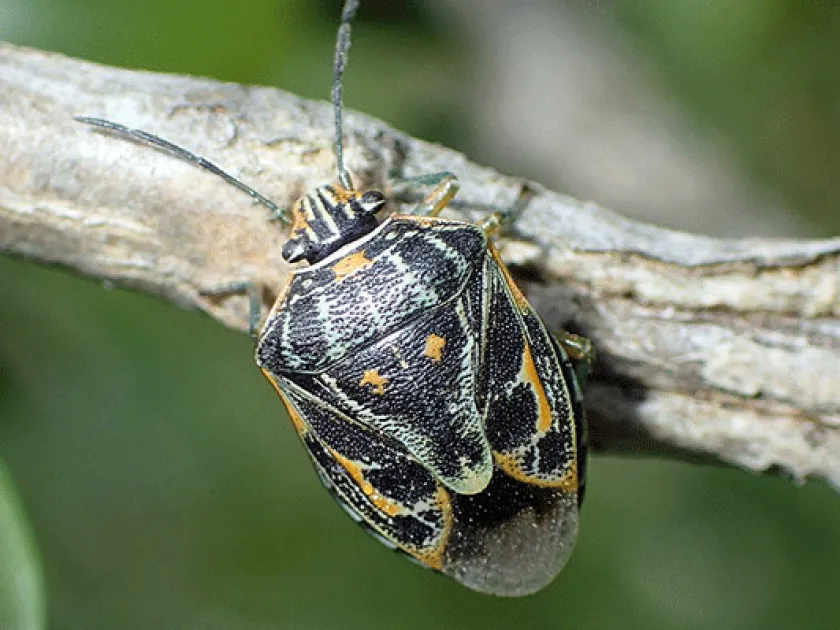
Description
How to identify
Antestia (genus Antestia) is a group of insects belonging to the family Pentatomidae, commonly known as shield bugs. These insects are major pests in coffee-growing regions across the tropics.
Adult bugs typically have a shield-shaped body, measuring between 6 and 8 millimeters in length. Their coloration is usually a mix of dark brown or black with vibrant, contrasting spots in white, yellow, or orange.
Nymphs of the Antestia bug undergo five developmental stages, known as instars, before reaching adulthood. They are smaller than adults and lack fully developed wings, often appearing lighter in color.
The life cycle of the Antestia is highly adapted to tropical climates, allowing for multiple overlapping generations throughout the year. This continuity makes them difficult to manage effectively.
Females lay their eggs in small, neat batches, usually found on the underside of leaves. Each batch typically consists of 10 to 15 eggs, which are barrel-shaped and laid in organized patterns.
What it damages
Antestia bugs are specialized feeders on coffee plants (Coffea spp.). They primarily damage the crop by feeding on young shoots, flower buds, and developing green or ripening berries.
Feeding on flower buds frequently causes them to wither and drop off, leading to a significant loss of potential yield. This feeding behavior directly disrupts the fruit-setting process.
When the bugs pierce the berries, they introduce toxic saliva that causes tissue necrosis. Furthermore, these punctures create entry points for secondary fungal infections, such as Nematospora coryli.
These fungal infections cause the coffee beans inside the berries to rot or become discolored. This condition is often referred to as "bean damage," which severely degrades the quality and flavor of the coffee.
Affected beans often develop a bitter, unpleasant taste and odor, rendering the harvest unsuitable for commercial roasting and export, which represents a massive economic loss for farmers.
When it appears
Antestia populations tend to peak during periods of high humidity and rainfall, which favor their reproduction and nymphal survival. However, they remain present on plantations year-round.
The most critical period for damage is when coffee trees produce new vegetative growth and begin the fruit development phase. During these times, the insects aggregate in high numbers on the trees.
Migration of adult bugs between fields occurs continuously, especially as berries begin to ripen. Their ability to fly allows them to rapidly recolonize areas that have been cleared or treated.
Environmental factors such as temperature directly influence the speed of the life cycle. Warmer temperatures generally accelerate development, leading to larger populations in a shorter amount of time.
Continuous monitoring throughout the growing season is essential to detect population spikes. Vigilant scouting allows farmers to intervene before the bugs cause irreversible damage to the berry crop.
Signs of infestation
Common signs of infestation include the yellowing, curling, and distortion of young leaves. Small, dark puncture marks are often visible on the tissues where the insects have been feeding.
On the berries themselves, one can observe small sunken spots or lesions. Opening a damaged berry often reveals blackened or moldy beans, which is a definitive sign of Antestia activity.
The presence of egg batches on the undersides of leaves is a clear indicator of a developing infestation. These should be looked for during routine inspections of the coffee canopy.
Increased activity of ants on the branches can also signal the presence of Antestia, as ants are often attracted to the insects' secretions or the sap leaking from the punctures.
The use of shake-sheet sampling, where branches are shaken over a white cloth, is a standard agronomic method for estimating the density of the bug population in a specific block.
Control measures
Cultural control measures, such as proper pruning, are essential to maintain an open canopy. Good light penetration and air circulation make the trees less attractive to the bugs.
Biological control plays a key role in managing Antestia. Protecting natural enemies, such as egg parasitoids (small wasps) and predatory spiders, can help keep population levels in check.
If chemical intervention becomes necessary, selective insecticides should be used to minimize harm to beneficial organisms. Treatments are most effective when applied early in the morning or late evening.
Resistance management is crucial, so rotating between different chemical classes is highly recommended. Farmers must also strictly adhere to pre-harvest intervals to ensure safety.
Integrated Pest Management (IPM) strategies, combining regular monitoring, sanitation, and biological support, provide the most sustainable path to protecting coffee yields from this pest.
Taxonomy
- Latin name
- Antestia
- Order
- Hemiptera (bugs, aphids, leafhoppers)
- Family
- Pentatomidae
- EPPO code
- ATSTSP
Discussion
No discussions yet — be the first.