
Anoplotermes pacificus
Anoplotermes pacificus
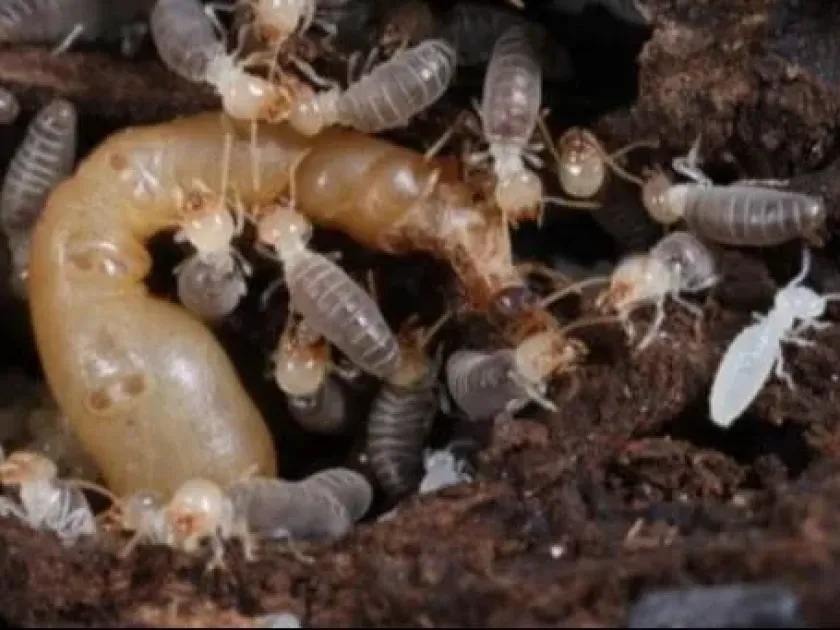
Description
How to identify
Anoplotermes pacificus belongs to the order Isoptera, family Termitidae. These are small, soil-dwelling insects that lead a cryptic and subterranean lifestyle.
Unlike many other termite species, this type does not construct large mounds, preferring to inhabit the humus layer of the soil or decaying organic matter.
Worker termites have whitish or yellowish bodies and lack eyes, which is an adaptation to their permanent existence underground.
Colonies consist of thousands of individuals that move in a coordinated manner through soil horizons in search of cellulose sources.
These termites rarely emerge to the surface, making them difficult to detect without careful excavation and soil analysis.
What it damages
The pest affects a wide range of crops, including cereals, sugarcane, and young tree saplings in nurseries.
The primary damage occurs to the root system, where termites feed on tissues, disrupting the transport of nutrients and water to the plant.
During massive outbreaks, termites can destroy the root collar, leading to the rapid death of young plants.
Damage is not limited to living tissues; they also consume crop residues, which can alter the structure and quality of the topsoil.
Seedlings are particularly vulnerable, as their underdeveloped root systems cannot withstand the destructive feeding of termite colonies.
When it appears
The pest's activity is directly linked to soil moisture and temperature, peaking during warm and moderately rainy seasons.
In tropical and subtropical regions, these insects remain active throughout the entire growing season of agricultural crops.
During drought periods, colonies migrate to deeper soil layers where the moisture content remains sufficient for the survival of workers.
The dispersal of winged reproductive individuals often coincides with the onset of the rainy season, allowing for rapid colonization of new areas.
Infestation rates often increase in fields where irrigation creates a favorable microenvironment in the root zone for termite activity.
Signs of infestation
The first indicator of infestation is the sudden wilting of plants despite adequate water availability and field care.
Inspection of the root system often reveals characteristic tunnels and cavities within the roots, lined with soil particles and saliva.
The presence of small earthen tubes or crusts on the soil surface near the stem base indicates active underground movement.
A significant reduction in stand density in specific patches of the field is a direct consequence of termite damage to roots.
Finding root fragments with internal gnawing patterns confirms the presence of this specific termite species in the area.
Control measures
The primary control method is cultural, involving strategic soil tillage to disrupt termite tunnels and destroy their nesting microhabitats.
Systemic and contact insecticides are applied directly to the soil during planting or as a side-dressing treatment for established crops.
Biological control methods involve the application of entomopathogenic fungi, which can effectively reduce the population density of colonies.
Crop rotation is crucial, as it limits the availability of food sources for the pests, especially when removing fields rich in organic residues.
The use of slow-acting toxic baits is highly effective, as it allows for the destruction of the entire colony, including the queen, ensuring long-term results.
Taxonomy
- Latin name
- Anoplotermes pacificus
- Family
- Termitidae
- EPPO code
- ANOTPA
Discussion
No discussions yet — be the first.